IRCC’s Hidden GCMS File Problem
Applicants asked for their own immigration records. Canada’s privacy watchdog says IRCC systematically gave them the short version — even when the full file was requested.
Immigration decisions can change a family’s future. That is why applicants need access to the record behind those decisions: officer notes, history entries, status changes, and the internal trail that explains what happened. According to Canada’s Office of the Privacy Commissioner, IRCC has been cutting that trail short.
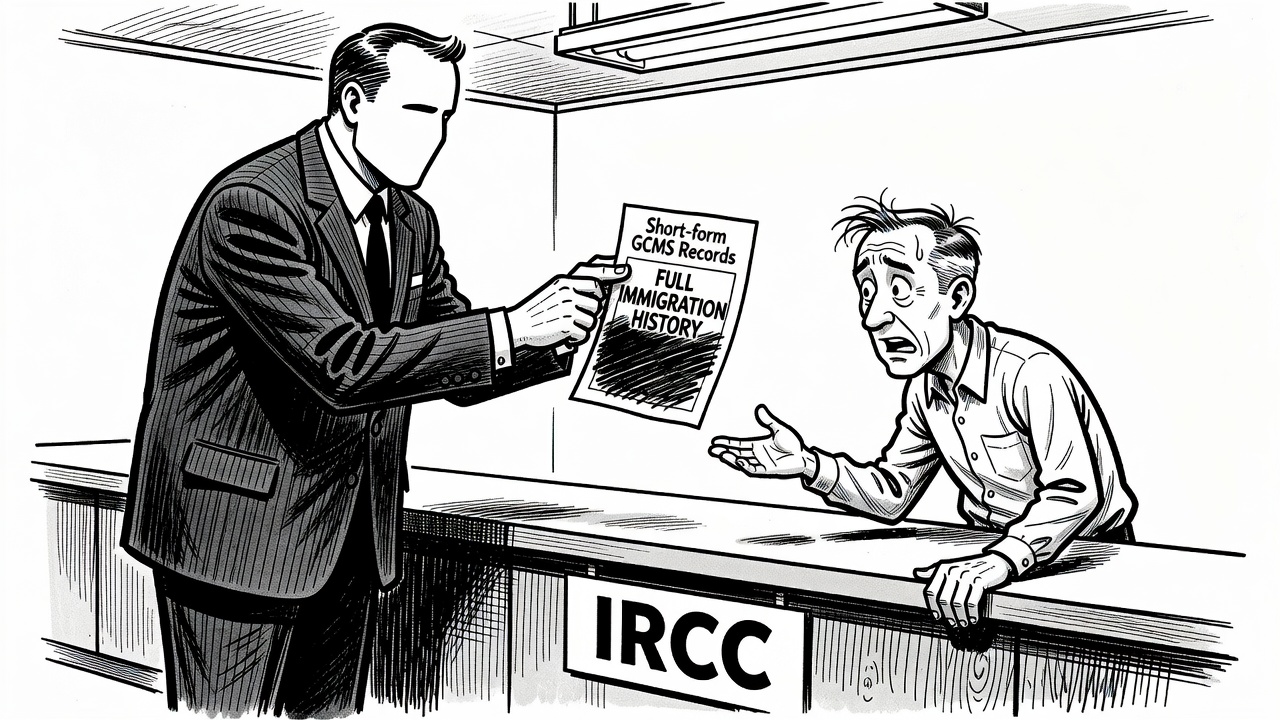
In a March 26 finding modified on June 4, the watchdog said Immigration, Refugees and Citizenship Canada was “systematically” retrieving and processing only a subset of Global Case Management System records — a “Short Form” GCMS report — when people requested immigration files. The problem was not limited to vague requests. The OPC said IRCC used that short-form approach even when individuals asked for their whole file or for specific content found only in the “Long Form,” including the History Section.
That matters because the Privacy Act is not a customer-service suggestion. Section 12 gives individuals a right to access personal information about themselves held by government, subject to legal exceptions. The commissioner found that material outside IRCC’s short form can contain personal information people have a right to see. In the investigated case, the complainant had specifically requested the History Section. IRCC did not retrieve or process it until the investigation pushed the issue.
IRCC argued the long-form material was unnecessary because it would either contain no personal information or be withheld under exemptions. The watchdog did not accept that. It reviewed the complainant’s file and found personal information in the History Section. It also pointed to earlier cases where IRCC had released History Sections, including a 2022 Information Commissioner matter involving 64 GCMS history sections that were ultimately released in full.
The narrow good news is that the complainant finally received the Long Form, including the History Section, on March 24, 2026. The broader bad news is more serious: IRCC did not agree to update its procedures so that people seeking their whole file get all responsive GCMS material retrieved and processed. The OPC therefore marked the complaint “well-founded and not resolved.”
From a conservative accountability perspective, this is exactly how bureaucracy loses public trust. A department cannot preach fairness, compassion and modern service while rationing access to the very records applicants need to understand delays, refusals, errors or appeal options. Efficiency is not a legal excuse for withholding personal information. If long-form records require lawful redactions, then redact them. But first retrieve them, review them, and explain the basis for any withholding.
The fix is straightforward: IRCC should immediately publish a GCMS disclosure policy, stop defaulting to the short form when the full file is requested, report how many long-form requests it has denied or short-formed since 2023, and give Parliament a compliance deadline. Applicants should not need a watchdog investigation to obtain their own government-held immigration file.
- Office of the Privacy Commissioner of Canada: IRCC systematically withholds access to certain personal information in GCMS
- Department of Justice Canada: Privacy Act purpose and right-of-access framework
- Office of the Information Commissioner of Canada: Immigration, Refugees and Citizenship Canada (Re), 2022 OIC 01
This article criticizes IRCC’s records-access practices. It does not blame immigrants, applicants, officers, or temporary staff; the accountability issue is federal policy and compliance.