Defence Spending Without Defence Transparency
Ottawa wants Canadians to accept a bigger defence buildout. National Defence still has to prove it can answer basic records requests on time.
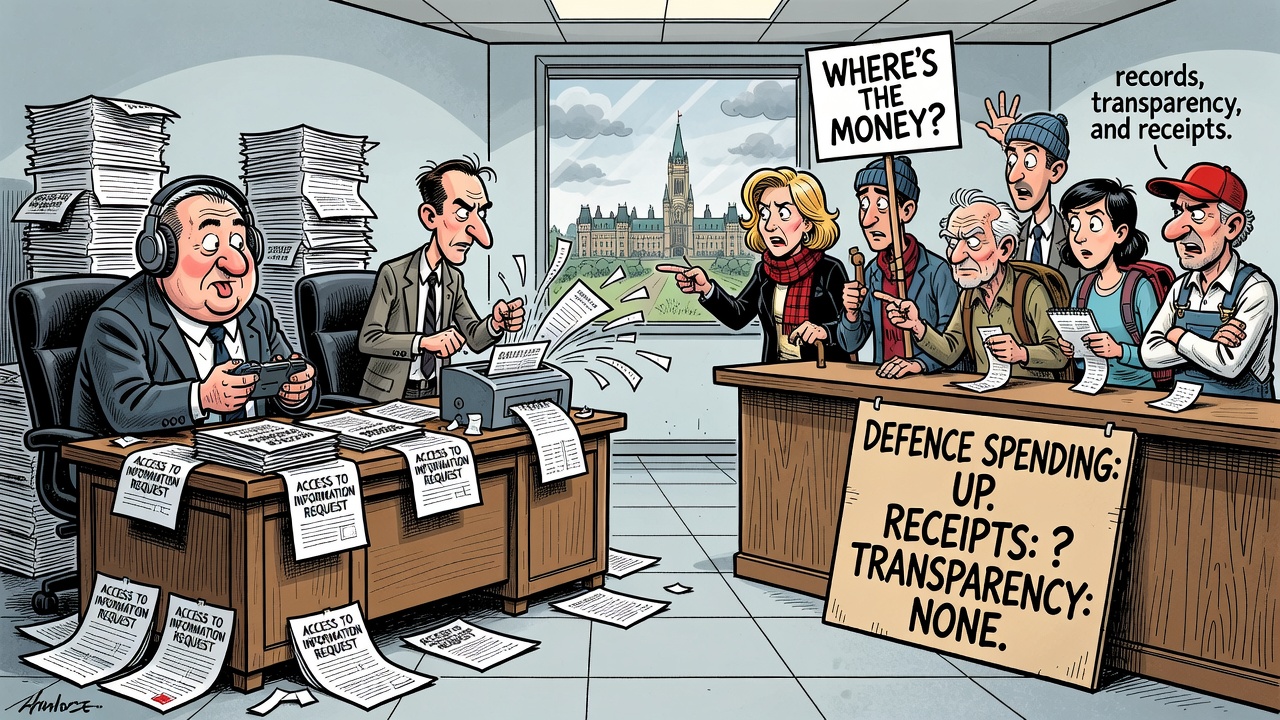
Defence is one of the few federal files where secrecy is sometimes legitimate. Operational security, allies’ intelligence, and troops’ safety all matter. But “national security” cannot become a magic curtain that hides ordinary briefing binders, procurement context, travel records, and spending decisions from the taxpayers funding them.
That is why the latest access-to-information reporting on National Defence should bother conservatives and liberals alike. Global News reported that Information Commissioner Caroline Maynard found it “completely unacceptable” that senior DND officials failed to respond to two access requests filed on October 20, 2025. The department did not provide the records within the 30-day period and did not claim an extension. In the commissioner’s words, DND was deemed to have refused access.
The requested records were not fringe gossip. Global said one request involved briefing binders for Defence Minister David McGuinty’s meetings with German and Norwegian counterparts as submarine procurement loomed. The other involved briefing material for McGuinty’s travel with the prime minister to Ukraine, Poland and Latvia. Those are precisely the kinds of records that help Canadians understand what ministers were told before major defence and foreign-policy decisions.
DND’s own numbers show this is not an isolated newsroom complaint. Its 2024–25 Access to Information Act report says the department received 2,494 new ATI requests, carried 2,314 requests into 2025–26, and ended the year with 141 active complaints before the Information Commissioner. Its on-time compliance fell to 43.91%, down from 57.24% the previous year. In plain English: most requests were not answered within legal timelines.
The timing makes the failure worse. Budget 2025 proposes $81.8 billion over five years, on a cash basis, to rebuild, rearm and reinvest in the Canadian Armed Forces. Many Canadians support rebuilding the military after years of neglect. But support for defence does not require blind trust in a department that cannot reliably produce records. In fact, a serious defence rebuild requires more transparency, not less, because bigger budgets mean bigger contracts, bigger risks, and bigger opportunities for waste.
The Maple connected the same DND report to a broader pattern: well-founded complaints against the department more than doubled from 44 in 2023–24 to 99 in 2024–25. It also noted that delays and exemptions often keep procurement details out of public view until journalists, researchers or citizens pry them loose through access requests.
The minister’s statement that transparency is essential is welcome. But statements are not systems. Before Parliament approves ever-larger defence commitments, DND should publish a compliance plan: monthly ATI backlog numbers, the offices causing delays, consequences for non-responsive senior officials, and a clear deadline to bring on-time compliance above 80%.
Rearming Canada may be necessary. Rearming the bureaucracy with another excuse to ignore the law is not.
- Global News: ‘Completely unacceptable’: Investigations finds DND ignored records requests
- National Defence: 2024–2025 Annual Report to Parliament — Administration of the Access to Information Act
- Budget 2025: Chapter 4: Protecting Canada’s sovereignty and security
- The Maple: As Military Spending Soars, Defence Department Fails On Transparency
This article criticizes departmental transparency and political accountability. It does not criticize Canadian Armed Forces members, veterans, or legitimate operational security protections.