The Rural Low-Wage TFW Loophole Test
Ottawa says employers must try to hire Canadians first. Then it created rural low-wage flexibility that can let eligible employers keep higher temporary-foreign-worker shares while youth unemployment remains above its pre-pandemic norm.
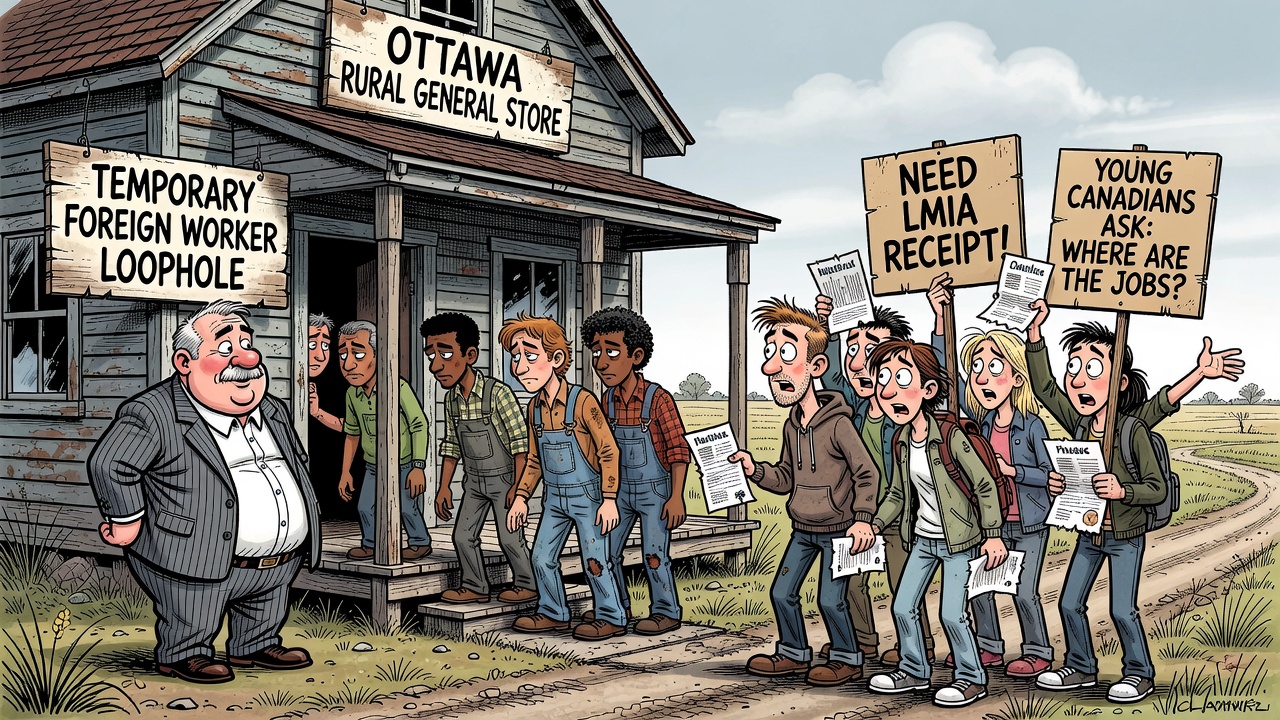
Ottawa’s Temporary Foreign Worker Program is supposed to be a last resort. The public promise is that employers use it when Canadians or permanent residents are not available. That promise becomes harder to trust when the government quietly builds exceptions around low-wage work.
ESDC’s current temporary-measures page says that from April 1, 2026, to March 31, 2027, eligible rural employers outside census metropolitan areas can access special flexibility for low-wage positions in participating provinces and territories. Depending on the worksite, that flexibility can let an employer retain its current proportion of low-wage temporary foreign workers even when it sits above today’s cap, or use a 15 per cent cap instead of the usual 10 per cent.
That is the loophole test. If a workplace is already above the cap, taxpayers deserve to know why that was necessary, whether wages were raised, how many local applicants were rejected, and whether inspections confirmed the rules were followed. If a worksite is allowed the 15 per cent cap, Canadians deserve the same receipts before Ottawa treats “rural shortage” as a blanket explanation.
The timing matters. Statistics Canada’s May 2026 Labour Force Survey put youth unemployment at 13.4 per cent. The rate was down from April, but the agency also said youth unemployment has stayed above its pre-pandemic average of 10.8 per cent since January 2024. That means young Canadians have spent more than two years in a tougher entry-level labour market while Ottawa continues to preserve pressure valves for low-wage employers.
This does not mean every rural job can be filled overnight by a student, a graduate, or an unemployed local worker. Some regions have real demographic and seasonal challenges. Temporary foreign workers also deserve fair treatment, safe housing and honest contracts. The problem is federal opacity. A government that asks the public to trust low-wage exemptions should be able to prove, community by community, that employers exhausted local hiring at fair wages first.
Even Tim Hortons’ recent pivot should make Ottawa pause. CityNews and The Canadian Press reported the chain planned to scale back reliance on temporary foreign workers and seek 10,000 local hires, with the company saying high youth unemployment meant lobbying for expanded access was no longer necessary. If a major low-wage brand can make that adjustment, Parliament should ask which employers still need above-cap flexibility, and why.
The conservative accountability standard is not complicated: publish the LMIA approvals, occupations, wage offers, Canadian-applicant counts, rejection reasons, cap exemptions, above-cap worksites, inspection results and violations where privacy law allows. If the Carney government wants to defend rural flexibility through March 2027, it should prove the “hire Canadians first” test is real — not just a slogan printed on a federal webpage.
- Employment and Social Development Canada: Temporary measures under the Temporary Foreign Worker Program
- Statistics Canada: Labour Force Survey, May 2026
- CityNews / The Canadian Press: Tim Hortons scaling back reliance on temporary foreign workers
This article criticizes federal policy design and employer-access rules. It does not blame immigrants, temporary foreign workers, or individual employees.