Gordie Howe Bridge: Canada Paid. Canadians Deserve the Receipts.
Carney is calling the bridge opening a cooperation win. Fine. But taxpayers still need the final invoice, toll-recovery timetable, ownership terms and political-risk memo.
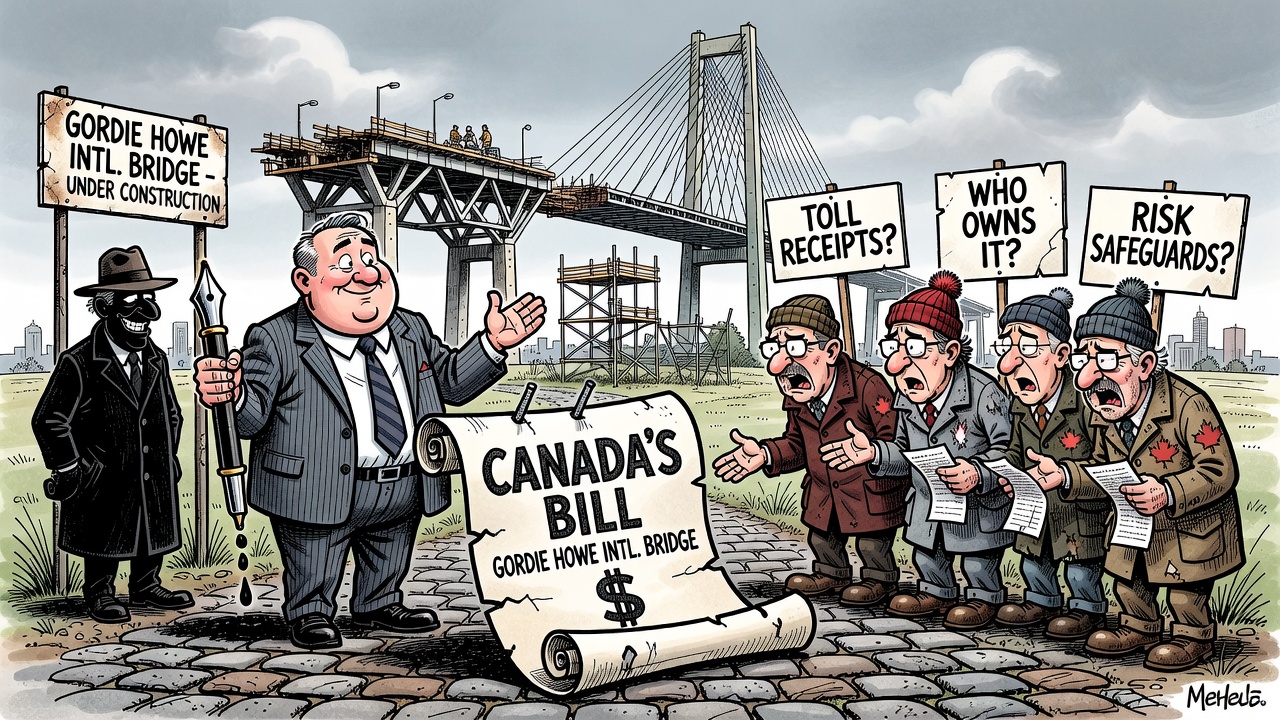
The Gordie Howe International Bridge should be good news. A new public crossing between Windsor and Detroit means more capacity, a direct link between Highway 401 and I-75, and relief for one of the most important trade corridors in North America. Conservatives do not need to oppose useful infrastructure to ask basic accountability questions about how it was financed and who carries the risk.
Prime Minister Mark Carney said Tuesday that the bridge will open “at the end of the week,” with a ribbon-cutting expected Friday and traffic later this month. He called it both a symbol and a fact of Canada-U.S. cooperation. That is the photo-op version. The taxpayer version is more complicated.
The Government of Canada says plainly that Canada is funding the entire project. The Windsor-Detroit Bridge Authority is a Canadian Crown corporation, and official project material says the bridge will be publicly owned by Canada and Michigan. The 2012 Canada-Michigan Crossing Agreement also says tolls in both directions will be collected on the Canadian side and used to reimburse the Canadian government for funds advanced to the project.
That structure may be defensible. Canada needed redundancy at a border bottleneck, and Michigan politics made financing difficult. But if Canadians fronted the bill, Parliament should publish the receipts: final all-in cost, interest assumptions, toll-rate modelling, the expected payback date, the sensitivity analysis if traffic underperforms, and the terms for what happens after Canada is repaid.
The risk is not theoretical. In February, Donald Trump threatened to block the opening unless the United States was “fully compensated” and floated a demand for at least half of the asset. Michigan and Canadian officials pushed back, noting that Michigan already shares public ownership and that Canada financed the project. AP reported Tuesday that Trump made the threat as USMCA/CUSMA review politics were heating up.
That should worry any serious government. If a Canada-financed bridge can be turned into leverage before it opens, Canadians deserve to see Ottawa’s risk plan. What approvals still depend on Washington? What staffing, customs, permit, security or tolling chokepoints could be politicized? What commitments did Carney or his ministers make to get the opening back on track? Were any toll, ownership or trade concessions discussed?
Carney wants the headline: bridge opens, cooperation restored. Taxpayers deserve the ledger underneath it. Publish the final invoice, the toll recovery schedule, the Canada-Michigan ownership summary, the diplomatic correspondence on the Trump threat, and the contingency plan for future political interference. A bridge can be worth building and still require receipts.
- Associated Press: Carney says the new Canadian-built bridge across Detroit River that Trump threatened will open — June 9, 2026
- Government of Canada / Housing, Infrastructure and Communities Canada: The Gordie Howe International Bridge Project
- Gordie Howe International Bridge / WDBA: The Canada-Michigan Crossing Agreement
- Federal Highway Administration: Project Profile: Gordie Howe International Bridge
- Canadian Council for Public-Private Partnerships: Gordie Howe International Bridge: First Binational P3
- WEMU / Michigan Public Radio Network: Michigan, Canadian officials counter Trump’s claims about Gordie Howe bridge — February 11, 2026
This article supports the bridge’s public value where justified; the accountability issue is whether Canada’s all-in cost, toll-recoupment model and political-risk protections are transparent to taxpayers.