Carney’s June 15 Transparency Test: Fix Access to Information, Don’t Build a Secrecy Wall
Ottawa’s Access to Information Act review is still open until June 15. Carney should fix delays and disclosure gaps, not give departments more ways to narrow, pause or sanitize records.
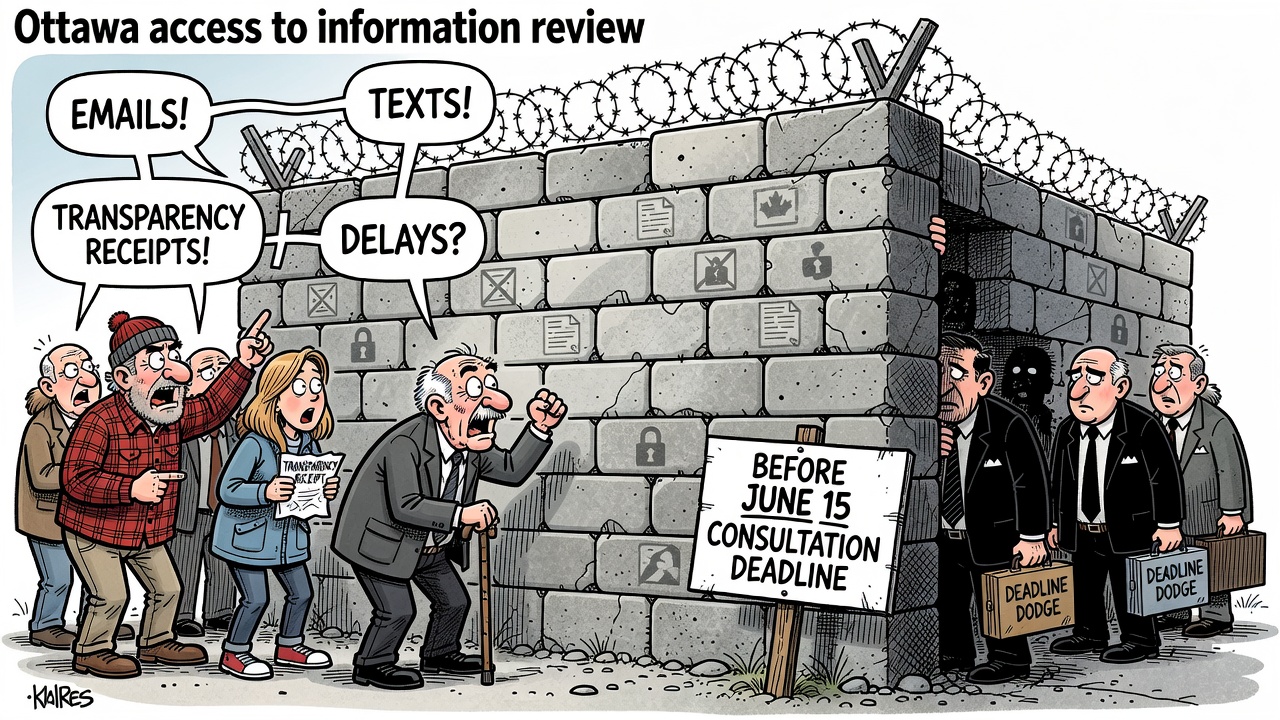
Prime Minister Mark Carney’s government has a simple transparency test before June 15: will it modernize access to information for citizens, journalists and taxpayers, or will it let departments build a cleaner bureaucratic wall around embarrassing records?
The Treasury Board’s 2025 review of the Access to Information Act is still in the consultation stage. That matters. These are not enacted rules yet. But the direction is already worth challenging because access-to-information law is one of the few practical tools Canadians have for checking what Ottawa says against what Ottawa actually did.
The government’s policy approaches include allowing institutions to place unclear or overly broad requests “on hold” while they seek clarification, or alternatively to take a time-limited extension. In theory, clarification can make a request better. In practice, any new pause button must be tightly limited, publicly tracked and appealable. A department that already misses deadlines should not be handed another procedural excuse to run out the clock.
That concern is not partisan paranoia. Information Commissioner Caroline Maynard warned in March that the government’s initial step showed a “lack of ambition,” appeared in several respects to prioritize institutional burden over the public’s right to know, and did not tackle unacceptable delays with the urgency Canadians deserve. When the independent officer responsible for access rights is sounding the alarm, ministers should listen.
The bigger risk is record definition. The Narwhal reported concerns that a narrower definition of “official records” could leave routine communications, transitory records, drafts, duplicates and messages without “business value” outside the system. In modern government, decisions are often shaped through emails, texts, instant messages, draft notes and briefing exchanges before a polished memo appears. If reform makes those trails easier to exclude, Canadians will get cleaner binders and dirtier accountability.
A conservative accountability standard is straightforward: public power needs public receipts. If officials spend tax dollars, pressure regulators, design subsidy programs, approve contracts or manage politically sensitive files, the default should be preservation and disclosure, subject to genuine security and privacy limits. The answer to a strained access system is not to narrow what counts as a record. It is to fund basic compliance, enforce deadlines, publish request statistics by institution, penalize chronic delay and expand proactive disclosure so fewer Canadians need to file requests in the first place.
Carney likes to sell competence. Here is a chance to prove it. Competent government does not fear the paper trail. It preserves it, indexes it and releases it when the law requires. Before June 15, Canadians should tell Ottawa the same thing: fix access to information by opening the system, not by giving departments new ways to pause, narrow or sanitize what voters are allowed to see.
- Treasury Board of Canada Secretariat: 2025 Review of the Access to Information Act
- Treasury Board of Canada Secretariat: Policy approaches under consultation
- Office of the Information Commissioner of Canada: Information Commissioner expresses reservations — March 6, 2026
- The Narwhal: Canada’s access-to-information changes and concerns about official records
This article describes policy approaches under consultation, not enacted amendments. The accountability argument is based on official consultation material, the Information Commissioner’s public response and independent reporting on record-definition concerns.