Carney’s Caucus Is Not a Boardroom
The issue is not gossip about tone. It is whether elected MPs can challenge PMO control and defend their constituents without fear of pressure.
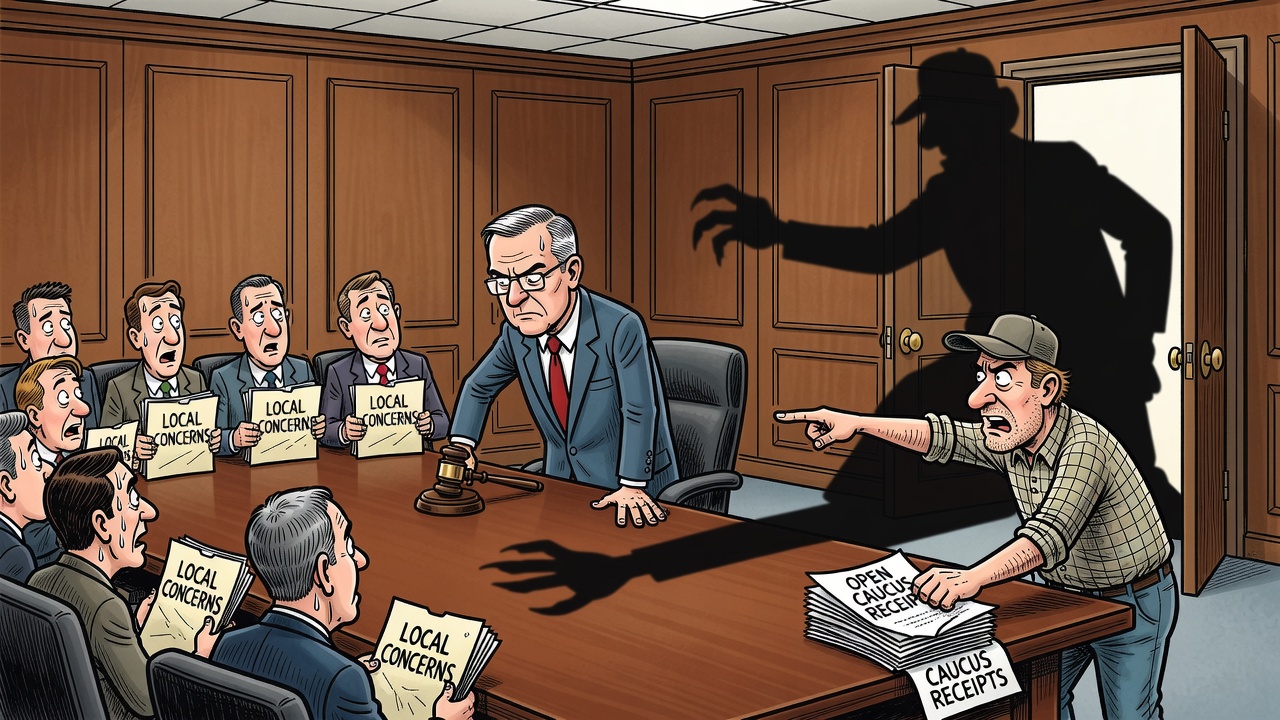
Mark Carney’s defenders want the caucus-management story reduced to one narrow question: did he yell, or did he not yell? That is convenient. It is also the least important part of the controversy.
Juno News reported that several Liberal MPs, speaking anonymously after a Toronto Star story, accused Carney of shutting down dissent, centralizing power in the Prime Minister’s Office, and reacting harshly when MPs raised concerns. Because the allegations are anonymous and contested, they should not be treated as proven facts. But they should not be waved away either. Anonymous caucus complaints are often a symptom of a deeper problem: elected MPs do not believe it is safe to speak plainly in public.
CTV later reported Liberal caucus chair James Maloney saying “the story is wrong” and defending Carney. A National Post follow-up, republished by Unpublished, also quoted Liberal MPs and ministers describing the Prime Minister as demanding but respectful, with several saying they had not heard him yell. Those denials matter. A fair accountability standard includes them.
The examples circulating in the coverage are exactly the kinds of issues MPs are elected to bring forward: Winnipeg MP Doug Eyolfson’s concerns over Ottawa’s response to Alberta health legislation, Nova Scotia MP Jaime Battiste’s concerns around Indian Act changes, and Laval MP Angelo Iacono asking the Prime Minister to visit his riding. None of that should be treated as disloyalty. It is the job.
Carney spent years in central banks, global finance and boardrooms. In those settings, command, message discipline and hierarchy may look like competence. Parliament is different. A caucus is not an executive committee. MPs are not branch managers. They are representatives of real communities, and the Prime Minister’s Office should not become a discipline machine that filters constituent concerns before they reach the top.
Conservatives should be careful here. The accountability argument is not that every anonymous complaint is true. It is that Canadians deserve a public standard for caucus democracy: ministers answer questions, MPs can dissent internally, local warnings are documented, and major policy disputes are not buried behind scripted unity.
If Carney’s team says caucus is open, prove it with process. Publish clearer rules for MP access to ministers and the Prime Minister. Stop punishing regional dissent as a communications problem. Let committees do real work instead of PMO theatre. And when MPs raise concerns from their ridings, treat those concerns as democratic inputs — not interruptions to a boardroom plan.
A prime minister who cannot tolerate hard questions from his own side will not suddenly become transparent when opposition MPs, journalists or taxpayers ask harder ones. That is why this story matters.
- Juno News: Carney’s leadership style is turning off some Liberal MPs
- CTV News: Liberal caucus chair defends Carney amid reports of yelling at MPs
- Unpublished / National Post: Is Mark Carney a yeller or just a demanding boss? Liberal MPs have thoughts
- National Newswatch: June 6-7 politics listings and summaries
This article treats contested anonymous claims cautiously and argues for a process-based caucus-accountability standard rather than presenting allegations as proven misconduct.