The Uyghur Import Blind Spot: Ottawa Condemns Forced Labour, But Cannot Count It
If Canada is serious about stopping forced-labour imports, Canadians need enforcement receipts — not another promise that the system is working somewhere offstage.
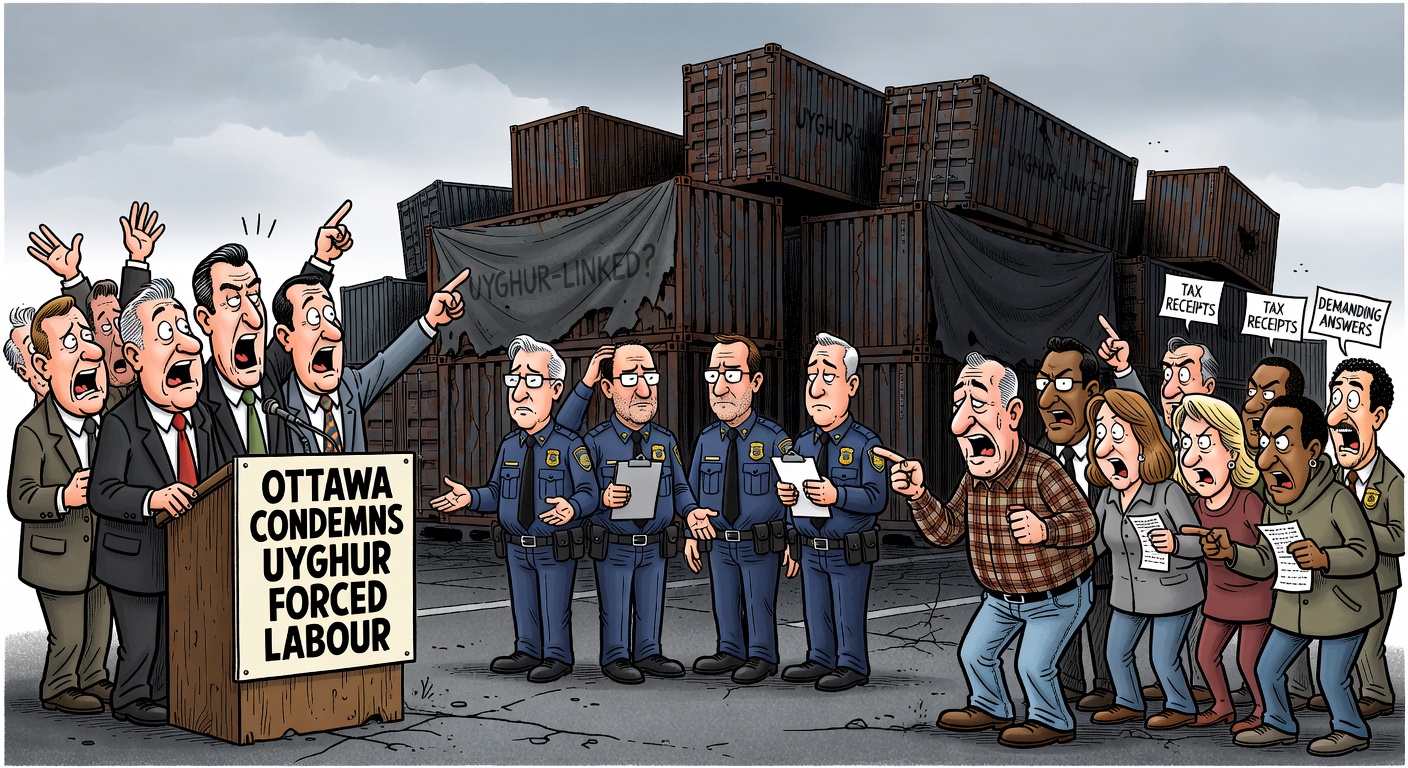
Ottawa says Canada bans goods made with forced labour. The question is whether the Liberal government can prove that ban is being enforced where the risk is most politically sensitive.
Conservative MP Kyle Seeback put that test directly to the government in written question Q-1075. He asked, since 2022, how many goods made using forced Uyghur labour in China had been intercepted or seized by the Canada Border Services Agency, and he asked for the basic enforcement details Canadians should expect: dates, product descriptions, quantity, value, point of entry, disposition of the goods, and any charges.
The House of Commons page shows the question was asked on April 17, 2026, and answered by Public Safety on June 3. Rebel News reported the key admission from the response: CBSA does not track and cannot provide information specific to goods detained because of forced labour involving a particular ethnic group, including Uyghur labour in China’s Xinjiang region.
That is not a minor database quirk. It is an accountability failure. Canada’s forced-labour import prohibition is broad, and CBSA’s own memorandum says goods mined, manufactured or produced wholly or in part by forced labour are prohibited from entering Canada. The same memorandum says importers are responsible for due diligence and that CBSA works with Employment and Social Development Canada to identify suspect goods and supply chains.
Good. But if Ottawa cannot tell Parliament whether any Uyghur-linked shipments were stopped, then Canadians cannot tell whether the policy is targeted, effective, or mostly performative. A government can issue condemnations of Beijing all day long. The harder job is proving that Canadian ports are not quietly accepting products tainted by coercion because enforcement data is too vague to audit.
A conservative accountability standard is simple: publish the receipts without compromising active investigations. Canadians do not need private commercial secrets. They do need annual, privacy-safe totals by country, region, product category, detention outcome, and enforcement result. If a shipment is released after importer evidence, say so in aggregate. If goods are refused, exported, abandoned, or seized, count it. If charges are rare or nonexistent, explain why.
This is about more than China policy. It is about whether Parliament can verify a law after passing it. Ottawa has built a habit of announcing virtue and hiding performance. On Uyghur forced labour, the humane position is not a press release. It is a border-enforcement dashboard Canadians can actually read.
- House of Commons: Q-1075 — written question on forced Uyghur labour imports
- House of Commons: Sessional Paper 8555-451-1075 response page
- Rebel News: Government admits it doesn't track imports linked to Uyghur forced labour
- CBSA: Memorandum D9-1-6 — Goods manufactured or produced by prison or forced labour
This article argues for transparent, aggregate enforcement reporting. It relies on the official House of Commons question record, Rebel News reporting on the government response, and CBSA guidance on Canada’s forced-labour import prohibition.