The Consultation Clock: Ottawa’s Major-Project Fast Track Needs Receipts
Building faster is not the same thing as governing clearly. If Ottawa wants a major-project fast track, Canadians deserve the legal and environmental receipts first.
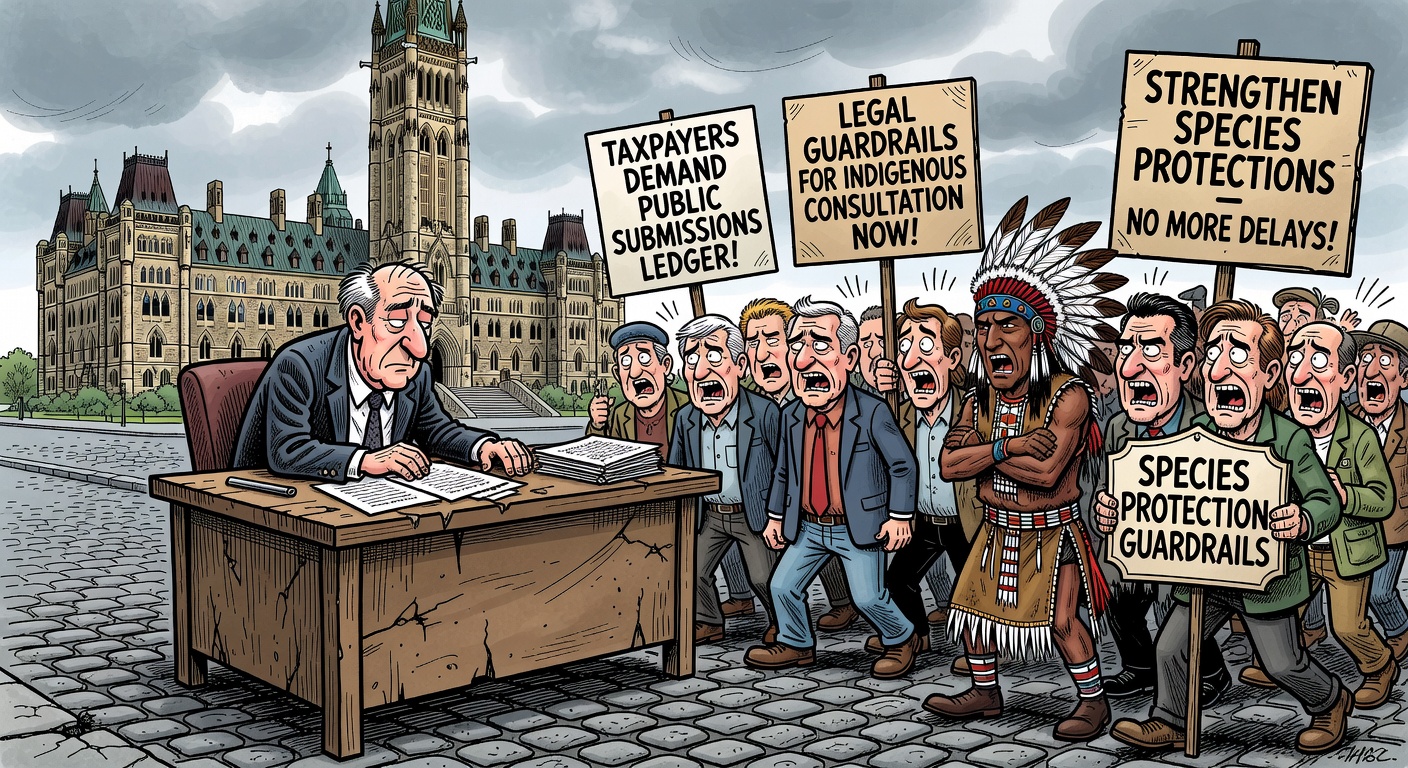
The Carney government has quietly turned a fast-track pitch into a fall accountability test.
On June 4, Ottawa announced it was extending public engagement on proposed “One Canadian Economy” regulatory reforms until July 22. The official release says the goal is to simplify and accelerate federal reviews so project review and decision timelines take no longer than one year once a proponent has supplied all required information. It also says the government has heard from thousands of stakeholders, Indigenous groups and members of the public, and that some asked for more time.
That extension matters because the government now says legislation will come in the following sitting of Parliament. In plain English, the bill moves out of the pre-summer rush and into the fall.
Speed is a legitimate objective. Canada does need to build mines, ports, pipelines, transmission lines, housing-enabling infrastructure and energy projects faster than the current maze often allows. Conservatives should not pretend every delay is noble or every duplicate review protects the public interest. A country that cannot approve and build strategic infrastructure becomes poorer, weaker and more dependent.
But the Canadian Press report shows why the backlash was not imaginary. The discussion papers reportedly floated approving major projects before reviews are complete, exempting some projects from species-at-risk protections, and moving review responsibility for pipelines, transmission lines and offshore renewable projects from the Impact Assessment Agency to the Canada Energy Regulator. Those are not housekeeping edits. They are structural changes with legal, environmental and Indigenous-consultation consequences.
The accountability problem is simple: Ottawa tried to sell speed before publishing enough guardrails. If cabinet can exempt a project from a protection rule, Canadians need to know the test, the evidence threshold, the appeal path and the public record. If one regulator replaces another, Canadians need to know whether the change improves expertise or narrows scrutiny. If Indigenous consultation is being compressed, Ottawa needs to prove the process will survive court review instead of creating another expensive delay after the ribbon-cutting press conference.
The right conservative standard is not “block everything.” It is “build with receipts.” Publish a summary of submissions. List which laws could be overridden, narrowed or reassigned. Identify which project categories benefit. Show the timeline from application to decision, including where public comment, Indigenous rights analysis and judicial-risk review fit. Then attach performance metrics so Parliament can see whether faster approvals actually produce completed projects.
Carney wants to brand himself as the competent builder after a decade of Liberal bottlenecks. Fine. The fall bill is his chance to prove it. But competence is not measured by how quickly Ottawa writes itself new discretion. It is measured by whether taxpayers, provinces, Indigenous communities, proponents and environmental watchdogs can see the rules before power is used.
The consultation clock is running. This time, Canadians should not accept “trust us” as the project plan.
- Government of Canada: Engagement period extended on proposed reforms to strengthen one Canadian economy
- Canadian Press via CityNews Halifax: Ottawa pumps the brakes on proposed changes to major project environmental reviews
- The Deep Dive: Ottawa Buys Time on Environmental Review Overhaul as Critics Close In
This article argues for transparent fast-track rules, public submission summaries and durable legal safeguards before Parliament votes on major-project review changes.