The Bill C-9 Amendment Trap: Broad Speech Law Invites Bigger Fights
The Senate rejected one rushed expansion. That does not fix the deeper problem with Ottawa’s speech-crime bill.
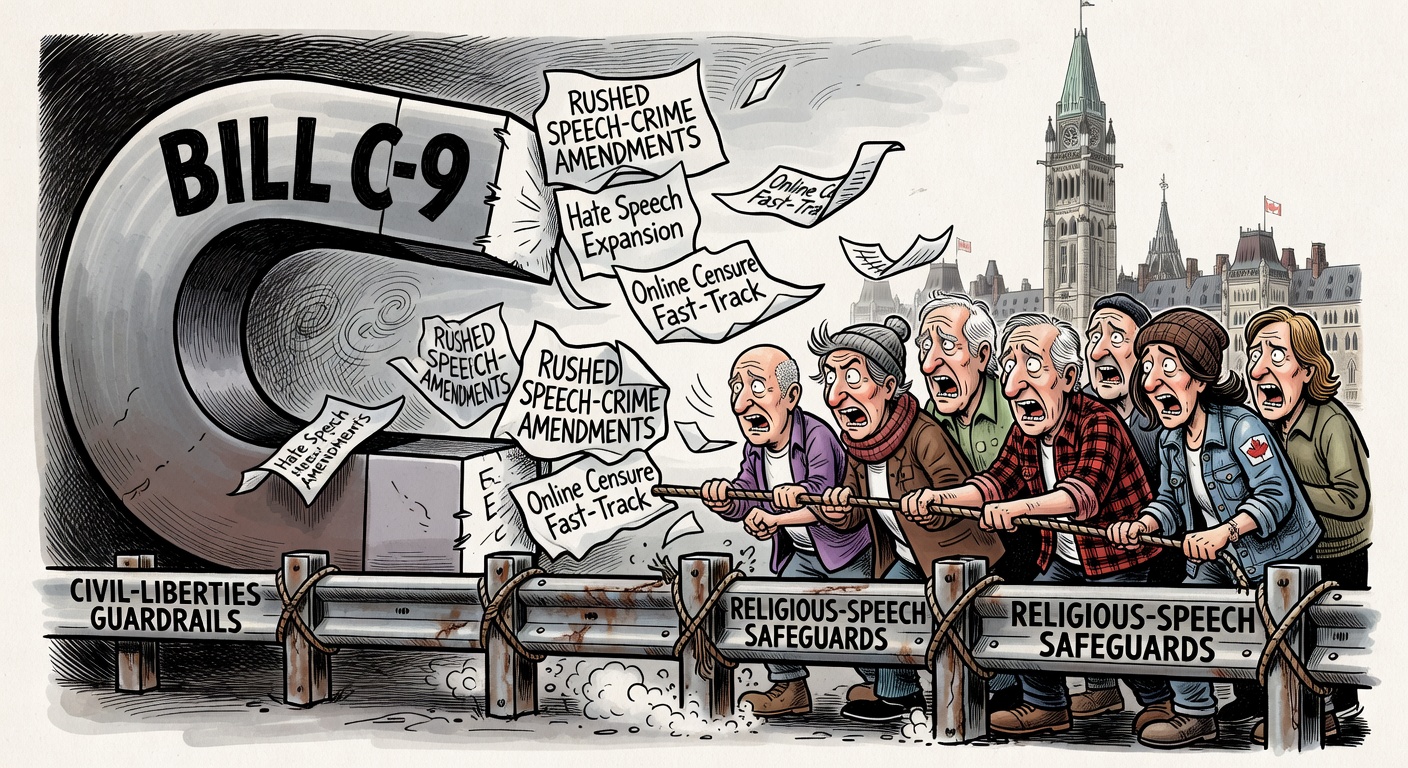
Bill C-9 just showed Canadians the danger of broad speech legislation: once Parliament opens the door, every faction wants to add its own new forbidden category.
On June 3, the Senate rejected the Human Rights Committee’s report on Bill C-9 after senators fought over a proposed residential-school-denialism offence. JURIST reported the vote at 32 to 41. The rejected amendment would have treated certain public residential-school-denialism communications as hate propaganda and carried a maximum two-year sentence on indictment.
The harms of residential schools are documented, real and central to Canada’s public record. The accountability issue here is not whether survivors deserve respect. They do. The issue is whether criminal speech law should be expanded in a rush, without the consultation and legal analysis even the government’s Senate representative said were missing.
That is the amendment trap. Liberals sell a hate-speech bill as targeted and safe. Then committee study becomes a bidding war over which additional speech deserves criminal punishment. The government opposed this particular expansion for process reasons, but it still built the vehicle.
The House-passed version of Bill C-9 already changes the Criminal Code by creating new offences around hate symbols, hate-motivated crime, and access to religious or cultural places. It also repeals the existing defence tied to opinions on religious subjects or religious texts for certain hate-propaganda offences, while adding clarification language around public-interest discussion. Supporters say that is enough. Many faith and civil-liberties critics disagree because a clarification is not the same as a clear good-faith defence.
A conservative accountability standard should be strict but fair. Threats, intimidation, vandalism and violence against synagogues, mosques, churches, temples, schools and community centres should be prosecuted. Canadians should be protected from real hate crimes. But criminal law should punish conduct and clearly defined incitement, not leave ordinary religious, political, academic or historical debate dependent on prosecutorial reassurance.
Carney’s government now has a choice. It can claim victory because one Senate amendment failed, or it can admit Bill C-9 still needs narrower drafting. Restore a good-faith religious-speech safeguard. Publish the legal analysis. Separate access-to-worship protections from broader speech offences. And stop telling Canadians to “trust us” when the Senate just proved how quickly a broad speech bill can attract new criminalization campaigns.
- JURIST: Canada Senate rejects proposal to include residential school denialism offense in hate crime bill
- Senate of Canada: Debates, Issue 78, June 3, 2026
- Parliament of Canada: Bill C-9, Combatting Hate Act, as passed by the House of Commons
- The Catholic Register: Religious speech protection in Bill C-9 fails to pass Senate
This article argues for narrower criminal drafting and stronger civil-liberties safeguards. It does not deny documented residential-school harms or argue against prosecuting violence, threats, vandalism or intimidation.