If Privacy Tools Leave Canada, Bill C-22 Is Already Failing
Ottawa says Canadians should trust its lawful-access bill. Privacy services are answering with the one warning governments understand: exit risk.
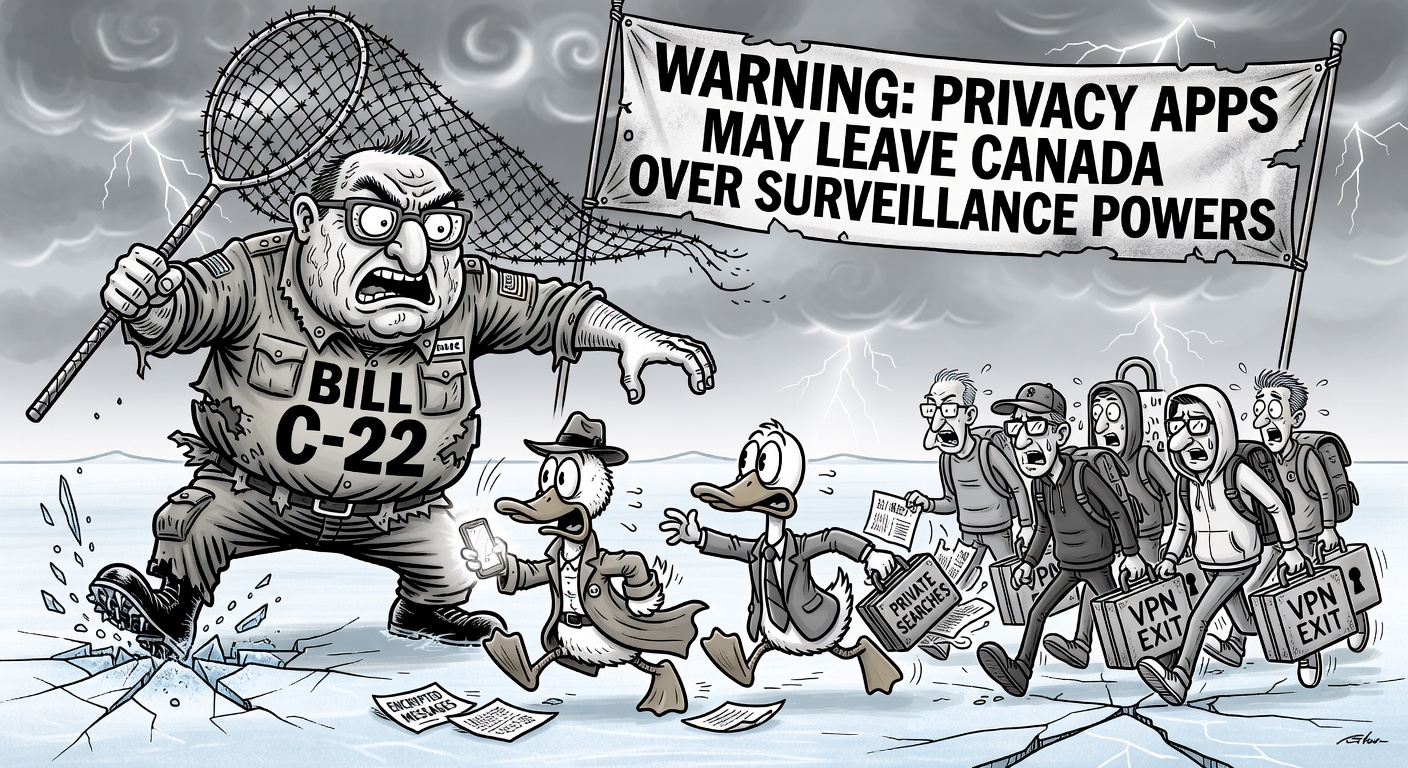
Bill C-22 is no longer just a committee fight about wording. It is becoming a market signal. If the law is vague enough that privacy companies are warning they may limit, remove, or rethink Canadian service, then Ottawa has already failed the confidence test.
Global News reported June 4 that Signal, NordVPN, Windscribe, DuckDuckGo’s VPN service and other providers have raised alarms about the bill. Their concern is straightforward: a lawful-access regime that can compel electronic service providers to build and maintain technical capabilities for police and CSIS access could make privacy-first products legally unsafe to offer in Canada.
That refusal is the accountability problem. One part of C-22 deals with requiring telecoms to confirm whether they provide service to a person, account or number of interest. The other part reaches toward the architecture of digital services themselves. Those are not the same question. They deserve separate votes, separate guardrails and separate public scrutiny.
The government insists the bill does not create backdoors, direct government access or mass surveillance. Good. Then write that protection so clearly that encrypted messaging, VPN and privacy-browser providers do not have to guess whether compliance means weakening their products, retaining more data, or building capabilities their users deliberately chose them to avoid.
Conservatives should be serious about lawful warrants, child exploitation investigations, terrorism cases and organized crime. But being serious about policing does not mean handing Ottawa a blank technical order book and hoping future ministers behave carefully. Public safety powers work best when they are narrow, reviewable and trusted.
The standard should be simple: no compelled encryption weakening; no secret capability orders without strict judicial authorization; no metadata fishing expeditions; no indefinite retention mandates by stealth; annual transparency reporting; independent audits; and a sunset clause forcing Parliament to revisit the powers after real-world evidence is available.
If Carney’s Liberals cannot accept those limits, Canadians should ask why. If the tools people use to protect journalists, dissidents, domestic-abuse survivors, businesses and ordinary families become harder to access, that is not a privacy fringe issue. It is a national trust issue. Bill C-22 should be split and rewritten before Canada becomes a place privacy services cannot responsibly serve.
- Global News: Companies warn services could leave Canada over Bill C-22
- Canadian Press via CityNews: Liberals say they won’t split off controversial section of lawful-access bill
- Parliament of Canada LEGISinfo: Bill C-22, Lawful Access Act, 2026
- Canadian Civil Liberties Association: Civil-society letter opposing Bill C-22
This article argues for narrower statutory guardrails, a split bill and transparent oversight. It does not claim the bill has already forced any listed company to leave Canada.