Carney’s AI Strategy Starts With a Spending and Insider Test
Mark Carney is promising “trusted AI,” more public AI adoption and another federal strategy. Canadians should ask who gets the money, who writes the rules, and who audits the risks.
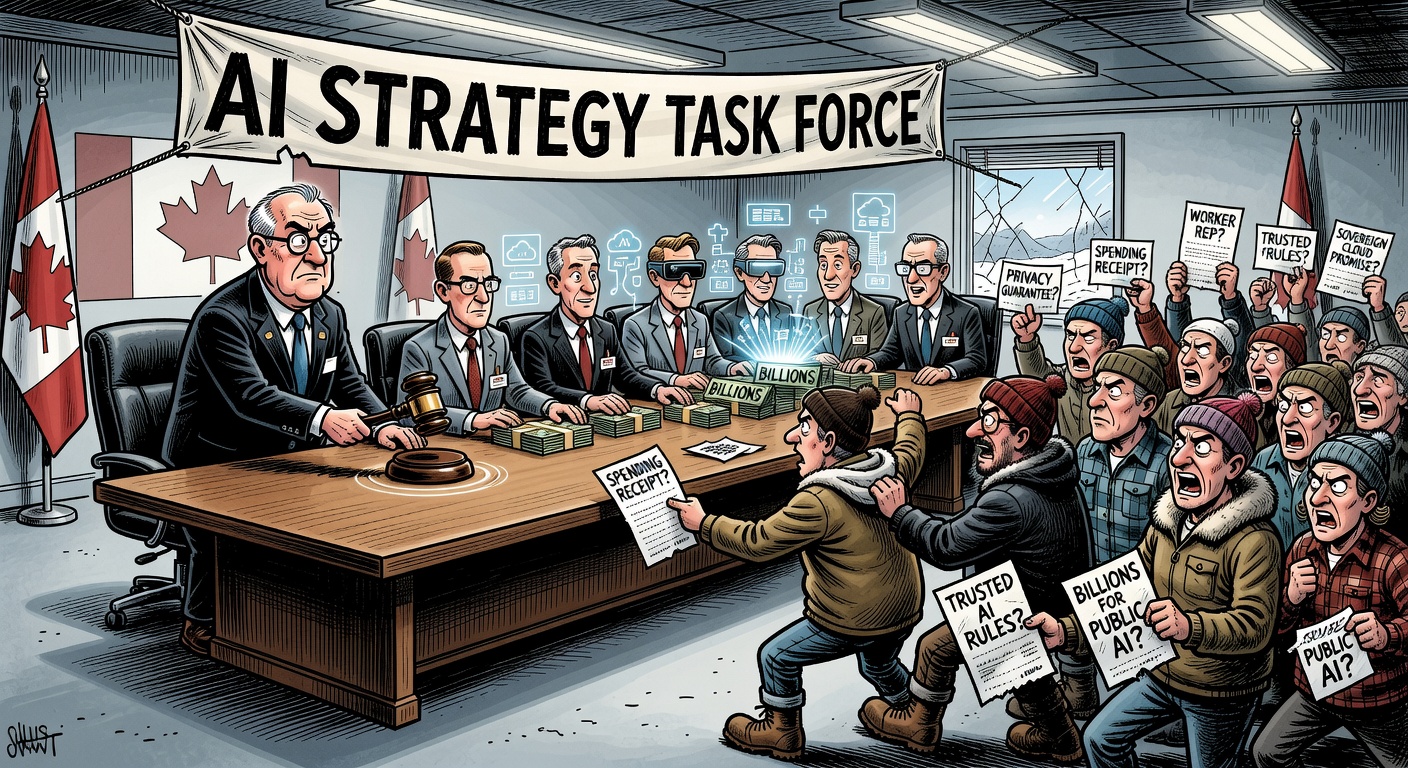
Prime Minister Mark Carney’s new AI Strategy Task Force is being sold as a race-to-win announcement. CBC reported Thursday that Ottawa says the task force is meant to ensure Canada has the tools it needs to compete globally in artificial intelligence. That sounds ambitious. It also sounds expensive, regulatory and very convenient for the people already closest to government technology policy.
The public-money side is not small. The Prime Minister’s Office says Budget 2024 committed $2.4 billion to Canada’s AI sector, including $2 billion for computing capacity and infrastructure. The same release says Budget 2025 commits another $925.6 million over five years for large-scale public AI infrastructure. Before ministers celebrate another innovation headline, taxpayers deserve a plain ledger showing where those billions go, which companies qualify, and what Canada owns at the end.
The regulatory side also deserves scrutiny. The government says the new strategy will examine public and private sector adoption, commercialization, safety and security, public trust, and the infrastructure needed for AI. Those are legitimate subjects. But “trusted AI” can become a blank cheque for Ottawa to define acceptable systems, preferred suppliers and approved uses while ordinary Canadians get vague assurances instead of enforceable guardrails.
Carney’s government is also pursuing a complementary sovereign-cloud strategy, backed by $68.3 million over four years in Budget 2025, according to CBC. That makes the accountability question sharper, not softer. If Canada is building sovereign AI on cloud infrastructure, Canadians should know where data is stored, which foreign legal regimes may reach it, and whether federal departments are locking themselves into a handful of dominant vendors.
Then there is the composition problem. Sustainable Jobs Canada welcomed the AI announcement, but warned that the task force appears to lack direct representation from workers, unions, civil society and Indigenous communities while including major AI, data-centre and tech-sector figures. Conservatives do not need to adopt every labour critique to see the problem: when government builds a subsidy-and-regulation table, the people with seats at that table can shape the market before taxpayers ever see the fine print.
A serious AI agenda would not begin with panic about competition and end with “trust us.” It would publish procurement rules, conflict disclosures, privacy impact assessments, data-location requirements, labour-market impact analysis and independent audit triggers. It would separate genuine innovation from corporate welfare. It would make sure public-sector AI adoption improves service rather than creating new black boxes for immigration, benefits, policing or hiring decisions.
AI may be important to Canada’s future. That is exactly why Carney’s plan needs hard public receipts now. Billions in spending, new rules for trust, sovereign-cloud promises and tech insiders around the table are not details. They are the story.
- CBC News: Carney government launches AI strategy task force
- Prime Minister of Canada: Prime Minister Carney launches AI Strategy Task Force
- Innovation, Science and Economic Development Canada: Minister Solomon announces new AI Strategy Task Force
- Sustainable Jobs Canada: Response to PM Carney’s AI Strategy Task Force
This article argues for public spending, privacy, procurement and representation safeguards. It does not claim AI investment is inherently illegitimate; it argues that large public AI spending and regulation need visible accountability.