Carney’s Guilbeault Exit Test
When a Liberal climate architect says the Liberal plan is being dismantled, Canadians deserve a before-and-after ledger.
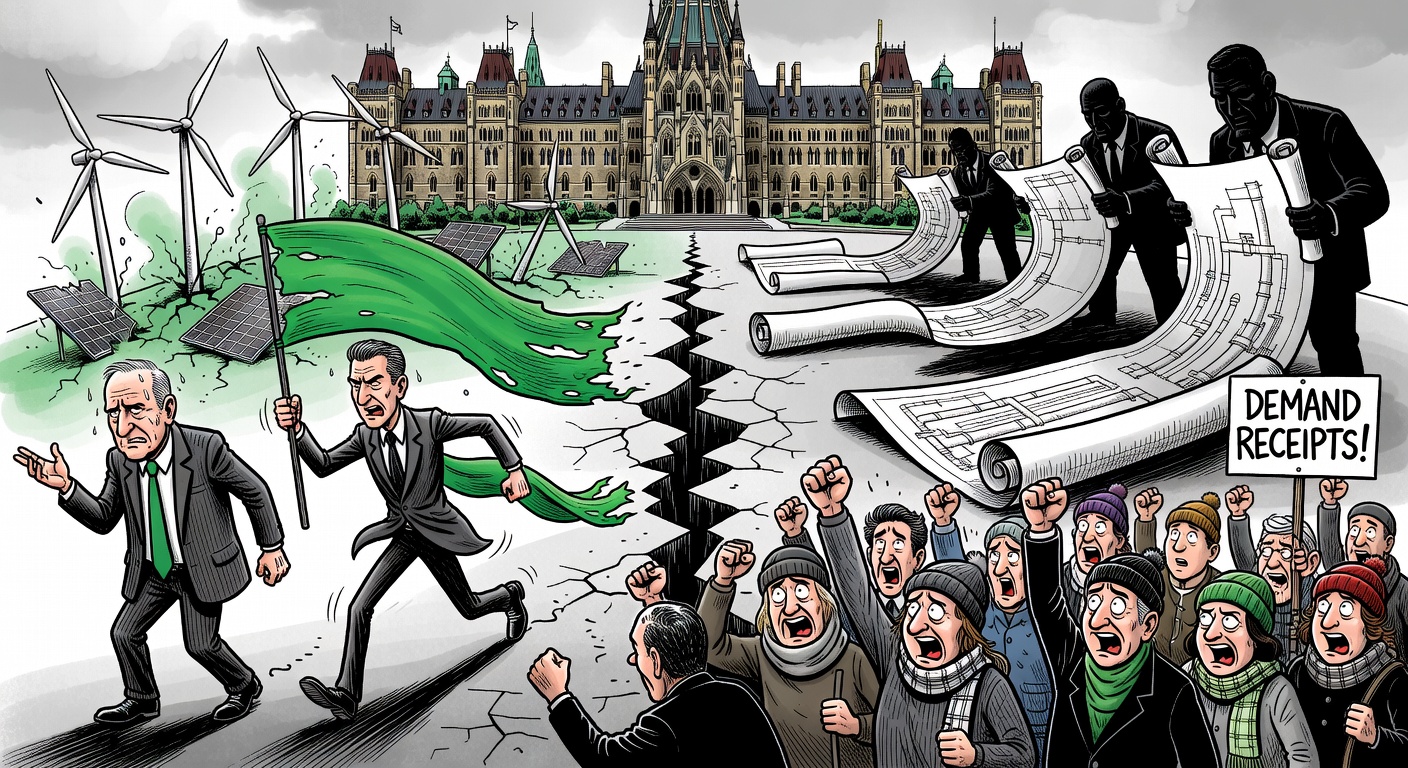
Steven Guilbeault’s departure is not just another Ottawa retirement story. It is a receipt for the central contradiction in Mark Carney’s government: the Liberals want credit for years of climate promises while quietly trying to reposition themselves as pragmatic energy managers.
Guilbeault announced on May 27 that he will leave federal politics later this summer, after nearly seven years as the MP for Laurier—Sainte-Marie and as a cabinet minister. His explanation was polite, but politically loaded. He said he would keep working on environmental protection and climate action “in another way.”
The real accountability point is what Guilbeault listed on the way out. He said major parts of the Liberal climate architecture had been eliminated or were at risk: consumer carbon pricing, the zero-emission vehicle standard, the oil-and-gas emissions cap, the fossil-fuel-subsidy framework, and clean-electricity regulations. That is not a Conservative attack ad. That is a former Liberal environment minister describing the direction of a Liberal government.
Carney’s defenders will say this is evidence of moderation: a new prime minister adapting to affordability pressure, provincial resistance and a changed economic reality. Fine. Governments are allowed to change course. But they are not allowed to ask for applause in both directions without showing the bill.
For years, Liberals told Canadians that these policies were essential, economically manageable and morally urgent. Businesses made investment decisions around them. Provinces fought over them. Consumers paid attention to promised rebates, mandates and timelines. If the new Carney line is that some of those tools were too costly, too blunt or too politically broken, then the government should say so clearly.
The accountability test is simple: publish a before-and-after table. For each major climate rule or tax, show the original promise, current status, legal authority, expected cost, expected emissions impact, affected industries, provincial implications, and replacement policy. If a measure is cancelled, say what fills the gap. If it is delayed, give the new date. If it survives only as a slogan, admit that too.
This is especially important because Carney is trying to occupy two lanes at once. He presents himself as a climate-finance technocrat who understands transition risk, while also promising a more aggressive national energy strategy. That balancing act may be politically useful, but voters should not have to decode it through caucus leaks, ministerial exits and carefully worded speeches.
Conservatives should not pretend Guilbeault’s resignation proves every climate policy was wrong. That is too easy. The stronger point is transparency. If Liberals built a costly policy machine and are now dismantling it piece by piece, Canadians deserve to know which costs remain, which promises were abandoned, and who inside the government objected.
Carney asked voters to trust his competence. The Guilbeault exit test asks for something more concrete: a public ledger before another round of green branding, energy slogans and taxpayer-backed transition spending.
- Le Monde: Canada: Resignation of environmental figure Steven Guilbeault weakens Prime Minister Carney — June 1, 2026
- iPolitics: Steven Guilbeault steps down as federal MP, says climate action is being dismantled — May 27, 2026
- CHCH / The Canadian Press: Steven Guilbeault resigns, will inform Liberal caucus Wednesday — May 27, 2026
- Journal de Montréal: Guilbeault reste libéral et quittera cet été — May 27, 2026
This article criticizes federal climate and energy-policy accountability. It treats Guilbeault’s claims as claims requiring a public government ledger, not as proof that any single replacement policy is automatically better or worse.