Ottawa’s AI Benefits Black Box Needs Sunlight Before It Touches Seniors and Workers
When government says artificial intelligence will make benefits delivery more efficient, taxpayers should ask the conservative question first: where are the receipts?
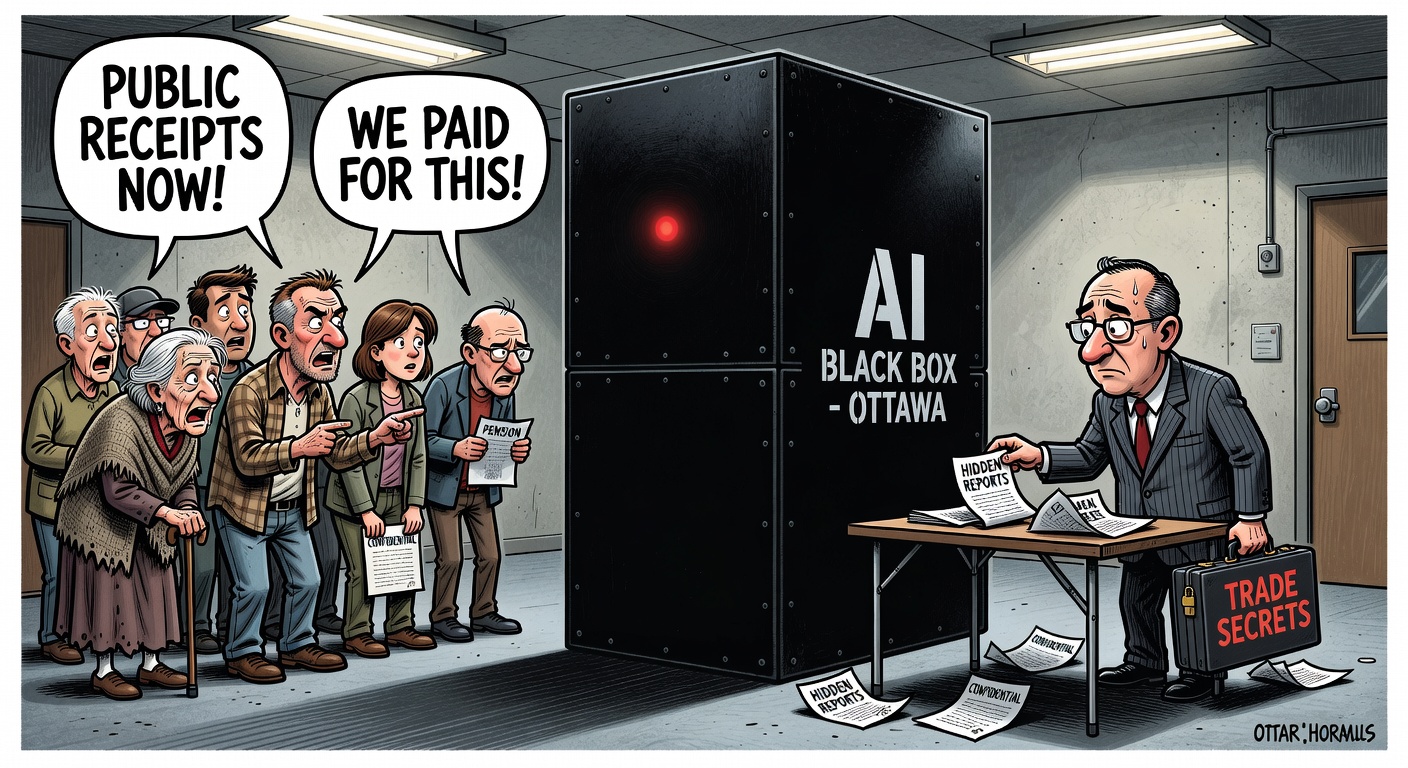
Employment and Social Development Canada is rebuilding the machinery behind Old Age Security, Employment Insurance and the Canada Pension Plan. Ottawa’s own Benefits Delivery Modernization page says OAS is the first benefit moving into the new delivery program and that the government will use outside contractors with transformation and IT experience.
That alone deserves scrutiny. These are not novelty apps. They are lifelines for seniors, laid-off workers and Canadians who paid into CPP for decades. A mistake in this system is not a bad user experience. It can mean a missed payment, a wrongful delay, or a citizen forced to fight a machine no one can explain.
Ricochet reported on May 25 that ESDC licensed NuEnergy.ai’s Machine Trust Platform for the modernization program, beginning with a $1.3 million one-year contract in May 2024 that was later amended to more than $3 million. NuEnergy describes its platform as a way to create AI “trust guardrails,” manage accountability and maintain transparent trust scores.
The problem is that the transparency stops right where the public interest begins. Ricochet says documents obtained through access-to-information requests were heavily withheld, including 232 of 251 pages, with the Year 1 final report almost entirely hidden to protect commercial interests. ESDC told Ricochet the platform assessed “knowledge retrieval” tools, such as chatbots that answer staff questions about benefits rules, and did not itself make automated decisions.
That distinction matters. Nobody should claim this proves Ottawa is already letting AI deny pensions or EI claims. But it also does not settle the issue. A chatbot that gives staff wrong guidance can still shape real-world decisions. A risk platform that greenlights future tools can become the gatekeeper before eligibility, fraud detection or appeals systems ever reach the public.
Treasury Board’s Algorithmic Impact Assessment is supposed to be the mandatory risk tool for automated decision systems. Ricochet reports ESDC did not conduct one for the Machine Trust Platform because the platform assesses other AI tools rather than directly deciding cases. That may fit the letter of the rule, but it exposes a loophole: who audits the auditor before it influences the next generation of benefit delivery?
A responsible government would publish the contract amendments, deliverables, redacted ATIP rationale, use cases, test results and plain-language risk assessments before any AI-assisted process touches eligibility, appeals, fraud flags or service access. If the answer is “trust us, the vendor says it measures trust,” that is not modernization. It is outsourcing accountability into a black box.
Conservatives should support better service and faster payments. But efficiency is not an excuse to hide the machinery. Seniors and workers do not owe Ottawa blind faith. Ottawa owes them proof.
- Ricochet: Inside the black box reshaping Canada’s benefits system
- Government of Canada: Benefits Delivery Modernization Programme
- Government of Canada: Algorithmic Impact Assessment tool
- NuEnergy.ai: AI Governance Solutions and Machine Trust Platform description
This article does not allege that AI is currently denying federal benefits. It argues that AI governance tools used inside benefits modernization should be transparent, independently audited and publicly defensible before they influence service or eligibility decisions.