The Backlog Bill: PBO Says 74,000 Failed Refugee Claimants Remain in CBSA Inventory
Ottawa’s asylum and removals backlog now has a clearer price tag. Canadians deserve a public dashboard, not another vague promise that the system is under control.
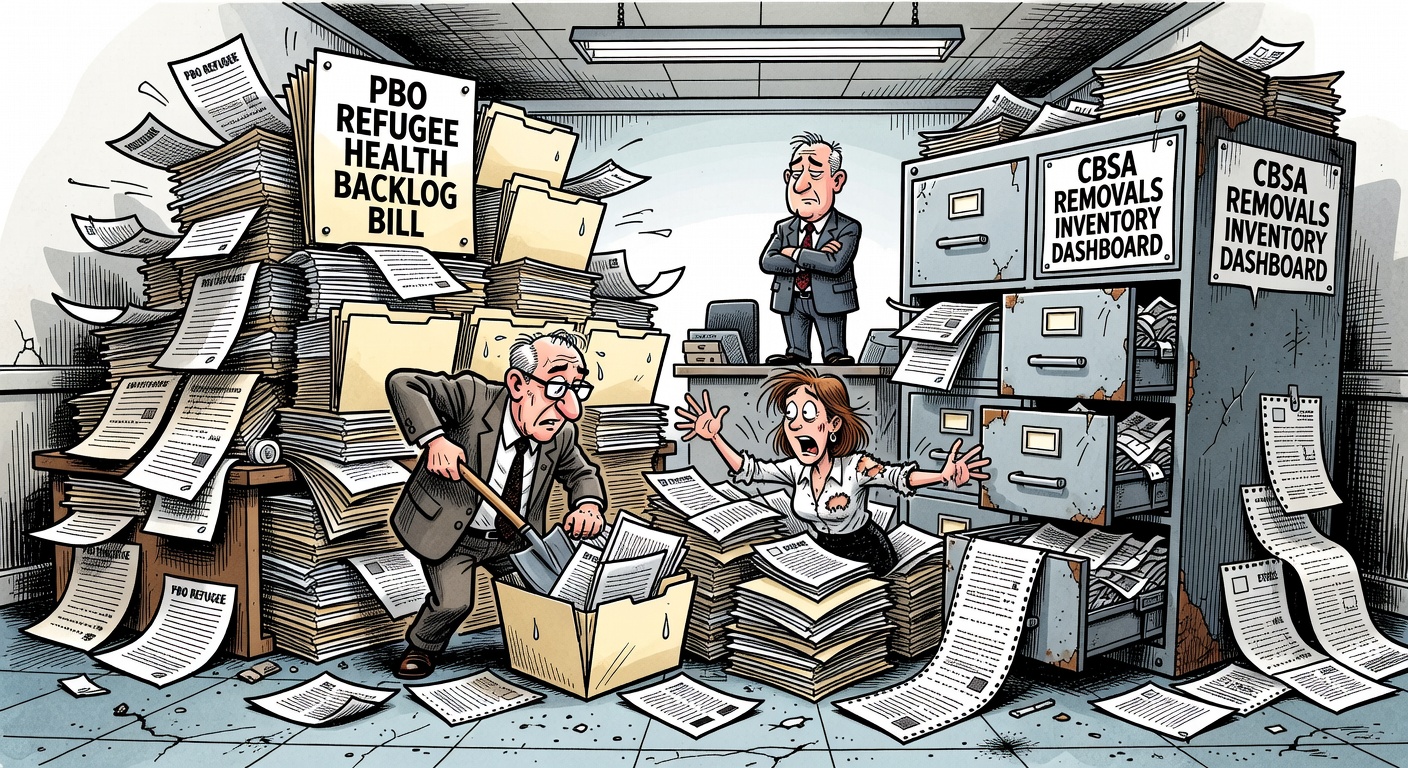
The Parliamentary Budget Officer has put hard numbers behind a problem Ottawa prefers to describe in soft bureaucratic language: the asylum system is backlogged, the removals system is clogged, and federal health costs keep rising while Canadians wait for basic competence.
The new PBO review of the Interim Federal Health Program says total IFHP costs continue to increase because of elevated intake levels, persistent backlogs and rising health-care costs. It also says that, as of December 2025, more than 300,000 asylum claimants remained in the inventory of cases pending adjudication, with roughly 65 per cent in the system for more than a year after referral to the Immigration and Refugee Board.
That is not an argument against legitimate refugees. Canada should protect people who qualify for protection. It is an argument against Liberal system design that lets unresolved claims and failed claims pile up while taxpayers absorb the cost and enforcement agencies chase the backlog from behind.
The fiscal exposure is not abstract. PBO estimates that a one-month increase in asylum processing times could increase annual federal IFHP costs by up to $72 million in 2026-27, given the current volume of claims in the system. That means delay has a price tag. Every month of extra processing time is not just paperwork; it is federal spending, provincial pressure, and a weaker signal that Canada’s rules are actually enforced.
Ottawa’s preferred answer has been a co-payment model that PBO estimates will reduce federal IFHP costs by $217 million annually by 2029-30. But shifting some costs at the point of care does not fix the pipeline. If claims take too long to decide, if failed claims sit in removal limbo, and if thousands are in a wanted inventory, the government has not solved the problem. It has moved one part of the bill while leaving the machine running.
Conservatives should insist on a simple accountability standard: publish the dashboard. Canadians should see the failed-claimant inventory by status, average time from rejection to removal, IFHP cost by claimant stage, monthly intake, monthly removals, and the estimated cost of each additional month of delay.
Mark Carney inherited the Liberal backlog, but he owns it now. A serious government can be compassionate and orderly at the same time. It can protect real refugees while removing people who do not qualify. It can fund necessary care while proving that costs are controlled.
What it cannot do is ask Canadians to trust another expensive black box. The PBO has shown the bill. Now Ottawa needs to show the plan.
- Parliamentary Budget Officer: Reviewing the Administrative and Fiscal Impacts of the Interim Federal Health Program
- Unpublished / National Post news feed: Canada spent $722M on health care for asylum seekers in 2024-25: PBO
- Canada Border Services Agency: Removals from Canada
This article criticizes federal processing, spending transparency and removals management. It does not blame refugees or claimants for using programs Parliament and cabinet created.