China Reset, Closed Questions
Trade with China is not the scandal. A strategic reset handled through controlled access and vague assurances is.
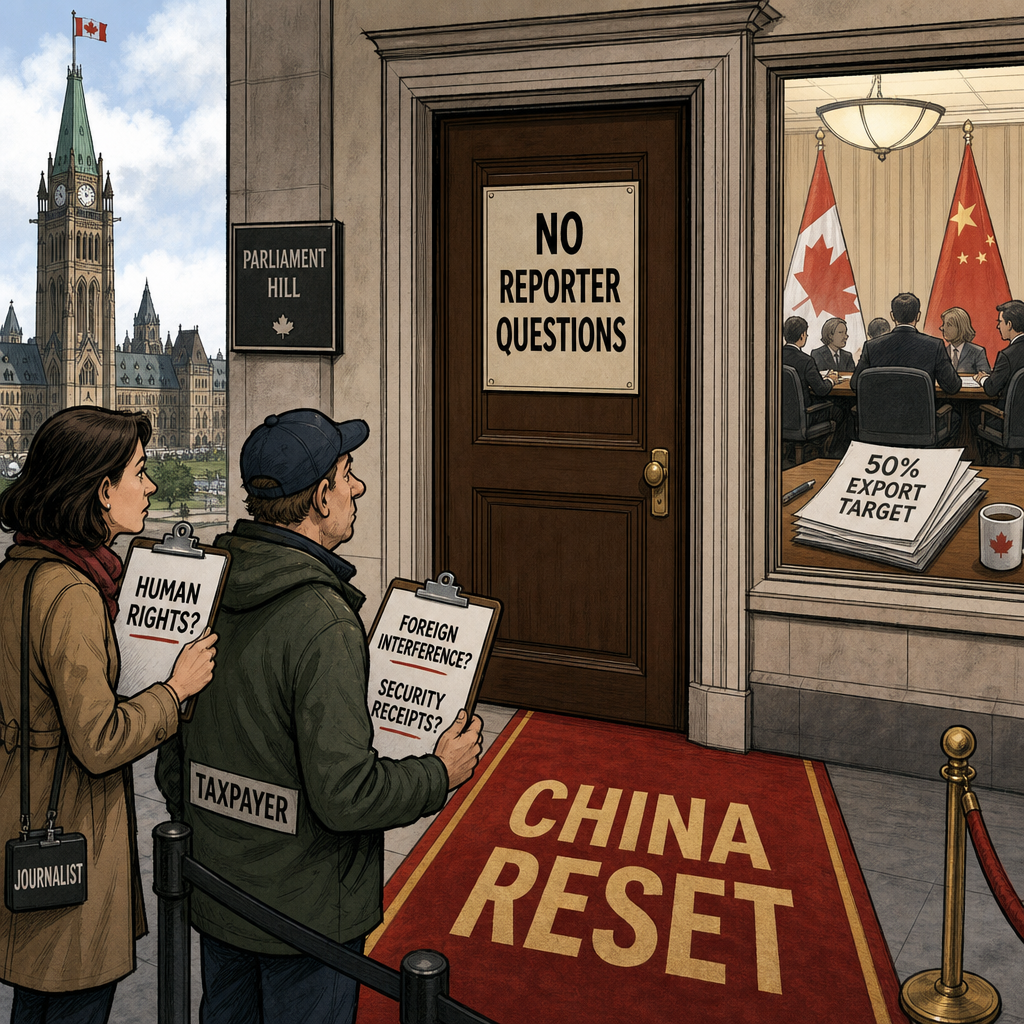
Wang Yi’s Ottawa visit gave Canadians a revealing snapshot of Mark Carney’s China reset: big trade promises, carefully managed optics, and too few public answers.
Global Affairs Canada announced that Wang’s trip would be the first bilateral visit to Canada by a Chinese foreign affairs minister since June 2016. The purpose, Ottawa said, was to advance “pragmatic engagement” and implement the updated Canada-China Strategic Partnership — including trade, investment and global security.
That is serious business. It is also exactly why the public should have seen serious accountability. Instead, Global News reported that Canadian journalists were not permitted to ask questions during Foreign Affairs Minister Anita Anand’s remarks with Wang. Later, when Wang met Prime Minister Carney, a small group of journalists could briefly record the handshake, but neither leader made remarks and no questions were allowed.
That matters because the substance is not small. Anand publicly recommitted Canada to growing the relationship “responsibly” and to increasing exports to China by 50 per cent by 2030 while safeguarding economic and national security interests and values. Global reported that her public remarks made no explicit mention of human rights. To be fair, Global Affairs Canada’s later readout says the bilateral meeting covered consular issues, foreign interference, forced labour and human rights. Good. Then show Canadians more than a readout.
The January joint statement from Carney’s Beijing visit already committed Canada and China to a new Strategic Partnership. It listed economic and trade cooperation, energy dialogue, cultural exchange, climate cooperation, public-security cooperation and a law-enforcement working group. That is not a symbolic reset. It is a broad government-to-government architecture involving trade, security, policing channels and diplomatic access.
A conservative accountability standard is straightforward: engage where Canada benefits, but publish the guardrails. Did Canada raise foreign interference in concrete terms? Did it demand protection for Chinese-Canadian communities facing intimidation? What limits govern law-enforcement cooperation with Beijing? What safeguards apply before sensitive technology, energy, research or security channels are expanded? What, exactly, does Ottawa mean when it says values are being protected?
Carney and Anand are entitled to pursue markets for Canadian exporters. Farmers, energy producers and manufacturers should not be trapped by Liberal mismanagement of trade relationships. But Canadians are also entitled to know whether economic access is being purchased with silence, ambiguity or private assurances.
The problem is not that Ottawa talked to China. The problem is that it treated a major strategic reset like a managed photo opportunity. If the government wants public trust, it should stop hiding behind the phrase “responsible engagement” and publish the receipts.
- Global News: Anand calls China ties “significant,” says Canada must safeguard “values”
- Global Affairs Canada: Minister Anand to meet with Wang Yi
- Global Affairs Canada: Minister Anand meets with Wang Yi
- Prime Minister of Canada: Joint statement of the Canada-China Leaders’ Meeting
- CityNews Vancouver: Carney meets Chinese Foreign Minister
This article argues for public accountability around Canada-China engagement. It does not allege unlawful conduct by any named Canadian official.