Carney Dropped Section 13. Now Show Us the Online-Harms Receipts
Dropping Trudeau’s speech-complaint model is a start. It is not a blank cheque for the next online-safety regulator.
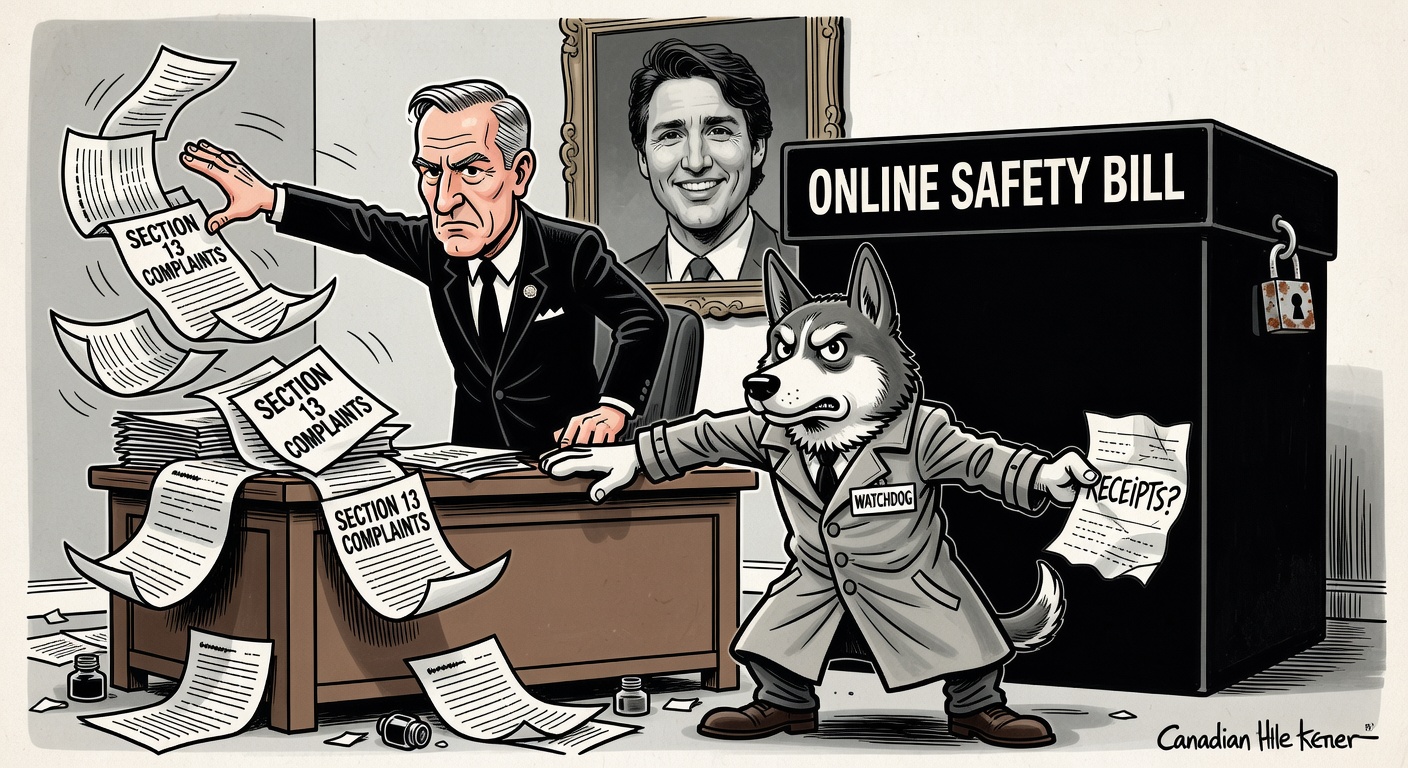
Mark Carney’s government has done something useful: it appears to have admitted, quietly, that Justin Trudeau’s Section 13-style online-hate complaint model was politically and constitutionally toxic.
National Post reported Thursday that the government is abandoning the Trudeau-era effort to reintroduce Canadian Human Rights Act complaints for online hate speech. Asked whether Ottawa intended to bring that section back into the Act, a spokesperson for Justice Minister Sean Fraser answered “no.” That is not a minor wording change. It is a retreat from one of the most controversial pieces of Bill C-63.
Bill C-63 was not just a child-safety bill. The government’s own 2024 backgrounder said it would create a new Online Harms Act, a Digital Safety Commission and a Digital Safety Ombudsperson, while also changing the Criminal Code and the Canadian Human Rights Act. One listed component was explicit: changes to the CHRA to let individuals and groups file complaints against people who post hate speech online. The same backgrounder said the bill would reinstate an “improved section 13” and define a new discriminatory practice of communicating hate speech online.
That history matters because Liberals have a habit of selling broad state power with narrow, sympathetic examples. Protecting children from exploitation, bullying and self-harm is a legitimate public goal. Conservatives should say that plainly. But a child-protection goal does not justify building a speech-policing machine that can drag ordinary Canadians before human-rights processes over political, religious or cultural expression.
Carney deserves no parade for dropping a bad tool his own party tried to revive. The accountability test is what comes next. Fraser told the justice committee that the coming online-harms bill should not be expected to be a “simple copy and paste” of the old legislation. Fine. Then publish the guardrails before asking Canadians to trust another regulator.
Ottawa should answer basic questions now. Will the new bill regulate platforms only, or users too? Will lawful-but-awful speech be targeted by bureaucratic pressure even if it avoids direct CHRA complaints? What appeal rights will Canadians have? What data will platforms have to hand over? Will the Digital Safety Commission survive in another form? Will parliamentary committees get enough time to split child-protection measures from speech-control measures?
The Department of Justice’s current legislation page lists Bill C-9, Bill C-14 and Bill C-16 among House bills in the 45th Parliament, but no replacement online-harms bill is yet listed there. That means there is still time to get this right.
The standard should be simple: punish crimes, protect kids, preserve free expression, and keep regulators on a short leash. If Carney wants credit for learning from Trudeau’s mistake, he can earn it by releasing a narrower bill with clear limits, public reporting, independent review and no backdoor revival of Section 13 by another name.
- National Post via Unpublished.ca: Carney government abandons Trudeau-era effort to allow human rights complaints on online hate speech
- Government of Canada: Bill C-63 / Online Harms Act backgrounder
- Canadian Heritage: Proposed Bill to address Online Harms
- Department of Justice Canada: Legislation introduced by the Minister of Justice
This article criticizes the policy design and accountability risks of online-safety legislation. It does not argue against criminal enforcement for threats, exploitation, harassment, or child sexual abuse material.