Bill C-14’s Bail-Reform Test: Show the Repeat-Offender Receipts
Tougher bail language is not the same as safer streets. Ottawa owes Canadians measurable results.
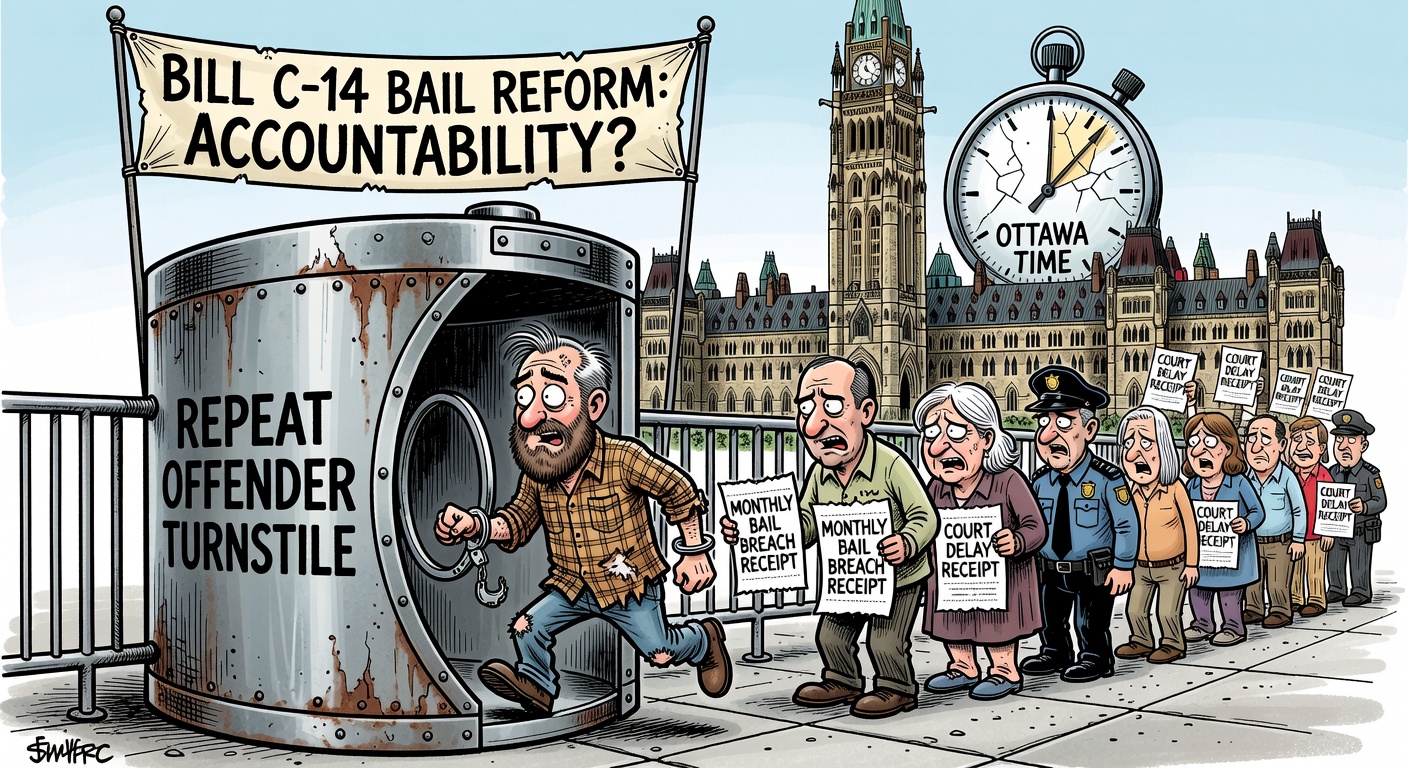
Bill C-14 is the kind of file Liberals now want Canadians to notice. After years of public anger over repeat violent offenders, auto theft, extortion and bail breaches, Ottawa is trying to sound tough on crime. Fine. But a tougher press release is not a public-safety result.
The bill, formally the Bail and Sentencing Reform Act, has reached a key Senate stage. Senate debate on May 27 recorded consideration of the Legal and Constitutional Affairs Committee’s seventh report on Bill C-14, with amendments and observations. The Senate order paper then listed third reading of the bill, as amended. That means the political promise is moving from slogan to implementation test.
The bill text says it would change bail and sentencing rules across the Criminal Code, the Youth Criminal Justice Act and the National Defence Act. Its summary points to expanded reverse-onus rules and related measures for serious files including organized-crime auto theft, home invasion and break-and-enter, human trafficking, human smuggling, violent extortion and choking or strangulation-related assault or sexual assault. It also adds reporting language: the justice minister must prepare an annual report on the state of judicial interim release in Canada.
That annual report is a start, but it is not enough. Canadians do not need one polished document long after the damage is done. They need regular, plain-language metrics that show whether the reforms are actually reducing repeat violence and whether the system has the capacity to enforce them.
Here is the receipt test. Ottawa should publish monthly national and provincial numbers for bail breaches, repeat violent charges by accused persons already on release, time to bail hearings, time to trial, remand populations, case stays linked to delay, and victim-notification failures. The data should also separate categories that Bill C-14 specifically targets, including violent extortion, auto theft, home invasion and human trafficking. If the reforms work, the government should be able to prove it. If they merely shift pressure onto courts and provincial jails, Canadians should know that too.
That is not a call to ignore civil liberties. Bail still protects the presumption of innocence, and Senate debate reflected warnings that tighter rules can increase pretrial detention, strain courts and produce unequal effects on Indigenous Peoples, Black Canadians, poor Canadians and people with mental-health needs. Conservatives should be honest about that. The answer is not softer treatment for dangerous repeat offenders; it is tighter law plus better evidence, faster courts, adequate detention capacity, competent prosecution and transparent review.
Carney’s Liberals inherited a public-safety credibility problem because Canadians watched governments minimize disorder until the political cost became too high. Bill C-14 may be necessary. It may even help. But nobody should hand Ottawa a victory lap before the numbers arrive.
The standard is simple: protect victims, respect due process, measure outcomes, and publish the receipts. Anything less is just another Liberal repositioning exercise.
- Parliament of Canada LEGISinfo: Bill C-14, 45th Parliament, 1st session
- Parliament of Canada: Bill C-14 third-reading text
- Senate of Canada: Debates, Issue 75, May 27, 2026
- Senate of Canada: Order Paper and Notice Paper, Issue 76, May 28, 2026
- Department of Justice Canada: Charter Statement — Bill C-14
This article argues for measurable public-safety outcomes and transparent implementation. It does not call for ignoring due process or the presumption of innocence.