Carney Announced Defence Procurement Inside a CANSEC Bubble
When Ottawa is redesigning defence procurement and steering massive public dollars, Canadians deserve the widest possible scrutiny — including from journalists the defence industry does not like.
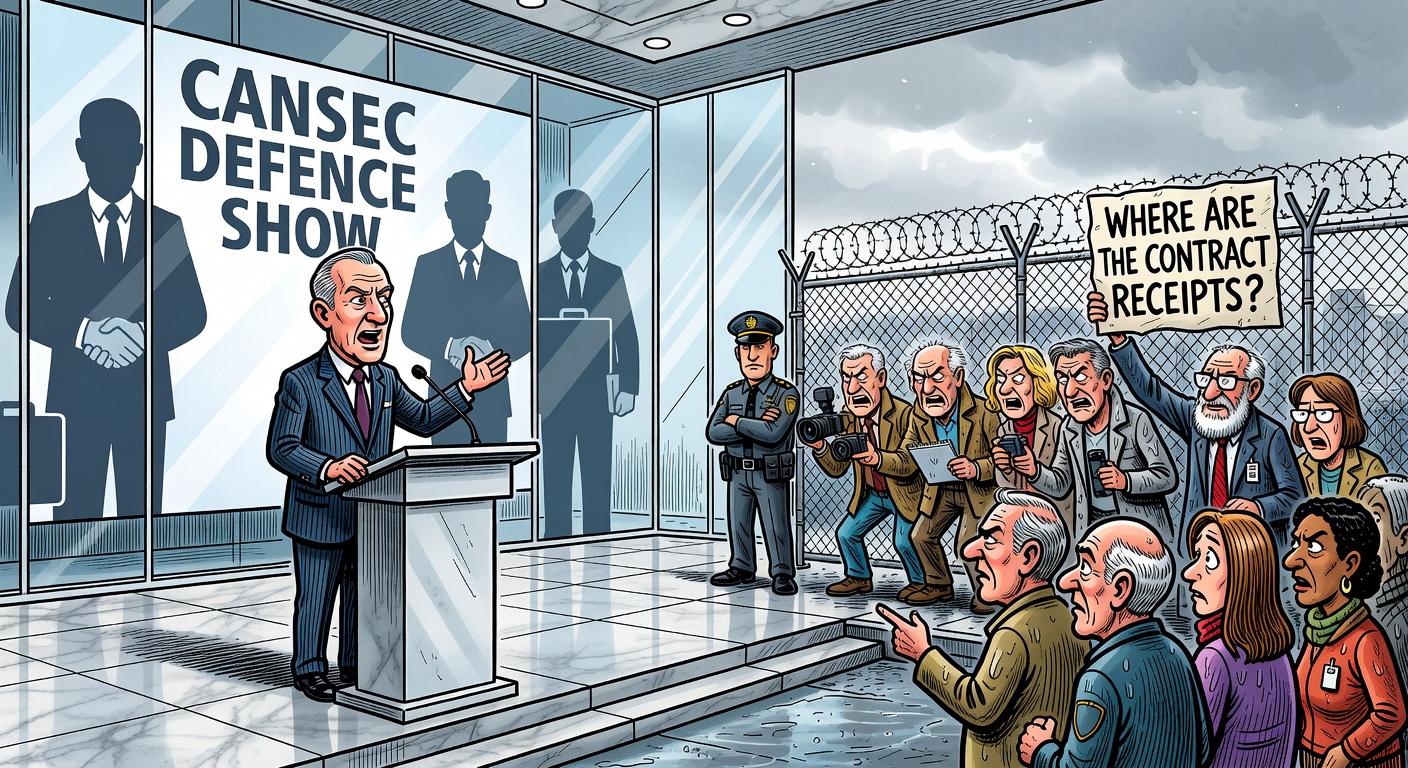
Mark Carney chose CANSEC, Canada’s premier defence-industry trade show, as the stage for a major procurement message. The Prime Minister’s Office said Canada had entered negotiations to procure Saab’s GlobalEye airborne early-warning aircraft, while also promoting the Defence Investment Agency, the Defence Industrial Strategy and a faster approval regime for defence industry projects.
There is a legitimate national-security case for rebuilding Canada’s military capacity. Conservatives should not pretend procurement speed is automatically bad. The problem is trust. The same government asking taxpayers to accept speed, scale and industry partnership also chose an industry-controlled venue where independent media reported being denied accreditation.
The Maple reported that CANSEC, hosted by the Canadian Association of Defence and Security Industries, refused accreditation to multiple independent journalists and outlets, including The Maple itself. CANSEC’s own media rules say new applicants are reviewed case by case, decisions are final, and organizers reserve the right to deny accreditation because the event is private. That may be CADSI’s legal right. It is still a terrible accountability look when cabinet ministers and the prime minister use that private venue to sell public procurement policy.
The distinction matters: the federal government did not necessarily make the accreditation decision. CADSI did. But Carney’s government chose to make CANSEC a centrepiece for public messaging on defence spending, procurement reform and industrial policy. If Ottawa wants to merge national security with industrial strategy, then the press environment around those announcements cannot become a friendly bubble for contractors, lobbyists and approved observers.
That is especially important because the PMO says the new procurement framework includes centralized expertise, reduced duplication, a 90-day approval standard, and a defence-industrial strategy tied to enormous future opportunities. Faster procurement can help soldiers if it breaks bureaucracy. It can also create shortcuts, insider advantages and weak paper trails if Parliament does not force transparency at the same pace.
The conservative accountability test is simple. Publish the procurement milestones. Publish conflict screens and lobbying contacts. Publish exception logs when normal competitive processes are narrowed. Publish industrial-benefit commitments in plain language so taxpayers can measure whether promised Canadian jobs and capacity actually arrive.
And when a defence-industry event becomes the backdrop for government announcements, err on the side of more press access, not less. Critical journalists are not a national-security threat. They are a stress test for public claims.
Canada can buy better equipment and still demand receipts. In fact, with defence spending rising and procurement power being concentrated, the need for scrutiny gets stronger. If Carney wants Canadians to trust a faster defence machine, he should not launch its sales pitch from inside a room where independent reporters say the door was shut.
- Prime Minister’s Office: Carney announces major new defence partnership and procurement initiatives at CANSEC
- Prime Minister’s Office: Carney’s CANSEC remarks on procurement, the Defence Investment Agency and SAFE
- The Maple: CANSEC Arms Fair Bars Multiple Independent Journalists From Attending
- CANSEC/CADSI: Media participation and accreditation rules
This article criticizes the accountability environment around a public procurement agenda. It does not claim the federal government personally denied any outlet accreditation; reported accreditation decisions were made by CANSEC/CADSI.