Ottawa’s 33,000-Worker PR Fix Needs Clear Receipts
Temporary should mean temporary — unless Ottawa can plainly explain who is being transitioned, why, and how the numbers fit Canada’s capacity.
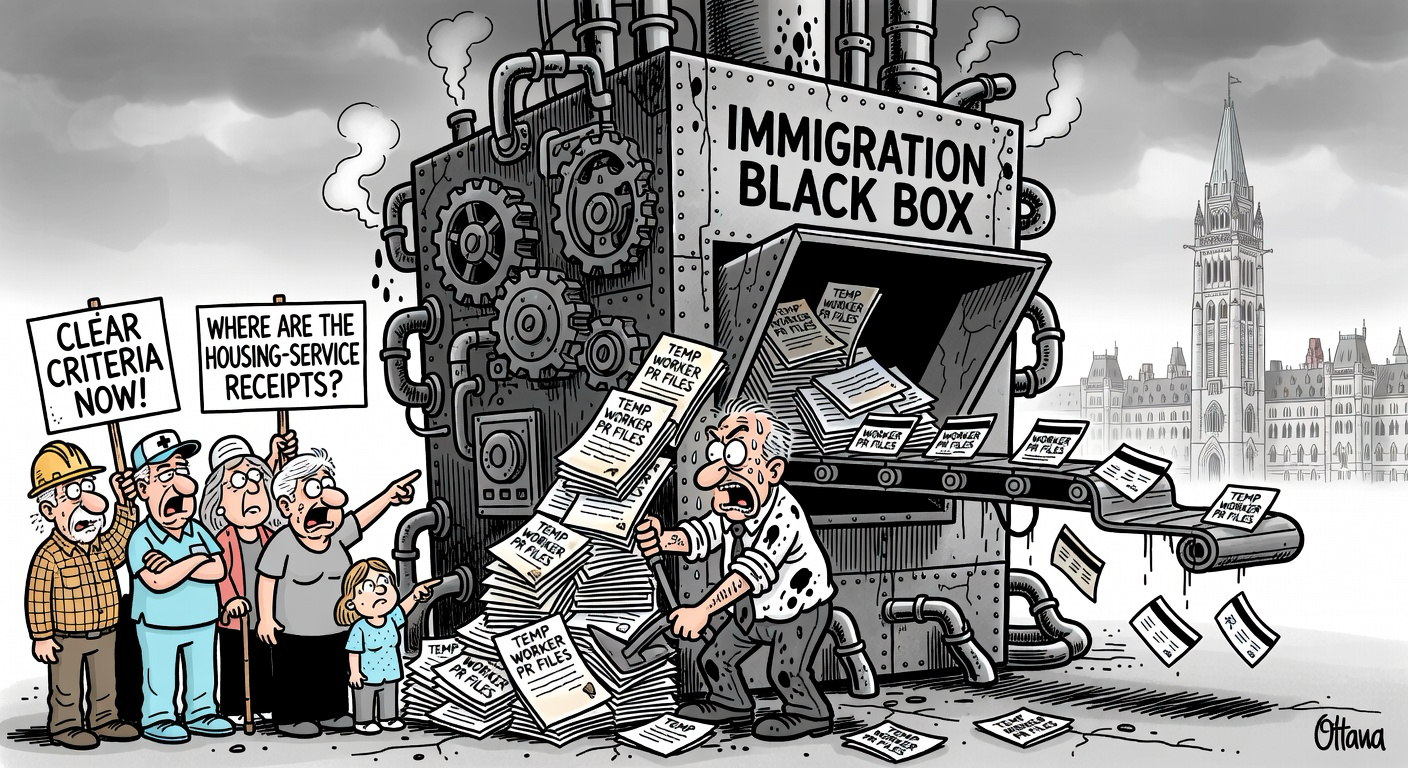
Ottawa’s new In-Canada Workers Initiative is being sold as practical immigration management: move up to 33,000 temporary workers into permanent residence in 2026 and 2027, with 20,000 targeted this year. In smaller communities facing labour shortages, that can sound sensible. Workers already living in Canada, paying taxes and filling real jobs should not be trapped indefinitely in limbo.
But competent government is not just about announcing a compassionate-sounding fix. It is about telling Canadians exactly what is changing — and telling temporary workers the truth.
The key detail is that this is not a broad new permanent-residence pathway. IRCC says the one-time measure accelerates eligible applications already moving through existing streams such as the Provincial Nominee Program, the Atlantic Immigration Program, community pilots, caregiver pilots and the Agri-Food Pilot. Coverage from CJDC/CTV also reported that eligible applicants will not be formally notified that they qualify; their files will simply be processed faster.
That is a recipe for confusion. Many workers heard “33,000” and “permanent residence” and reasonably expected a new door to open. Instead, Ottawa appears to be prioritizing a narrower group already inside the system. If the government wants public trust, it should publish the full selection rules in plain language: which occupations, which communities, which application dates, which programs, and how ties to rural labour shortages are verified.
The accounting problem matters too. IRCC says 3,600 workers had already been granted permanent residence under the initiative from January 1 to February 28, equal to 18 per cent of the 2026 target. Meanwhile, the IRPP has warned that one-time measures for protected persons and work-permit holders risk muddling public understanding if they are not clearly reflected in overall immigration planning.
That warning should be taken seriously. Canada is already under strain from housing shortages, medical wait lists, classroom pressure and local infrastructure gaps. The conservative accountability position is not “blame immigrants.” It is: stop using temporary programs as a pressure valve, stop making vague promises to vulnerable workers, and stop hiding capacity choices behind bureaucratic labels.
Ottawa should do four things now. Publish the complete criteria. Count these transitions transparently inside the immigration-levels plan. Report community-level housing and service impacts before expanding similar measures. And give workers honest notices instead of forcing them to guess whether they are in a silent fast-track queue.
If the Liberals created a temporary-resident system so large that they now need one-time conversion tools to manage it, Canadians deserve the receipts. Workers deserve clarity. Communities deserve capacity planning. And Parliament deserves numbers that add up.
- IRCC: Filling labour gaps in smaller communities by accelerating permanent residence for 33,000 workers
- IRCC: Understanding the one-time In-Canada Workers Initiative
- CJDC/CTV: Foreign workers in small communities to get faster path to permanent residency
- CIC News: IRCC fast-tracking permanent residence applications for eligible workers
- IRPP: Migrant integration services in Canada
This article supports honest, orderly immigration and fair treatment for workers while arguing that one-time PR transitions require transparent criteria, target accounting and community capacity planning.