Parliament Gets the $502.8B Invoice Before the Receipts
A serious government asks Parliament for confidence with numbers Canadians can audit, not a giant invoice and a promise that the details will arrive later.
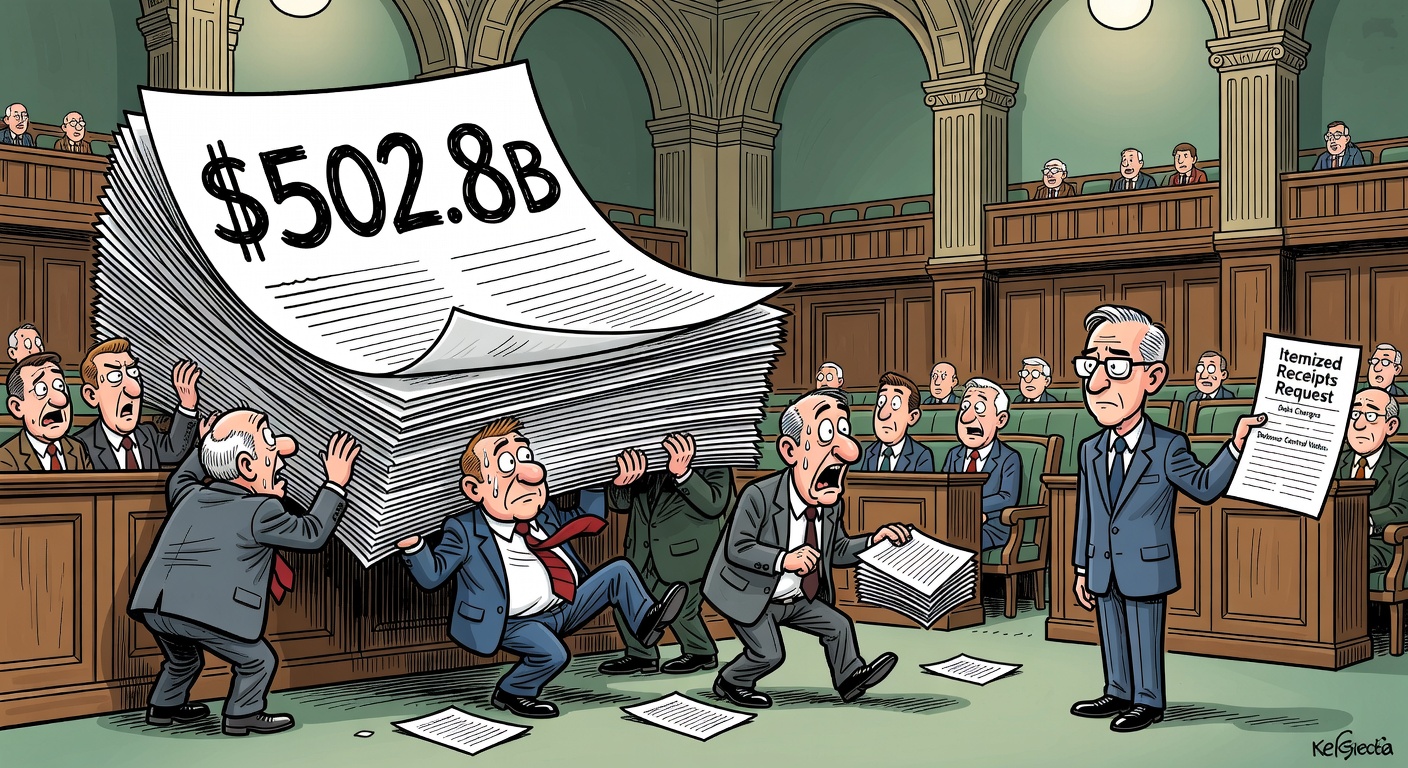
Parliament is being asked to authorize another enormous federal spending plan. The Parliamentary Budget Officer’s May 2026 review of the Main Estimates says Ottawa is seeking $502.8 billion in 2026-27 budgetary spending authorities: $230.4 billion that MPs must vote on and $272.4 billion already authorized by statute.
That is not a rounding error. It is the operating bill for a federal government that keeps telling Canadians it has turned the page on Liberal fiscal drift. From a conservative accountability perspective, the test is simple: if the Carney government wants Parliament to approve half a trillion dollars, it should provide the itemized receipt before the vote, not after. Families, small businesses and provinces are expected to budget with real constraints; Ottawa should meet at least the same standard when it spends their tax dollars.
The debt line alone should concentrate minds. The PBO says public debt charges in the Main Estimates are forecast at $53.7 billion, up $4.7 billion, or 9.7%, from 2025-26 estimates to date. Worse, the watchdog projects those charges could reach $80.9 billion by 2030-31. Every dollar spent servicing past borrowing is a dollar unavailable for tax relief, defence, health transfers or basic federal services.
Defence spending is the political centrepiece. The estimates include $14.7 billion for Budget 2025 measures, with the PBO noting that 71.1% of that amount is tied to rebuilding, rearming and reinvesting in the Canadian Armed Forces. That includes $9 billion for National Defence and $675.3 million for the Communications Security Establishment. Canadians support a credible military. But credibility requires procurement milestones, delivery dates and public reporting, not just patriotic adjectives attached to large appropriations.
The clearest warning light is the $1 billion Defence and Security Initiatives central vote. PBO says broad central votes reveal the specific purpose of spending only after Parliament approves the money. That reverses the accountability order. MPs should know what they are buying before they sign the cheque.
Ottawa also points to a Comprehensive Expenditure Review. Yet the PBO says operating expenditures are down 6.3%, or only 5.1% when Canada Post is excluded, against the government’s stated intent to reduce direct program spending by 7.5%. That may be progress, but it is not proof of discipline.
Canadians do not need performative austerity. They need honest books: program-by-program savings, defence project timelines, debt-charge sensitivity tables and plain-language explanations of central votes before approval. Parliament should not be treated like an accounts-payable department. It is the taxpayer’s check on government, and the receipt should come first.
- Parliamentary Budget Officer: Government Expenditure Plan and Main Estimates for 2026-27
- Finance Canada: Fiscal Monitor, February 2026
- News mirror: Budget watchdog says key details missing in Liberal government’s fiscal plan
This article uses official fiscal-watchdog and Finance Canada materials and argues for earlier, clearer parliamentary spending disclosure before approval.