Liberals Voted Down the Property-Rights Receipts Canada Needs
The responsible answer to B.C. land-title uncertainty is not panic. It is a public legal plan Canadians can actually read.
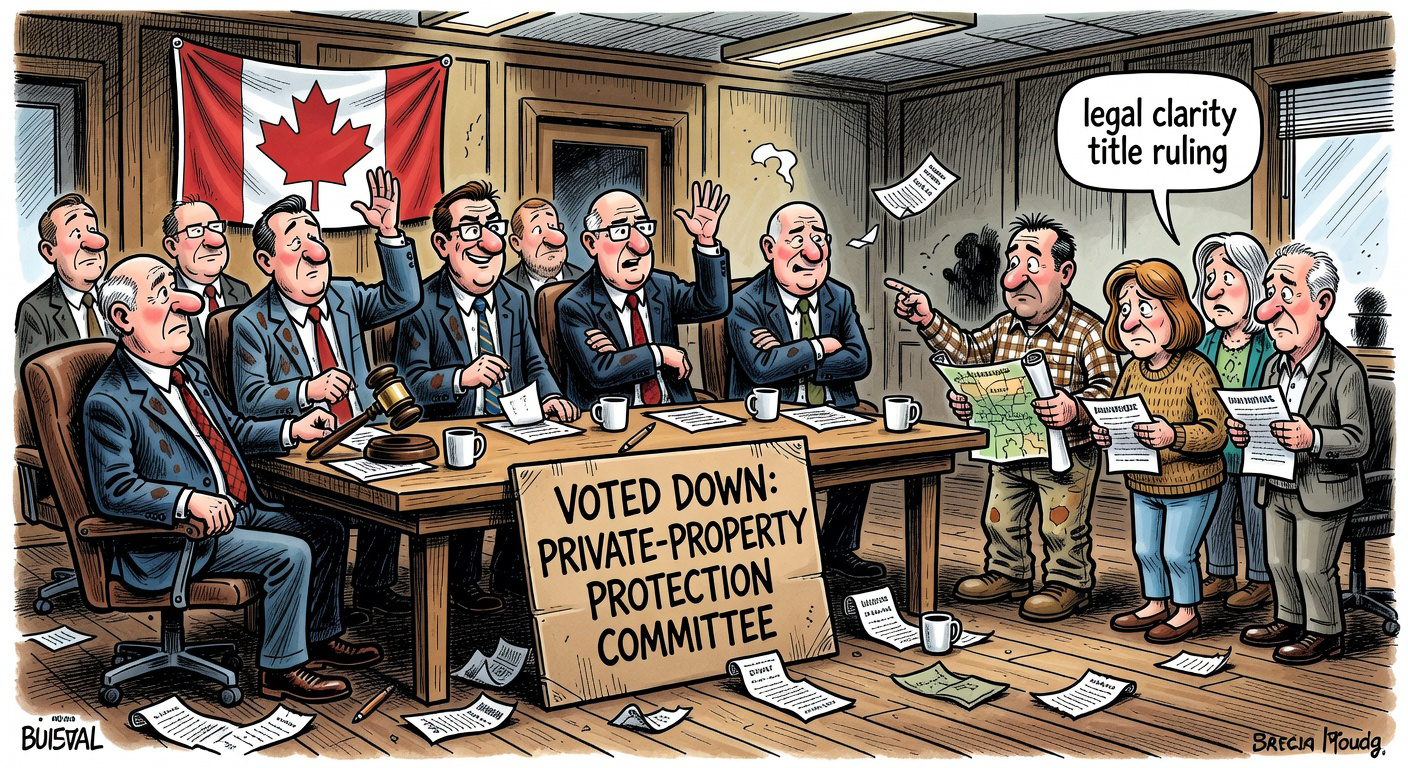
The House of Commons had a chance Monday to lower the temperature on a serious property-rights question. Instead, Liberals joined the NDP and Bloc to vote down a non-binding Conservative motion calling for federal action to protect private property from uncertainty flowing out of First Nations land claims.
This debate needs care. It should not become anti-Indigenous rhetoric, and it should not pretend reconciliation and private ownership are automatically enemies. But care is not the same as evasion. A 2025 B.C. Supreme Court ruling confirmed Cowichan Tribes Aboriginal title over roughly 300 hectares in Richmond, and The Canadian Press reports that the decision has raised questions about how Aboriginal title and privately held fee-simple property coexist.
There are important guardrails in the public record. B.C. and the Cowichan Tribes have both said they do not want to invalidate privately held fee-simple titles on the lands covered by the ruling. The federal and provincial governments opposed the claim, and appeals are now underway, including a federal appeal. Those facts matter because they cut against panic. They also make the case for clarity stronger, not weaker.
The Conservative motion was not binding law. It called for steps including a special committee to study legal, constitutional and political options to protect private property rights, explicit protection of fee-simple property in future agreements, and a government plan. Conservatives voted for it. Liberals, New Democrats and the Bloc voted against it.
Crown-Indigenous Relations Minister Rebecca Alty argued Parliament should not weigh into active litigation and said Ottawa has appealed because it wants clarity on the ruling and its implications. She also said it is already Government of Canada policy to make rights-and-title agreements that protect Canadians’ private property, and that modern treaties since the 1970s have not resulted in people losing privately owned land.
That is exactly why the Liberal vote deserves scrutiny. If Ottawa’s position is that private property is protected, publish the proof. If federal lawyers have a litigation strategy that protects homeowners while respecting Indigenous rights, explain the principles. If future agreements already include model language protecting fee-simple owners, table that language. If ministers believe a special committee would spread misinformation, propose a better public forum instead of asking Canadians to trust a closed process.
Markets, homeowners and municipalities do not run on ministerial reassurance. They run on clear rules. British Columbians facing overlapping legal claims deserve more than a fight between Conservative alarm bells and Liberal accusations of fearmongering. They deserve written answers: what happens to mortgages, insurance, municipal permits, resale certainty and future rights-and-title agreements when court-recognized Aboriginal title overlaps with private parcels?
A serious government would treat this as a receipts test. Reconciliation requires good faith. Private property requires legal certainty. The Carney Liberals say both can be protected. Fine. Then stop voting down transparency and show Canadians the plan.
- The Canadian Press via iNFOnews: Majority of MPs vote down Conservative motion calling for private property protection
- Conservative Party of Canada: Conservatives call on PM to stop opposing property rights protections
- CambridgeToday / Canadian Press: MPs set to vote on private-property motion
- iPolitics: Property-rights pressure campaign preview
This article argues for public legal clarity and rejects panic or anti-Indigenous framing. It distinguishes court-recognized Aboriginal title and reconciliation obligations from the separate need to protect fee-simple owners with transparent federal policy.