Ottawa Has No Proof Its Gun Buyback Will Make Canadians Safer
Before Ottawa threatens criminal liability, it should show Canadians the evidence that this expensive program will actually reduce crime.
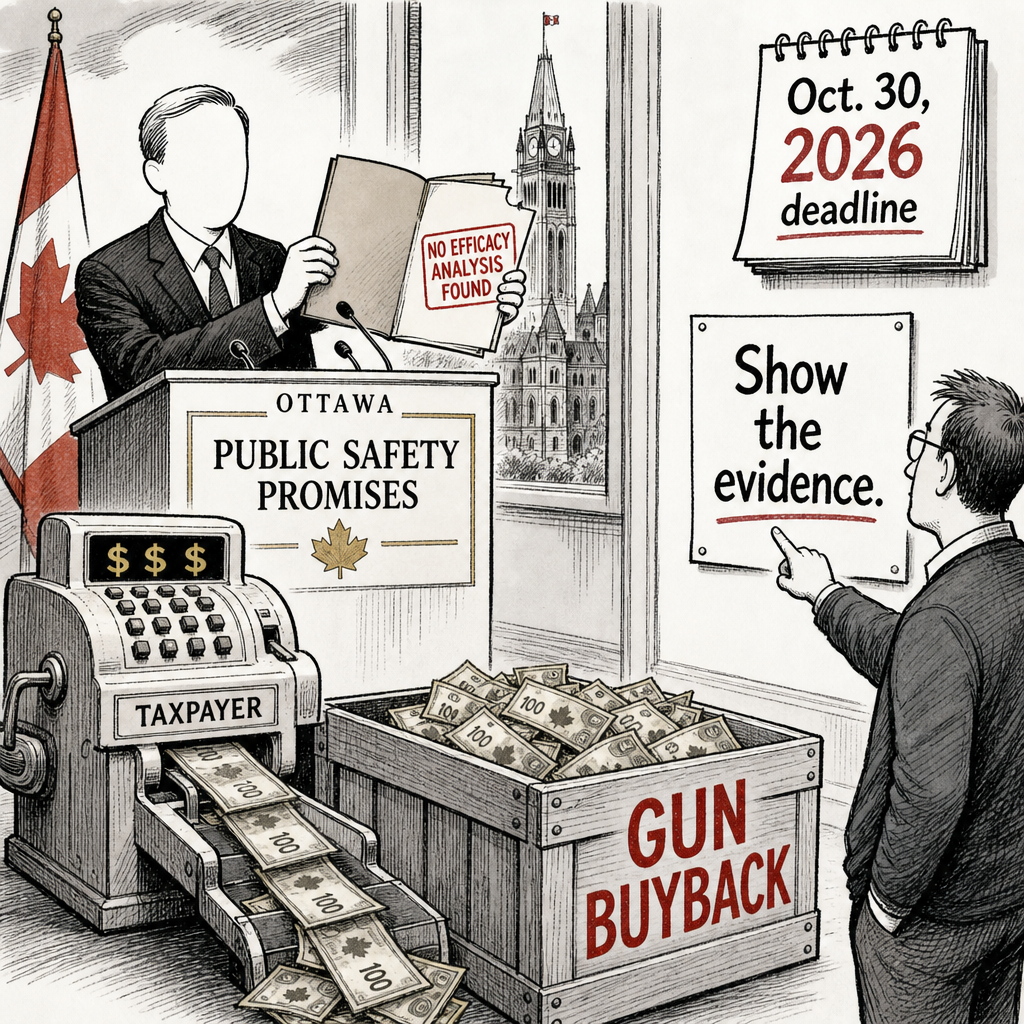
Ottawa is still selling its firearm compensation program as public safety. The problem is simpler than the slogan: when asked for its own analysis showing the program would reduce crime or improve safety, Public Safety Canada allegedly had nothing to provide.
The Canadian Taxpayers Federation says it filed an access-to-information request for “all analysis from the department on the efficacy of the assault style firearms compensation program and its effect on crime rates/public safety.” According to the CTF, the department answered that no information related to the request existed within Public Safety Canada. That does not prove every possible argument against prohibited firearms is wrong. It does mean taxpayers are entitled to ask why a national program with criminal-law consequences is moving ahead without disclosed departmental evidence of effectiveness.
The government’s own pages confirm the stakes. Public Safety Canada says the individual declaration period has ended, with collection, deactivation and compensation expected from spring to early fall 2026. It also says participation in compensation is voluntary, but compliance with the law is not: owners must dispose of or permanently deactivate prohibited assault-style firearms before the October 30, 2026 amnesty deadline or risk criminal liability for illegal possession.
That is a major coercive deadline. It should come with major proof.
The uptake problem is already public. The Canadian Press reported April 1 that owners had reported more than 67,000 banned firearms, about half the number the federal government expected to be eligible when the program opened in mid-January. Officials had earmarked almost $250 million in compensation for about 136,000 firearms. Global News also framed the program’s post-deadline results as fewer than half the number the Carney government had hoped for.
Public Safety’s January launch release said the program opened nationally to eligible firearms owners and described it as one piece of a broader anti-violence plan, alongside border officers, RCMP personnel, a $1.3-billion border plan, handgun restrictions and a classification review. Good. Then separate the measurable from the symbolic. How many crimes will this buyback prevent? What is the expected cost per firearm actually collected and destroyed? What police resources are being diverted from gangs, illegal trafficking and border enforcement? What evidence says this inventory, already prohibited from legal use, is the public-safety bottleneck?
Conservatives should not have to apologize for demanding receipts. If Ottawa wants to spend public money and threaten criminal liability after October 30, it owes Canadians more than “trust us.” Publish the efficacy analysis, the cost-per-result model, the police-resource plan, the border-smuggling comparison data and the final collection numbers.
If the evidence exists, release it. If it does not, Canadians are watching another Liberal public-safety performance where the announcement came first and proof came last — or not at all.
- Public Safety Canada: Firearms Buyback Program
- Public Safety Canada: January 17, 2026 national launch release
- CityNews / The Canadian Press: Gun buyback tally of over 67,000 firearms falls well short of federal estimate
- Canadian Taxpayers Federation: Ottawa has no idea if its gun grab will make Canadians safer
- Global News: Examining the shortcomings of the Liberal gun buyback program
This article argues for evidence-based public-safety spending and transparent cost accounting before Ottawa advances coercive firearm-compliance deadlines.