Carney’s Pipeline Caucus Letter Is a Credibility Test
If fourteen Liberal MPs privately warned that Ottawa’s pipeline pivot could compromise government credibility, Canadians deserve to see the warning before the deal is locked in.
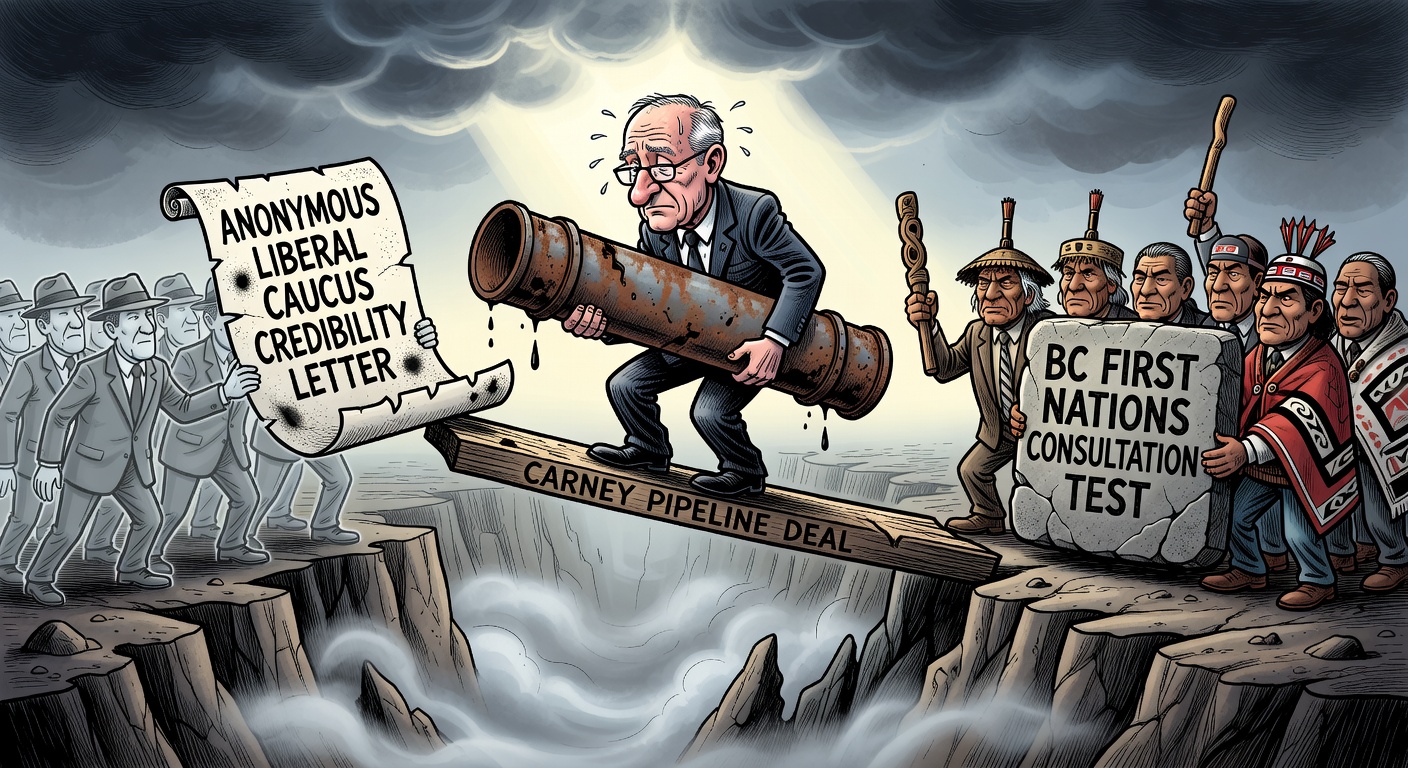
Prime Minister Mark Carney is trying to sell a pipeline pivot as nation-building. Fine. Then treat Canadians like adults and publish the trade-offs. Radio-Canada reporting republished by EnergyNow says fourteen Liberal MPs sent Carney a letter at the end of April warning that environmental rollbacks could seriously compromise the government’s credibility. They reportedly signed the letter, but do not want to be publicly identified.
That is the story. Not simply whether a West Coast pipeline is good or bad. The accountability question is whether Liberal MPs can privately warn the Prime Minister that his policy risks breaking public trust, then publicly let voters guess what they objected to, what they conceded, and what they were promised in return.
The pipeline file is not theoretical. Carney and Alberta Premier Danielle Smith signed an implementation agreement that Global News, citing The Canadian Press, says would move a West Coast pipeline toward Ottawa’s major projects office by July 1 and could see it declared in the national interest by October. CityNews reported that Carney has described conditions including the Pathways carbon-capture project, substantial economic benefits for British Columbia, and “non-negotiable” consultation with First Nations. The same report noted the obvious missing pieces: no agreed route and no private proponent.
Conservatives should be clear about the principle. Canada needs major projects. It needs energy exports. It needs governments that can say yes after years of regulatory paralysis. But a pro-development agenda is stronger, not weaker, when the public can see the receipts. If Ottawa is adjusting industrial carbon pricing, clean-electricity commitments, tanker-ban politics, First Nations consultation and B.C.-Alberta bargaining at the same time, those are not side notes. They are the deal.
B.C. Premier David Eby has accused Ottawa of rewarding Alberta’s “bad behaviour” and warned that projects should not jump the queue because a premier threatens national unity. Coastal First Nations have said no project should proceed without affected First Nations and provincial support. Alberta argues Canada must finally build. Those are competing democratic claims. Carney’s job is not to hide the tension behind closed doors; it is to show the country how he is resolving it.
So publish the Liberal caucus letter. Identify the specific environmental rules under review. Release the timeline, route assumptions, consultation framework, carbon-price math and benefits promised to B.C. If fourteen government MPs think credibility is at stake, voters should not have to wait for a leak to know why.
A pipeline can be debated. Secrecy should not be. Carney’s credibility test is simple: if this project is truly in the national interest, defend it in public with names, dates, costs and conditions attached.
- EnergyNow / Radio-Canada: 14 Liberal MPs pen letter to Carney raising concerns over environmental backslide
- CityNews / The Canadian Press: Carney lays out pipeline conditions before talks with Eby
- Global News / The Canadian Press: Eby says Ottawa is rewarding Alberta’s ‘bad behaviour’ with pipeline agreement
This article supports major-project debate while arguing that caucus dissent, environmental trade-offs and consultation conditions should be published before Ottawa advances a pipeline deal.