Liberals Put Bill C-31 on the Stopwatch Before Canadians See the Receipts
A majority government can pass legislation. It should not use the clock to turn a sprawling budget bill into a rubber stamp.
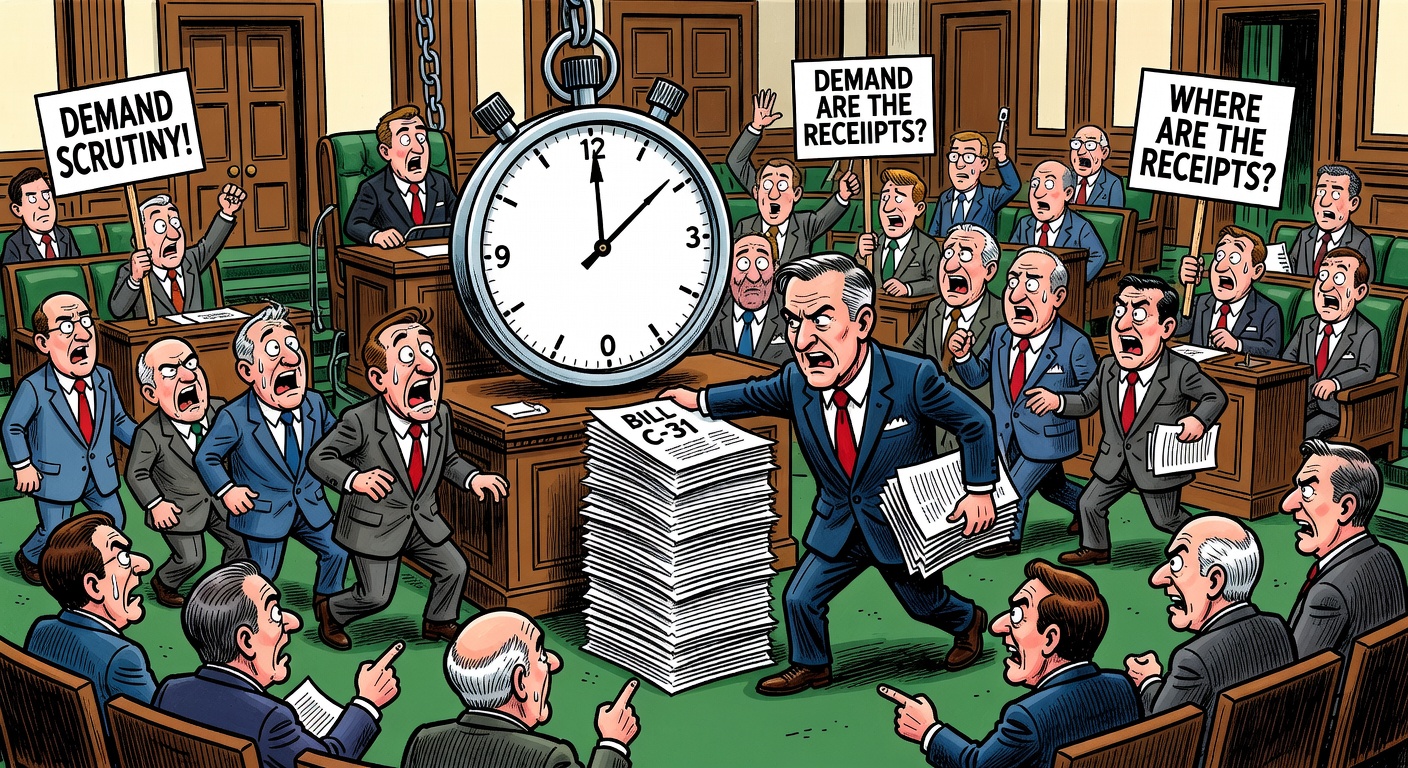
Bill C-31 is being treated like a delivery truck for the Liberal government’s spring agenda. Canadians should treat it like a receipt test.
The bill’s official title is the Budget 2025 Implementation Act, No. 2. Parliament’s LEGISinfo page identifies it as a House government bill sponsored by Finance Minister François-Philippe Champagne, introduced and given first reading on May 6, 2026. As of the latest checked parliamentary listing, it was still at second reading — the stage where MPs are supposed to debate the principle of the bill before sending it to committee.
That matters because C-31 is not a narrow housekeeping bill. Finance Canada says it would move automatic federal tax filing for up to 5.5 million low-income Canadians by the 2028 tax year, automate Canada Learning Bond enrolment, implement crypto-asset reporting, change mortgage-insurance and housing-finance rules, provide immediate expensing for manufacturing or processing buildings, alter the air-passenger complaints system, ban most non-compete clauses in federally regulated industries, and establish a stand-alone Defence Investment Agency.
Some of those measures may be defensible. Some may even be popular. That is not the point. The point is that a bill touching taxes, benefits, crypto reporting, employment contracts, airlines, housing finance and defence procurement deserves detailed, public scrutiny before the government runs out the parliamentary clock.
iPolitics reported May 24 that, with four sitting weeks left before the summer break, the Liberals were poised to accelerate the vote on the latest budget bill, including a possible deadline motion to wind down second-reading debate as early as Monday, May 25. That is the accountability problem. A majority government already has the votes. It does not need procedural muscle to avoid explaining trade-offs.
Budget implementation acts are where Ottawa often hides the real machinery of government. The headline is “affordability” or “growth.” The fine print is amendments to tax law, new reporting regimes, delegated powers, new agencies, exemptions, penalty structures and spending systems that Canadians only discover after the machinery is already moving.
KPMG has already noted that, for IFRS and ASPE purposes, business tax measures in the proposed legislation are considered substantively enacted as of first reading because Canada has a majority government. In plain English: the market is being told to treat parts of this as practically inevitable. That makes parliamentary scrutiny more important, not less.
Conservatives should not simply yell “omnibus” and move on. They should demand a plain-language C-31 ledger: every tax change, every new authority, every delegated power, every reporting burden, every expected cost, every enforcement mechanism, every affected sector, and every timeline. Then committee witnesses should be given enough time to test those claims in public.
If the Liberal government believes Bill C-31 is good legislation, it should welcome that exercise. If it needs a stopwatch to pass it before Canadians can read the receipts, that tells voters something too.
- iPolitics: With just four weeks left in the sitting, Liberals aim to accelerate vote on latest budget bill
- Parliament of Canada LEGISinfo: Bill C-31, Budget 2025 Implementation Act, No. 2
- Department of Finance Canada: Minister Champagne introduces second piece of legislation to implement Budget 2025: Canada Strong
- KPMG TaxNewsFlash: Canada: Draft second budget bill containing remaining tax measures from 2025 budget
This article argues for parliamentary and fiscal accountability. It does not claim every C-31 measure is harmful; it argues that a broad budget bill should be fully explained before being rushed through the House.