The Iceberg Invoice: Ottawa Should Show the ROI on Canada’s Osaka Pavilion
The pavilion may have been a polished showcase. That makes the accountability question easier, not harder: publish the final cost, amendments and measurable return.
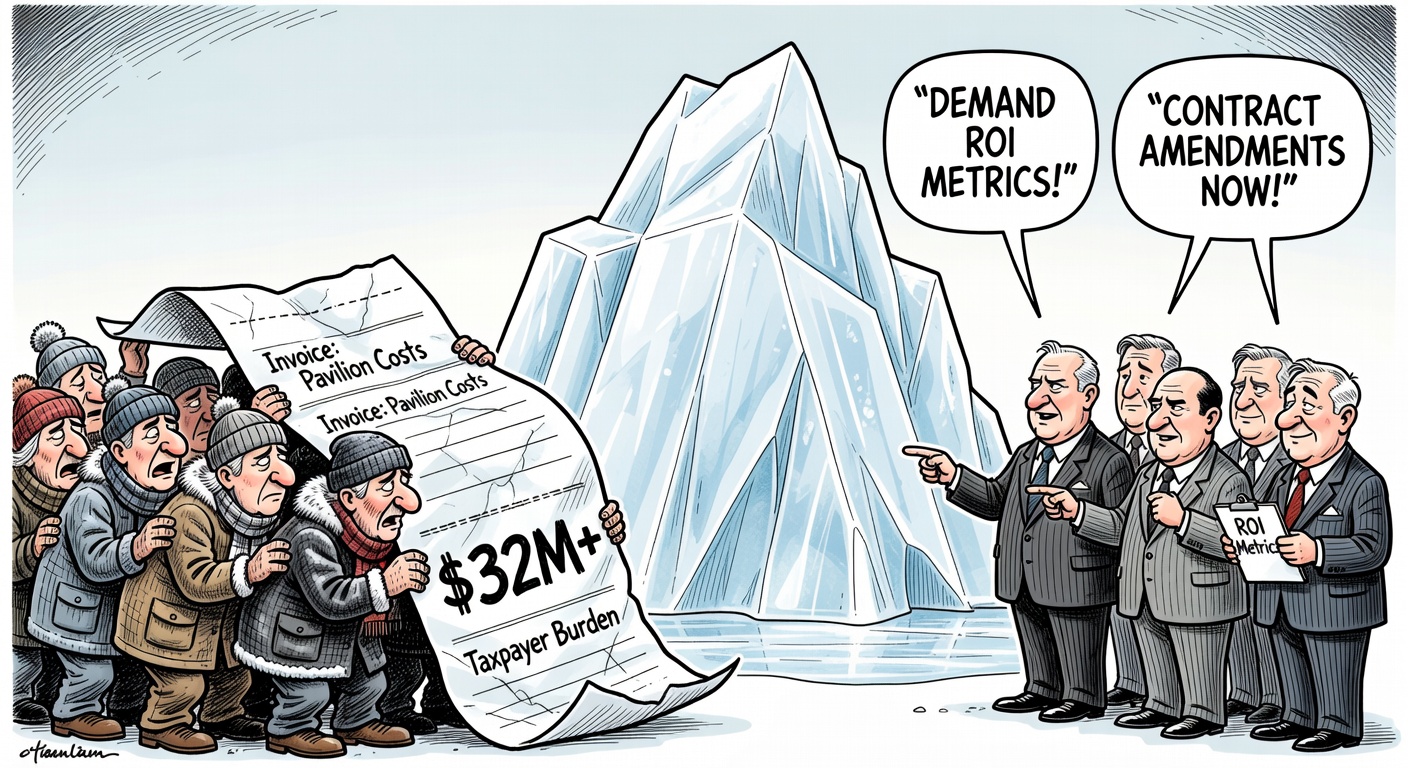
A foreign pavilion can be legitimate public diplomacy. Canada trades, attracts investment, promotes tourism and sells a national brand abroad. But legitimate does not mean blank-cheque. When Ottawa spends tens of millions on a six-month showcase overseas while telling Canadians to accept restraint at home, the standard should be simple: show the invoice, show the amendments, and show the return.
The latest accountability question is Canada’s pavilion at Expo 2025 Osaka. Blacklock’s Reporter summarized the bill as more than $32 million, including costs for research, creative work and the iceberg-themed concept. The official procurement trail already shows this was not a small communications exercise. CanadaBuys described Global Affairs Canada as the department mandated to plan, coordinate and implement Canada’s participation, while Public Works and Government Services Canada retained a contractor to design, build, fit up, operate, maintain and dismantle the pavilion. The posted solicitation said the maximum funding available for the resulting contract was $25 million, before applicable taxes, with a contract period running from October 31, 2022, to March 31, 2026.
The government’s own Expo site makes the best case for the project. Canada joined more than 150 countries in Osaka from April 13 to October 13, 2025. The pavilion welcomed Japanese and international visitors, promoted Canadian culture, creativity, innovation and energy, and now points to a legacy gallery. That gallery says more than 1.5 million people visited the pavilion and programming, that Canada received international recognition for technology integration and pavilion design, and that 75 percent of building materials were slated for reuse after careful dismantling.
Fine. Put all of that on the table. If 1.5 million visitors is the headline, taxpayers should see the denominator: final cost per visitor, hospitality cost per visitor, consulting cost per visitor, travel cost per visitor and the specific trade, tourism or investment outcomes Ottawa claims followed. If sustainability is the defence, publish the dismantling and reuse records. If cultural diplomacy is the defence, publish the evaluation framework used before cabinet or Global Affairs approved the spend.
This is not an argument that Canada should disappear from the world. It is an argument that a government managing huge debt and rising living costs has to treat international branding as public spending, not political décor. The same Liberals who ask Canadians to trust expert management should be willing to release contract amendments, final invoices, visitor methodology, hospitality expenses, consulting deliverables and performance reports.
The conservative accountability standard is not complicated: praise the pavilion if it delivered measurable value, but do not confuse glowing photos with proof. A shiny iceberg in Osaka may make a nice postcard. It does not cancel the public’s right to the receipts.
- Blacklock’s Reporter front-page summary, May 21, 2026: Global Affairs Osaka pavilion cost report
- CanadaBuys contract history: World Expo 2025 Osaka, Japan for Global Affairs Canada
- Government of Canada Expo site: Canada at Expo 2025 Osaka
- Canada Expo 2025 Legacy Gallery: Visitor stats, awards and reuse claims
- Global Affairs Canada briefing book: Foreign Affairs portfolio background
This article treats the Blacklock’s cost figure as a reported figure and relies on official procurement and Expo pages for contract scope, dates and pavilion-performance claims.