The Helen Grus Case Is Not Proof of a Vaccine Theory. It Is a Test of Institutional Trust.
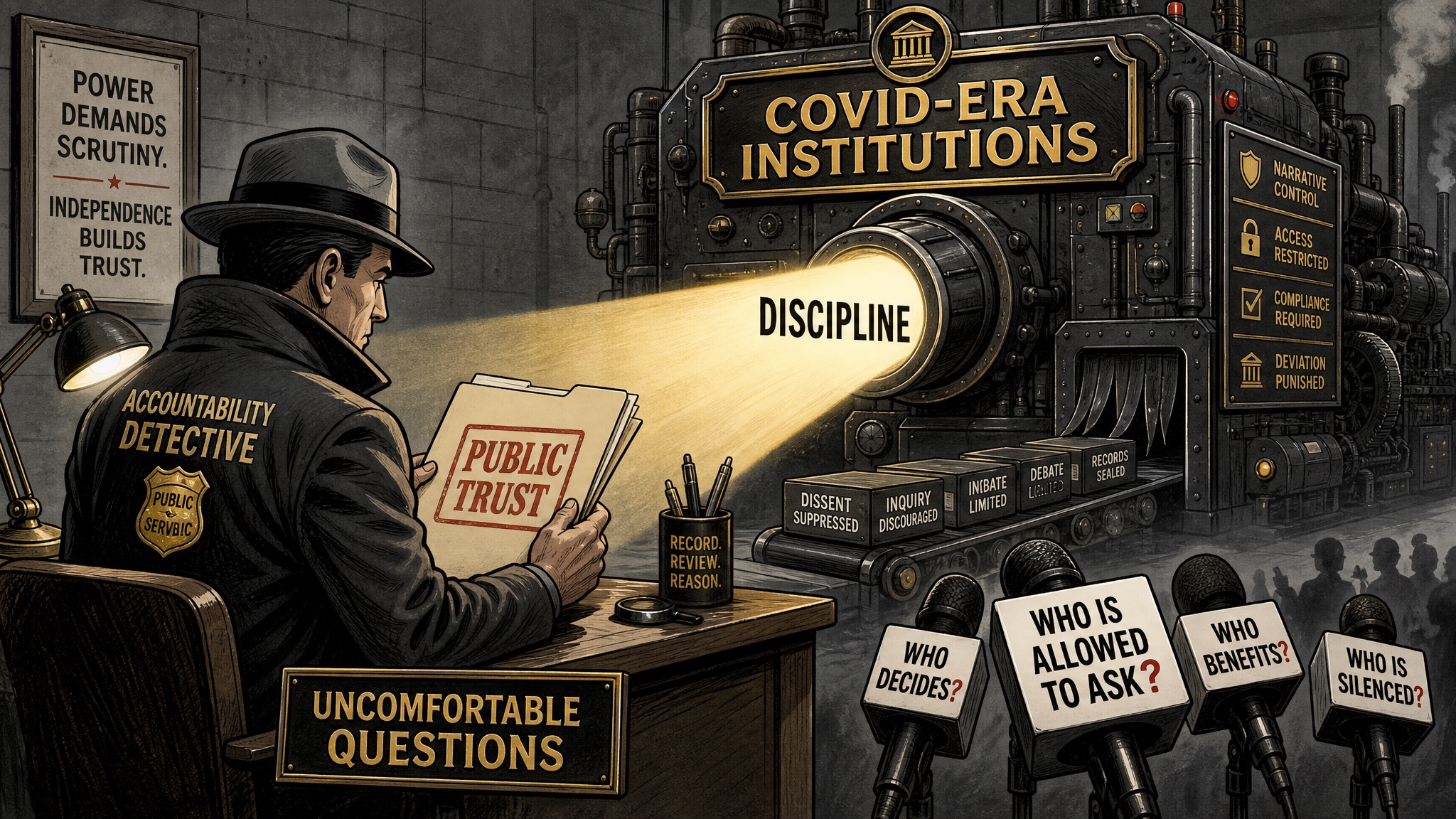
This is not a story about proving a medical theory. It is a story about what happens when a public institution decides who is allowed to ask uncomfortable questions.
Ottawa Police lists Constable Helen Grus for a disciplinary matter from May 19–21, 2026. This article will be updated if a penalty decision or appeal filing becomes public.
The Helen Grus case is becoming a rallying point for Canadians who believe COVID-era institutions punished dissent instead of answering hard questions. That makes it politically explosive. It also makes it easy to get wrong.
So let us draw the line clearly at the start: this article does not claim that COVID vaccination caused infant deaths. It does not claim the tribunal proved or disproved any medical theory. The accountability question is narrower, safer and still serious: when a police officer raised an uncomfortable public-health concern, did the institution answer transparently — or did the process become a warning to others not to ask?
Ottawa Police’s public disciplinary page lists Constable Helen Grus (PSA) for a May 19–21, 2026 matter at the Huntmar Community Boardroom in Kanata. The service has also published a March 25, 2025 Decision with Reasons finding Grus guilty of discreditable conduct.
The decision records that Grus had been a capable and respected investigator. It also records that she accessed infant-death records, raised concern about a reported increase in cases, and suspected a possible connection to COVID-era public-health decisions. Importantly, the decision also records her own evidence that she did not conclude COVID vaccines were the cause of death.
That distinction matters. The public deserves a serious debate without turning every unresolved question into a proven allegation. But the public also deserves to know why a question touching federal, provincial and municipal health officials became so radioactive that the process now carries national significance.
The tribunal’s view was that Grus exceeded the bounds of police discretion. The decision says her inquiries were not authorized by the service, were not run through the lead investigators or chain of command, and risked introducing personal bias into sensitive infant-death investigations. In the tribunal’s words, police discretion is real, but “not without checks and balances” and “certainly not without limits.”
That is one side of the institutional argument: records, privacy, chain of command, family sensitivity and bias-free investigations matter. Nobody should minimize those concerns, especially in cases involving grieving parents and deceased children.
The other side is now being pressed by Grus supporters. The Grus Justice Project, which promoted the May 19 Ottawa premiere of the documentary Silencing Detective Grus, argues that the case is about police independence and whether officers must seek permission before investigating matters with political ramifications. That is advocacy language, not a court finding. But it is also the reason the story has traction.
For Liberal accountability, the significance is broader than one Ottawa police detective. The Liberal brand wrapped itself in COVID-era institutional confidence: trust the experts, trust the mandates, trust the public-health apparatus, trust the media, trust the process. But public trust cannot survive on demand. It has to be earned through transparency.
If an officer’s theory was wrong, institutions should be able to show why. If the officer violated rules, the record should clearly explain which rules, how they were breached, and why the penalty fits. If records and privacy were the problem, say so directly. If politics had nothing to do with it, release enough of the reasoning and process for Canadians to see that for themselves.
What institutions cannot do, especially after the COVID years, is expect Canadians to accept a black box. Too many Canadians lost jobs, were excluded from public life, were told their questions were dangerous, or watched dissent get collapsed into extremism. Whether one agrees with Grus or not, the case lands inside that unresolved national wound.
The federal Liberal problem is not that Mark Carney personally ran an Ottawa Police tribunal. He did not. The problem is that the Liberal governing culture still depends on Canadians accepting institutional authority without full receipts. That model is breaking. The Grus case is one more sign of why.
A mature country should be able to hold two thoughts at once: officers cannot ignore privacy rules and chain-of-command limits, and public institutions cannot treat uncomfortable COVID-era questions as reputational threats to be managed away. Canadians need both professionalism and transparency.
The penalty phase now matters because it will show whether the institution wants correction, accountability and closure — or whether it wants an example made. If the punishment is proportionate and clearly reasoned, publish the receipts. If the process is being used to silence a broader debate, Canadians deserve to know that too.
The Helen Grus case is not proof of a vaccine theory. It is a test of institutional trust. And after the COVID years, that is exactly the test Canada’s political class least wants to face.