Parks Canada’s $15M Camping Experiment Needs Receipts
If Ottawa builds cabin-style camping to attract people who do not like camping, the public deserves occupancy data, full costs and proof the program pays for itself.
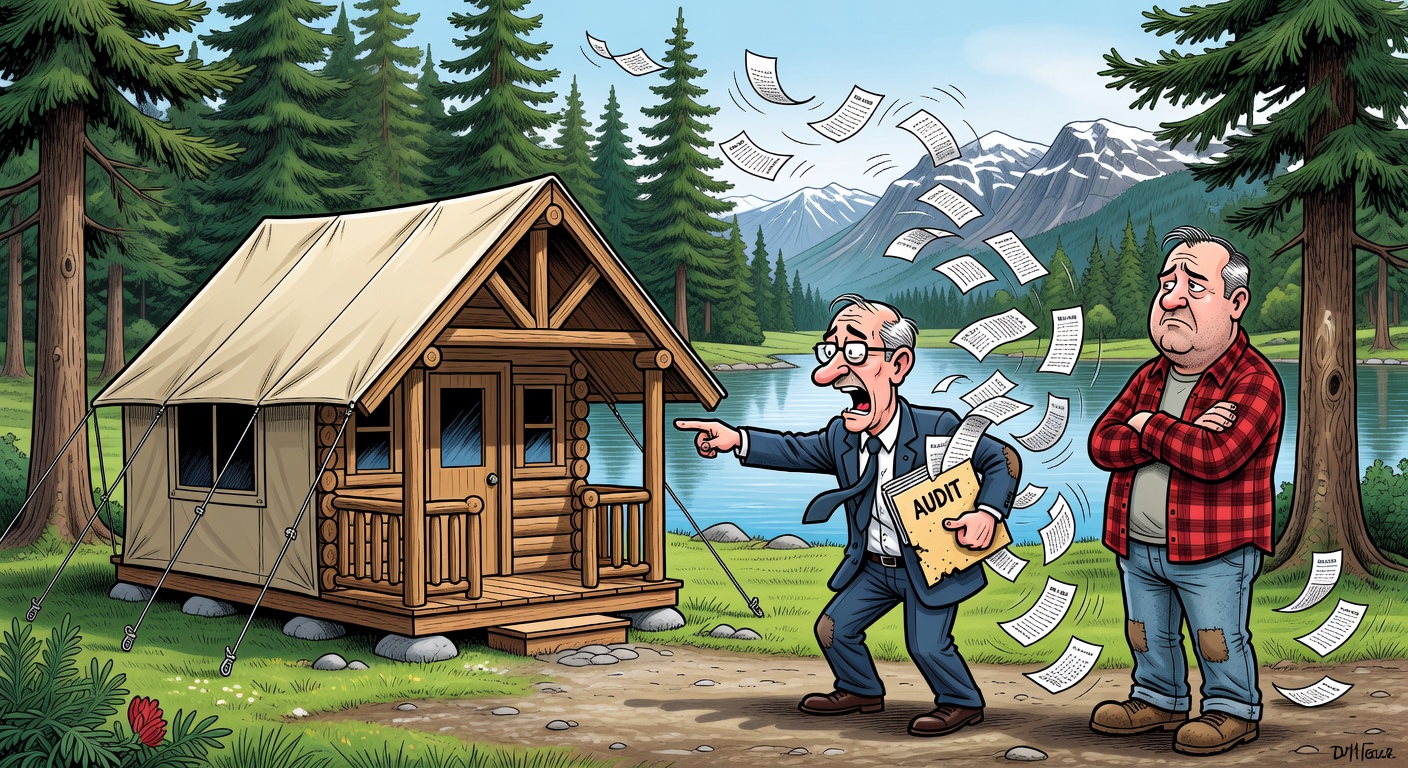
Federal waste rarely arrives with a villain’s cape. Sometimes it arrives as a cozy little cabin in a national park.
Blacklock’s Reporter flagged a Parks Canada internal evaluation Friday under the headline “Don’t Like Camping At $15M.” The public Parks Canada evaluation behind the story reviews the agency’s diversified accommodations program — oTENTik, Ôasis and MicrOcube units designed to give visitors a more comfortable overnight stay than traditional tent camping.
The idea is not automatically wrong. National parks should be accessible. Families without camping gear, newcomers trying parks for the first time, seniors and visitors with mobility or comfort concerns may all benefit from easier overnight options. The conservative problem is not that Parks Canada tried something new. The problem is whether Ottawa can show the public the business case, the cost recovery and the results.
Parks Canada’s own evaluation says the program had 426 oTENTik units across 53 sites in 2023-24. It lists the total purchase cost of one oTENTik unit with additional features at $57,036, including base shelter, installation, insulation options, wood stove and other components. It also notes installation costs varied where sites needed land clearing, washrooms, picnic-area upgrades or firewood storage.
Those numbers deserve more scrutiny than a glossy tourism brochure. At more than $57,000 per fitted unit before broader site costs, this is capital spending that must be justified by measurable occupancy, pricing, maintenance and replacement data. If a private campground builds a cabin, the owner knows the nightly rate, the break-even point and the repair bill. Taxpayers should expect at least that standard from a federal agency.
The evaluation’s accountability warnings are just as important as the sticker price. Parks Canada says relevant, reliable and timely information is needed to support decisions, but identifies gaps in data and performance measurement. Blacklock’s reports that recordkeeping was poor enough to raise questions about whether costs were recovered. That should concern every MP asked to approve spending while Ottawa is already carrying heavy debt and rising debt-service costs.
Canadians can support national parks and still demand discipline. Parks Canada should publish a site-by-site table showing the capital cost of each accommodation unit, annual occupancy, average nightly revenue, maintenance cost, staffing cost, replacement cost and net recovery. It should also disclose which sites lose money and what non-financial public-interest goal justifies keeping them open.
There is nothing conservative about letting public assets decay. But there is also nothing progressive about hiding the receipts. If Ottawa wants taxpayers to finance hotel-lite camping inside national parks, it owes taxpayers the same thing every family budget requires: the full cost, the revenue, and a straight answer on whether the experiment works.
Blacklock’s Reporter: Blacklock’s Reporter; Parks Canada: Evaluation of the Diversified Accommodations Program: Parks Canada: Evaluation of the Diversified Accommodations Program; Parks Canada camping and overnight accommodations: Parks Canada camping and overnight accommodations