Canada Strong Fund Needs a Conflict Firewall Before the $25B Leaves Ottawa
A sovereign-wealth-style fund can be useful only if taxpayers can see who benefits, who decides, and how Carney-era conflict risks are walled off before private capital gets public leverage.
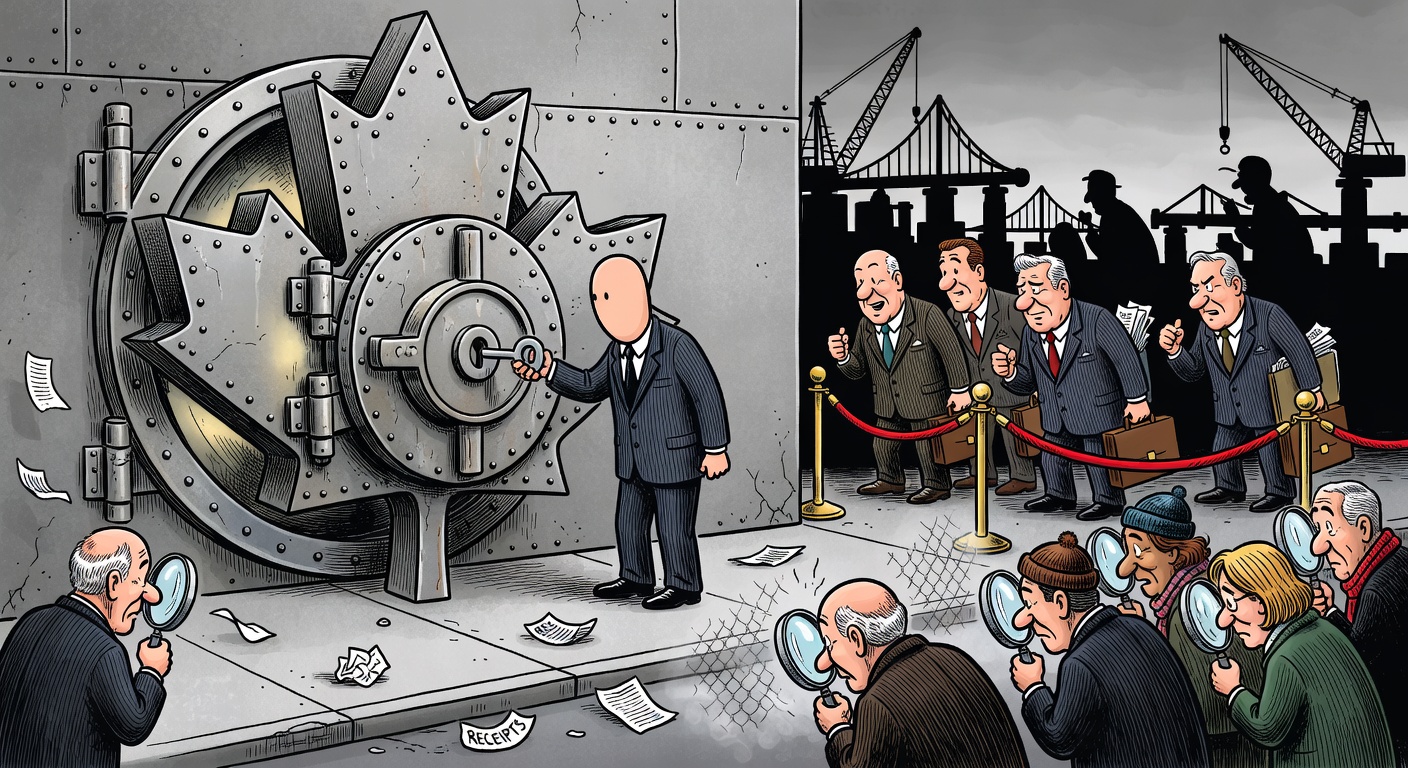
Ottawa’s newest money machine has a patriotic name, a giant price tag and a conflict-of-interest problem waiting at the door.
Prime Minister Mark Carney announced the Canada Strong Fund as Canada’s first national sovereign wealth fund. The government says it will begin with a $25 billion federal contribution and invest alongside private-sector capital in energy, critical minerals, agriculture, infrastructure, transportation and technology. It will be structured as an arm’s-length entity reporting through the finance minister, with more design details promised in the Spring Economic Update.
The concept is not automatically wrong. Canada needs ports, mines, corridors, power, data infrastructure and industrial capacity. If public capital is used carefully, transparently and commercially, Canadians can receive a return instead of simply handing out subsidies. But that is exactly why the conflict rules matter. The moment Ottawa puts $25 billion beside private investors, every decision becomes a question: who gets leverage, who gets access, who gets upside, and who had relationships before the cheque was written?
Carney is not an ordinary prime minister on this file. His Brookfield history is already the subject of a formal conflict screen. Canadian Press reporting on the ethics filing said Carney’s chief of staff and the Clerk of the Privy Council were tasked with maintaining a screen to prevent him from decisions that could benefit Brookfield, Brookfield Asset Management, Stripe or related companies. The House ethics committee’s review of the Conflict of Interest Act also put the administration of the prime minister’s screen directly into the public record.
That is the accountability issue. A screen may keep one person away from one decision, but it does not automatically give taxpayers a full map of the private parties circling a new public fund. CarneyWatch and other watchdog-style coverage have argued that Brookfield-linked conflicts are broader than one meeting or one document. Their tone is partisan, but the underlying public question is fair: when a former global-finance executive creates a public investment vehicle designed to partner with private capital, ordinary Canadians need stronger disclosure than “trust us.”
Before the Canada Strong Fund deploys a dollar, Ottawa should publish the governance rules, eligible-investment criteria, board appointment process, beneficial-ownership disclosure rules, recusal logs, lobbying contacts, expected returns, downside risk and every conflict screen triggered by a proposed investment. If a project involves a company connected to any entity on Carney’s screen, the public should know before approval, not years later through committee testimony.
Canada does not need another opaque Liberal fund with a nice slogan and missing receipts. If the Canada Strong Fund is really for Canadians, prove it with sunlight: public criteria, public recusals, public beneficiaries and public results.
Prime Minister of Canada: Canada Strong Fund announcement: Prime Minister of Canada: Canada Strong Fund announcement; House of Commons ETHI report: Review of the Conflict of Interest Act: House of Commons ETHI report: Review of the Conflict of Interest Act; Global News / Canadian Press: Carney ethics screen on Brookfield: Global News / Canadian Press: Carney ethics screen on Brookfield; CarneyWatch.ca: The Brookfield File: CarneyWatch.ca: The Brookfield File