Canada-India Defence Talks Need More Than Liberal Reassurance
Defence cooperation with India may serve Canadian interests. But after CSIS named India as a foreign-interference and transnational-repression risk, Ottawa owes Canadians more than diplomatic boilerplate.
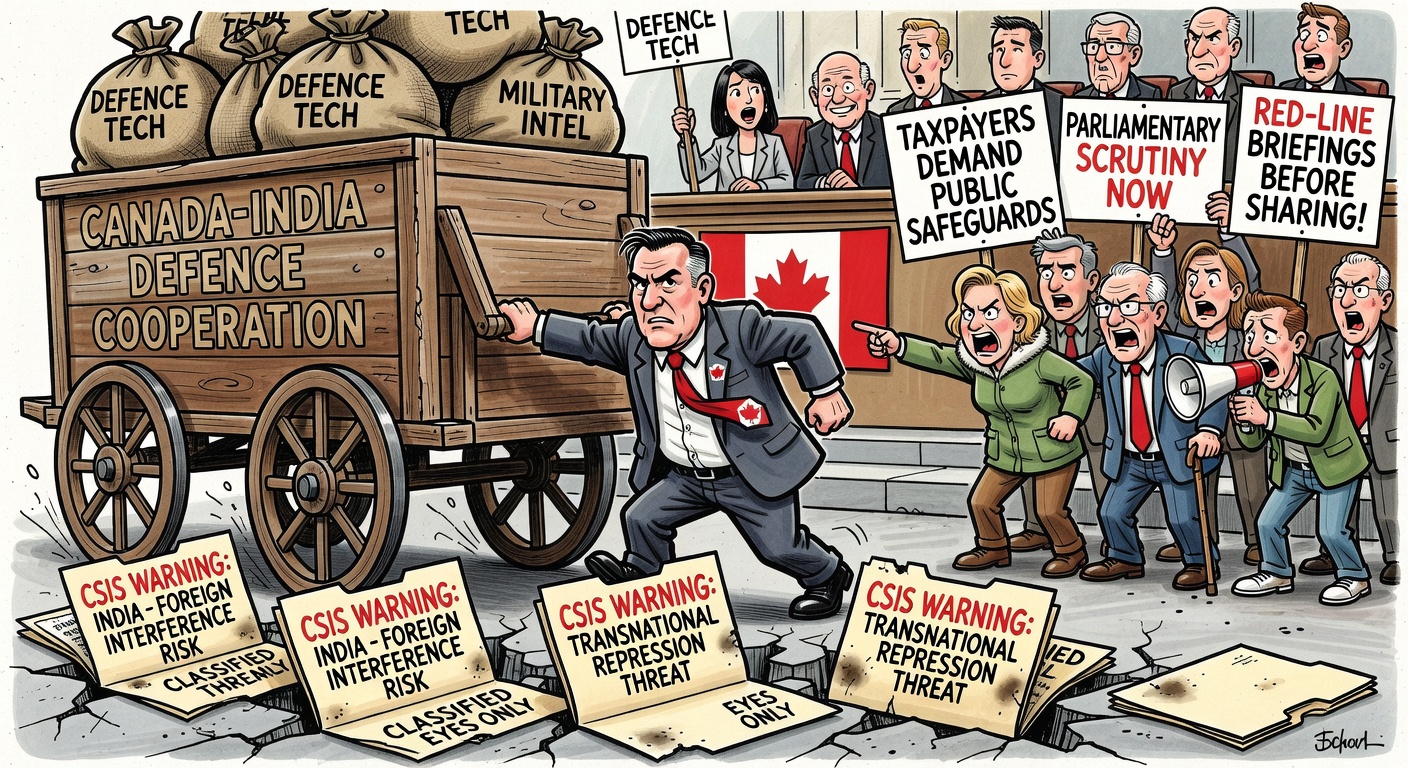
Canada can have practical relations with difficult partners. Conservatives understand that foreign policy is not a purity contest; it is a discipline of interests, leverage and risk. But when the Liberal government deepens defence cooperation with a state that Canada’s own intelligence service has identified as a serious foreign-interference actor, the burden is on ministers to show the safeguards.
The Indian Eye and The Tribune reported May 17 that Canadian High Commissioner Christopher Cooter met India’s Defence Secretary Rajesh Kumar Singh to discuss next steps in a strengthened bilateral defence partnership. The reports describe the meeting as a follow-up to Prime Minister Mark Carney’s February–March 2026 India visit, when Ottawa announced a Canada-India Defence Dialogue covering maritime security cooperation, defence training and education, joint exercises, and negotiation of a General Security of Information Agreement.
That is not routine diplomacy. Defence training, joint exercises and security-of-information talks involve trust, access and institutional habits that can shape policy for years. If the government believes the benefits outweigh the risks, it should say so plainly and explain how it reached that conclusion.
The reason is CSIS. In its 2025 public report, the intelligence service said India, along with China, Russia and Iran, remained among the primary perpetrators of foreign interference and espionage in Canada. CSIS also described Indian transnational repression activities involving surveillance and coercive tactics targeting Canadian communities. Those are not opposition talking points. They are official national-security warnings.
A serious government would not respond by pretending the warning file and the defence file live in separate universes. It would brief Parliament’s national-security committees. It would publish the risk framework for any defence training, exercises or information-sharing negotiations. It would identify what categories of information are off limits, what vetting rules apply, and what happens if intimidation of Canadians connected to India continues.
The Liberal instinct is often to substitute reassurance for accountability: trust us, the grown-ups are handling it. That is not good enough. Canadians of Indian origin, Sikh Canadians, dissidents, students, businesses and taxpayers all have a stake in a policy that protects trade and security without rewarding coercion on Canadian soil.
Canada should engage India where it advances Canadian interests. But engagement is not a blank cheque. Before Ottawa expands defence ties, Parliament should demand the safeguards, the red lines and the paper trail. If the Carney government cannot show those, Canadians are entitled to ask whose security this dialogue is really protecting.
The Indian Eye: Canada-India defence partnership report; The Tribune: defence cooperation follow-up; Prime Minister of Canada: Carney-Modi readout; Prime Minister of Canada: India visit deliverables factsheet; CSIS: 2025 public report