The Temporary Media Bailout Wants to Become Permanent
If newsrooms want public payroll support, Canadians deserve the names, amounts and lobbying asks before MPs vote to keep the richer subsidy.
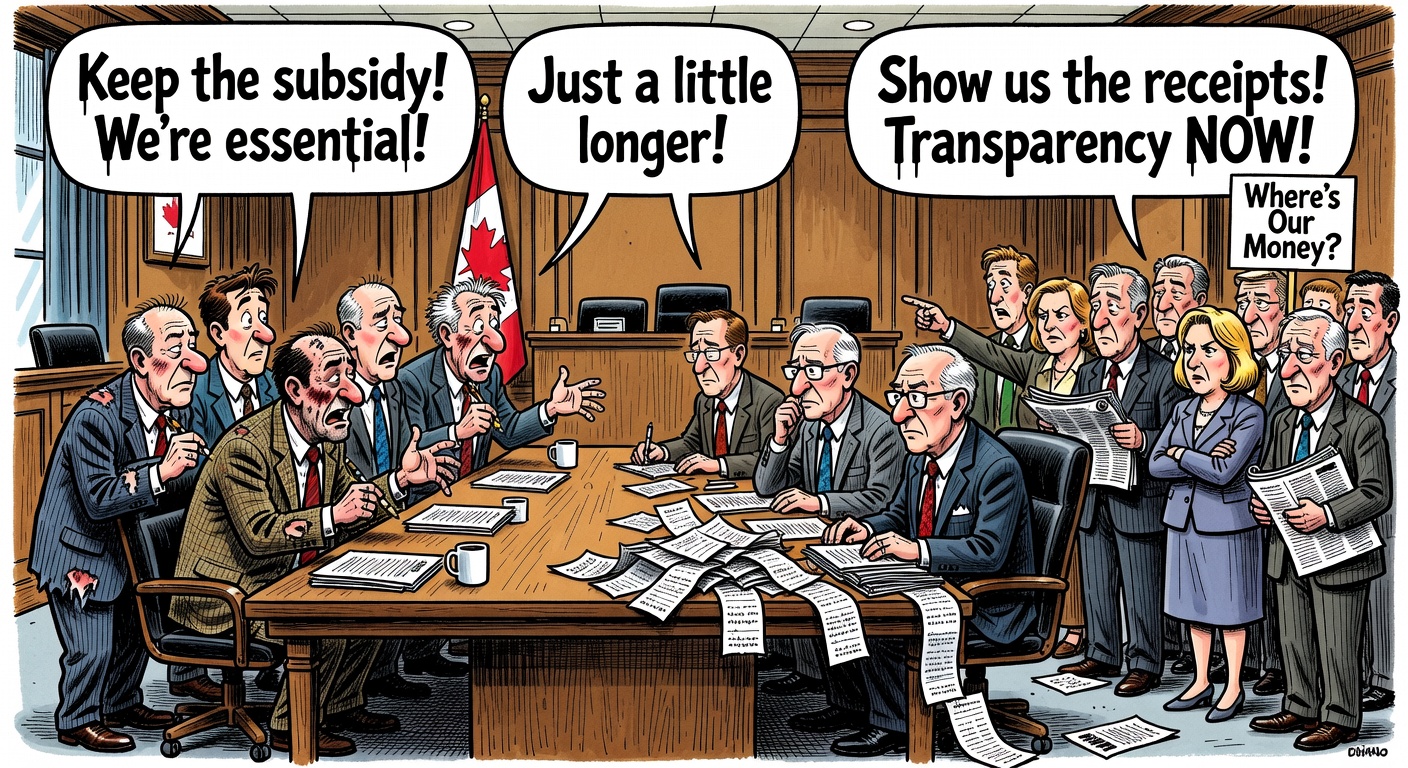
The Canadian Journalism Labour Tax Credit was presented as help for journalism. It is now becoming a test of whether Ottawa can subsidize the press without quietly buying political insulation for itself.
Blacklock’s Reporter says government-paid publishers are petitioning MPs to maintain richer payroll rebates worth up to $29,750 per eligible newsroom employee. The key word is “maintain.” The enhanced rate was not designed to last forever. The Canada Revenue Agency says the credit is refundable, applies to qualifying journalism organizations, and that the rate rose to 35% for the period from January 1, 2023 to December 31, 2026. After that, CRA says the rate returns to 25%.
The math is not complicated. CRA also says the annual cap on qualifying labour expenditures increased from $55,000 to $85,000 per eligible newsroom employee as of January 1, 2023. Thirty-five percent of $85,000 is $29,750. Twenty-five percent of the old $55,000 cap is $13,750. That is the difference taxpayers are being asked, directly or indirectly, to keep funding.
The Parliamentary Budget Officer put a public price on the enhancement in 2024. The PBO estimated the new provisions would add $104 million to the public cost, noting the measure permanently raised the labour-cost cap while temporarily lifting the credit rate over four years. That is not pocket change. It is a public subsidy to an industry that covers the government deciding whether the subsidy continues.
This is where conservatives should be precise. The issue is not whether journalism matters. It does. Local reporting matters. Court reporting matters. Investigations matter. A country without independent reporters becomes easier for politicians, bureaucrats and corporations to manage.
But independence is exactly the point. If a newsroom’s payroll depends on a refundable federal credit, and that newsroom’s publisher is lobbying MPs to preserve richer terms, Canadians are entitled to see the full conflict-of-interest picture. Who receives the credit? How much does each organization receive? Which publishers or associations are lobbying to extend the enhanced rate? What meetings have ministers, MPs and senior officials taken? What conditions, if any, protect editorial independence?
The Carney government should not be allowed to handle this as a quiet budget-line extension. Before Parliament votes on any continuation, Ottawa should publish a recipient list, aggregate and organization-level amounts, lobbying correspondence and a plain-language sunset review. If publishers want public money, they should accept public disclosure.
Taxpayers can support journalism without writing a blank cheque. A temporary rescue should not become a permanent dependency hidden behind noble language. The standard is simple: no more media subsidies without receipts.
Blacklock’s Reporter: May 15, 2026 reporting on publishers seeking to keep enhanced payroll rebates; Canada Revenue Agency: Canadian Journalism Labour Tax Credit; Parliamentary Budget Officer: Supporting Journalists and News Organizations.