Carney Is Turning Public Assets Into a Cash Register
Carney says Ottawa is open to selling public assets to fund infrastructure. Before any airport, port, rail or Crown asset is monetized, Canadians deserve a public-interest test.
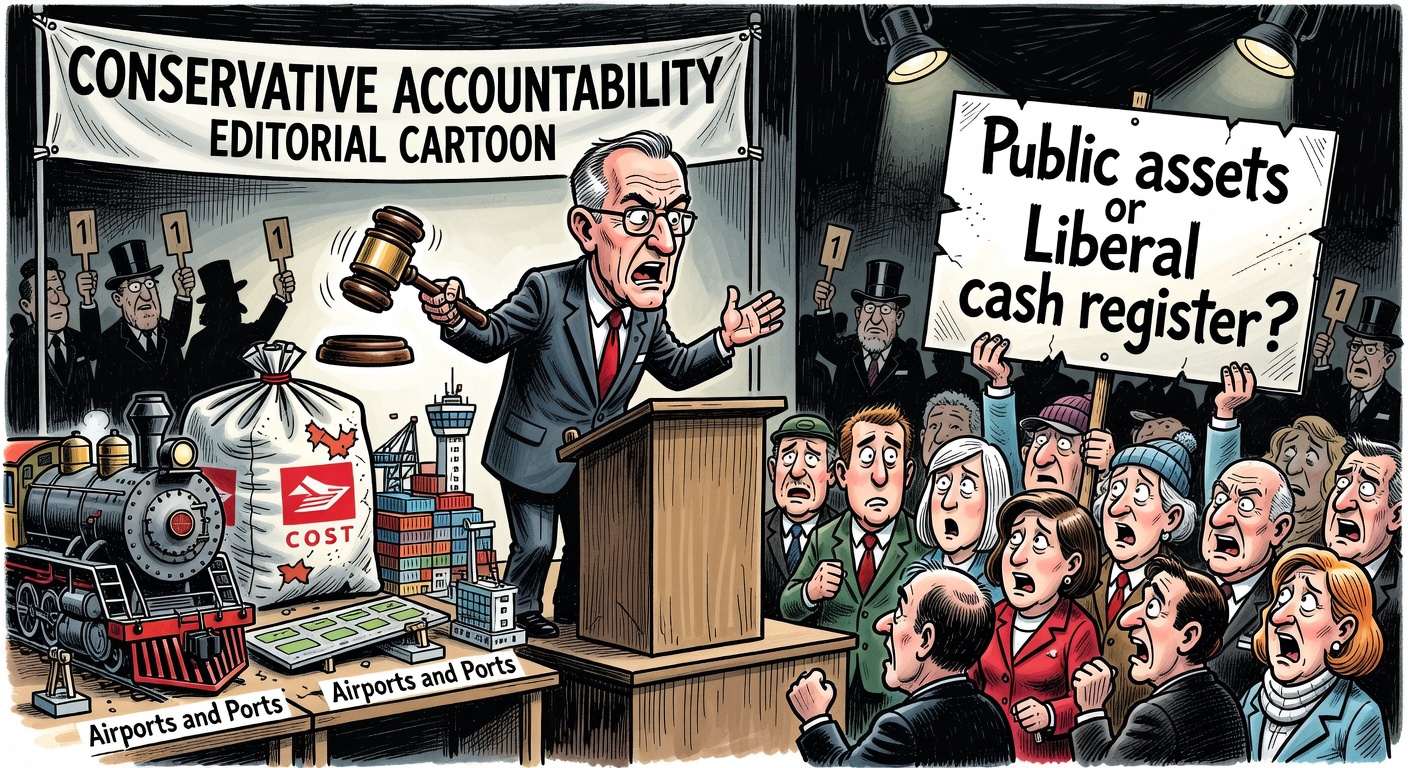
Prime Minister Mark Carney has now said the quiet part out loud: Ottawa is open to selling public assets if the proceeds can help fund new infrastructure.
Canadian Press reporting carried by CityNews says Carney told reporters that public assets could be sold where it makes sense, with airports specifically in the conversation and ports already under review through a federal discussion paper. Reddit threads lit up almost immediately, with Canadians asking the obvious question: if “Canada is not for sale” was the campaign posture, why are airports, ports and other strategic assets suddenly on the table?
This is not automatically wrong in every case. Governments can own assets badly. Some assets may be better governed locally, commercially or through tight public-private structures. But selling public infrastructure to fill a financing hole is one of the oldest political traps in the book: politicians get cash today, taxpayers lose control forever, and future users pay through fees, tolls or monopoly pricing.
That risk is especially serious under Carney because his economic model is built around mobilizing private capital through the Canada Strong Fund. Ottawa announced the fund as a $25 billion vehicle to invest alongside private money in major projects. Now the government is talking about “unlocking” federal asset value. Canadians should hear that phrase clearly: it means turning assets Canadians already own into capital for a new investment agenda.
Before any sale, Ottawa should publish a hard test. What exactly is being sold? Who can buy it? Will foreign state-linked entities be barred? What revenue does the asset currently generate? What user fees could rise after privatization? What safeguards protect national security, rural service, workers and supply chains? Will proceeds reduce debt, or simply seed another Liberal-branded fund?
Ports and airports are not ordinary real estate. They are strategic gateways. Canada is a trading nation with a thin corridor economy: goods move through limited ports, rail links, airports and border crossings. If those choke points are transferred to private owners without ironclad rules, the public can lose leverage over the very infrastructure the country depends on.
Carney’s defenders will call this sophisticated finance. Conservatives should call it what it is: a demand for receipts. If a public asset is obsolete, prove it. If private capital can improve service, prove it. If taxpayers will be better off over 30 years, publish the math.
Canada does need infrastructure. It needs ports that work, airports that expand, rail that moves, and projects that get built. But the answer to Liberal debt and delays cannot be a quiet auction of national assets.
The rule should be simple: no sale without full disclosure, parliamentary scrutiny, Canadian-control safeguards, and a public-interest case stronger than “Carney needs cash.”
Canadian Press / CityNews: Carney says he is open to selling infrastructure like airports to finance projects; Reuters via MarketScreener: Canada weighing options for airport capital; Reddit discussion: Canadians debate public asset sales; Prime Minister’s Office: Contrecœur port expansion background.