IRCC Just Put a Housing Number on Immigration: 82,000 Homes
Ottawa finally admits immigration affects housing. Now Canadians need to see the capacity math before the next levels plan is sold as compassion or growth.
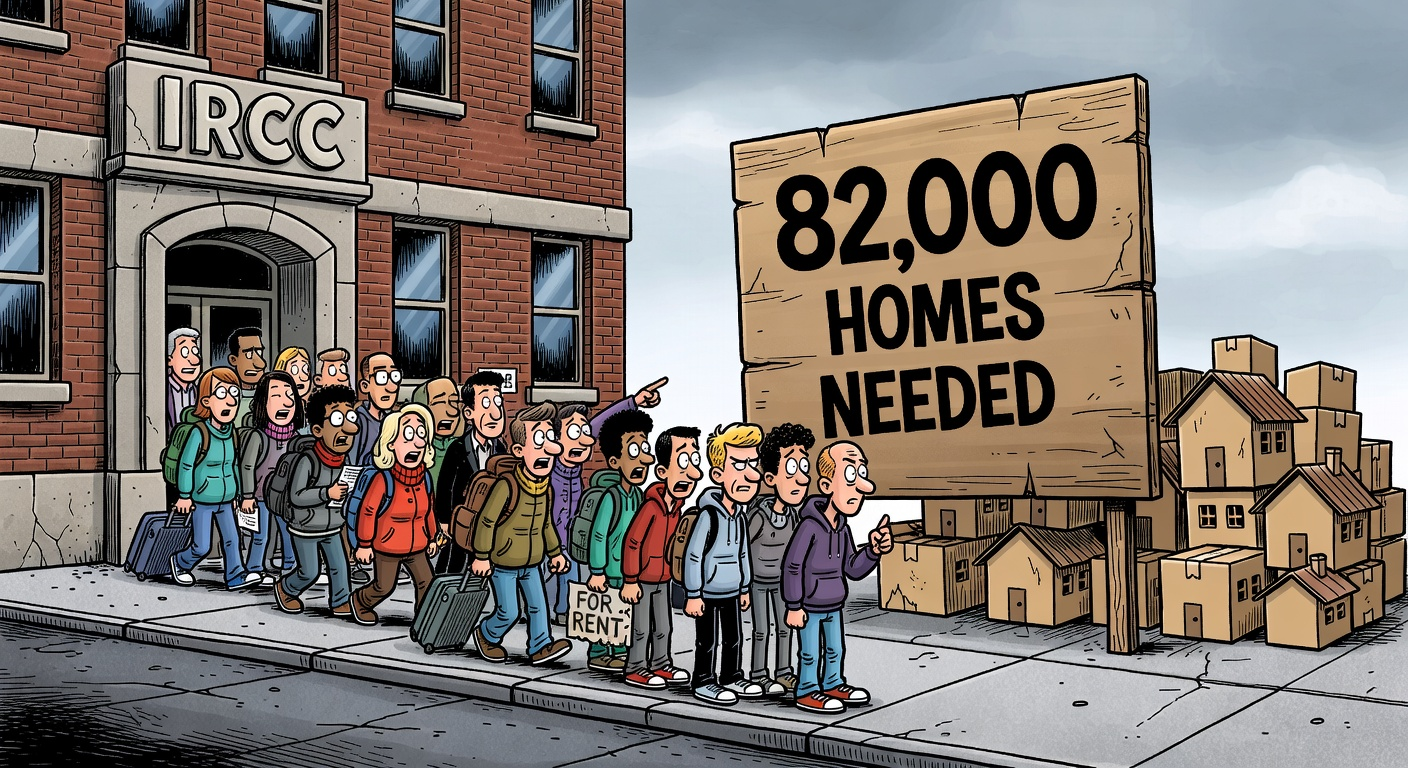
For years, Canadians were told the housing crisis was everything except an Ottawa planning failure. It was zoning. It was interest rates. It was greedy investors. It was municipalities. Some of that matters. But now Immigration, Refugees and Citizenship Canada has put a hard number on the pressure created by federal intake decisions.
Blacklock’s Reporter says the Department of Immigration calculated that Canada needed nearly 82,000 homes to shelter new landed immigrants admitted last year. The department’s plain-language admission was equally important: “Immigration affects housing.” That sentence should be printed at the top of every immigration levels plan from now on.
CMHC’s own construction numbers show why this matters. Actual 2025 housing starts in centres of 10,000 people or more reached 241,171 units. If the immigration housing figure is nearly 82,000 homes, that is roughly one third of all urban starts in a year that was already straining renters, first-time buyers, infrastructure and public services.
This is not an argument against immigrants. Conservatives should say that clearly. People who come here legally, work hard, build families and contribute to Canada are not the problem. The problem is a Liberal government that expanded intake beyond the country’s ability to absorb newcomers honestly, then acted surprised when housing, healthcare and schools cracked under the load.
IRCC’s 2025 Annual Report says the quiet part out loud. It states that the pace of arrivals began to exceed Canada’s capacity to absorb and support newcomers, and that growth put pressure on housing supply, healthcare and schools. That is not Conservative spin. That is the department responsible for the file acknowledging the capacity problem.
The Carney Liberals now say the 2026–2028 plan will stabilize permanent-resident targets at 380,000 per year, lower temporary-resident admissions targets and reduce temporary residents to below five percent of the population by the end of 2027. Fine. But after years of denial, Canadians should not accept targets without tables.
Every annual immigration plan should include a housing-capacity appendix: projected households, required units, regional pressure, school seats, healthcare load, infrastructure costs and a comparison against realistic CMHC starts and completions. If Ottawa can estimate intake, it can estimate the homes needed to make that intake humane and sustainable.
That is the accountability test. Do not sell immigration as compassion while forcing newcomers into bidding wars, basement crowding and overburdened services. Do not tell young Canadians housing affordability is a priority while adding demand without proving supply. And do not call critics divisive when the government’s own department admits the math is real.
Canada needs an immigration system with public consent. Public consent requires honesty. The first honest sentence is now on the record: immigration affects housing. The next step is making Ottawa prove, before the fact, that the homes exist.
Blacklock’s Reporter: “Count Homes For Immigrants,” May 15, 2026; IRCC: 2025 Annual Report to Parliament on Immigration; CMHC: Housing starts up 5.6% in 2025 from 2024.