CBC’s Extra $150M Needs Budget Office Receipts
If Ottawa is handing the state broadcaster another $150 million, Parliament and taxpayers deserve a clear spending plan — not a locked drawer.
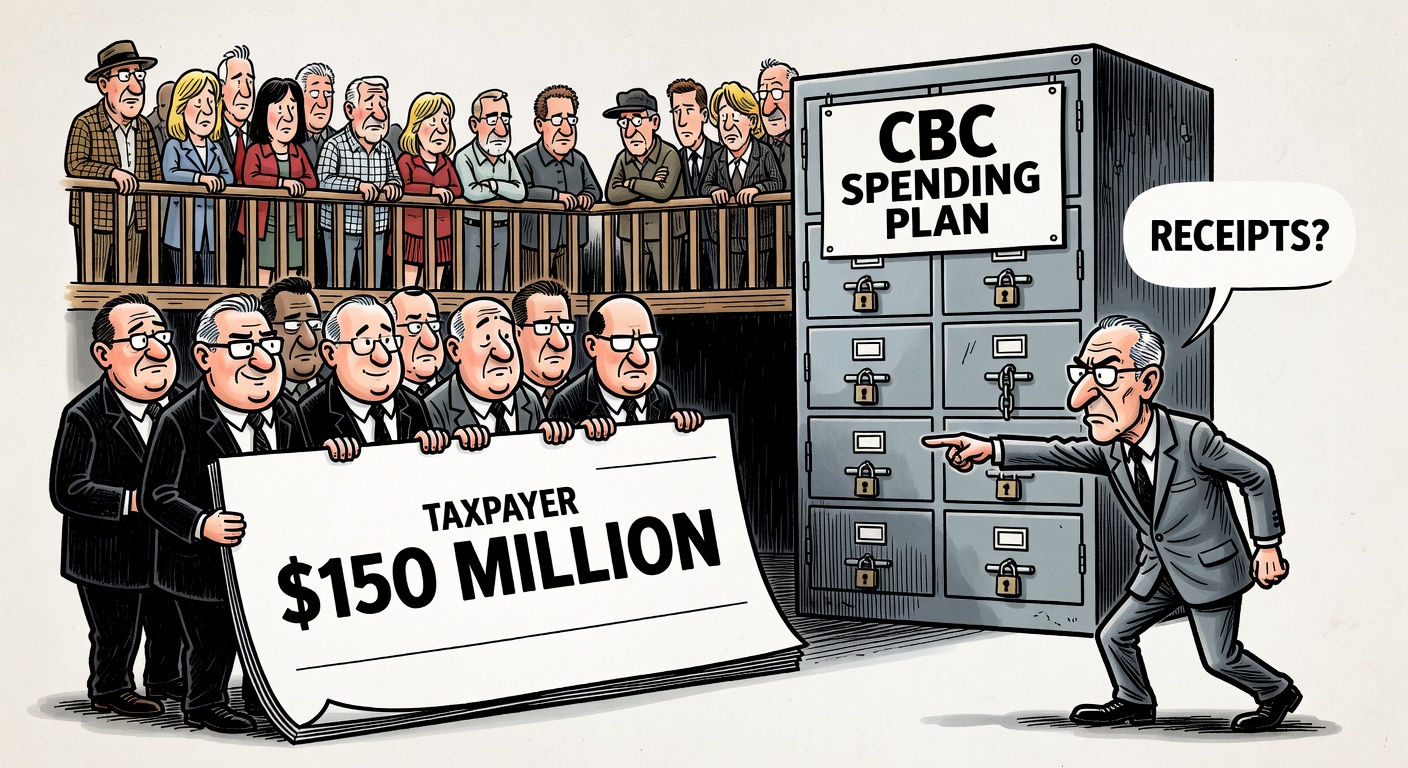
Blacklock’s Reporter published a simple but serious accountability claim Thursday: CBC managers would not tell the Parliamentary Budget Officer how they plan to spend an extra $150 million. Blacklock’s reports the extra money raises the Crown broadcaster’s annual parliamentary grant to a record $1.6 billion this year.
That should bother every taxpayer, whether they like CBC programming or not. The question is not whether Canada should have public broadcasting. The question is whether a government-funded broadcaster can receive nine-figure increases while declining to provide clear answers to Parliament’s own budget watchdog.
Budget 2025 itself says the government proposed $150 million in 2025-26 for CBC/Radio-Canada to strengthen its mandate, better reflect Canadians’ needs, explore mandate modernization, and even examine possible Eurovision participation. Those are political choices. Political choices made with public money require public receipts.
The Liberal government often talks about strengthening institutions. But institutions are strengthened by accountability, not by insulation. If the CBC needs additional funds for local news, emergency broadcasting, French-language service, Indigenous programming or digital modernization, it should be able to publish the breakdown. If the money is for salaries, consultants, foreign programming, executive layers or audience-growth experiments, Canadians should know that too.
This matters especially because CBC sits inside a broader Liberal media-funding ecosystem. Ottawa subsidizes news organizations through tax credits and support programs, regulates online platforms through broadcasting and news laws, and funds the national public broadcaster directly. A government that spends heavily in the media space must be more transparent than ordinary departments, not less.
The Parliamentary Budget Officer exists so MPs can scrutinize spending before it disappears into departmental language. When a Crown corporation refuses or fails to provide a usable plan, MPs should not shrug. They should summon the documents, publish the line items and ask management to explain the deliverables.
At minimum, CBC should publish a plain-language table showing how much goes to news, entertainment, regional service, French-language service, Indigenous content, digital platforms, administration, outside contracts and executive compensation. That would not compromise journalism. It would prove management can distinguish public service from institutional self-protection.
Prime Minister Mark Carney’s government promised fiscal discipline while asking Canadians to accept higher debt charges, larger central spending pools and new national funds. CBC’s extra $150 million is a test case. If even the public broadcaster’s top-up cannot be explained clearly, why should taxpayers trust bigger promises elsewhere?
Defund, reform, or defend the CBC — Canadians can argue all three. But no serious democracy should accept “just trust us” as the spending plan for $150 million.
Blacklock’s Reporter: CBC-TV Defies Budget Office; Government of Canada: Budget 2025, Chapter 3 — Protecting Our National Broadcaster; Parliamentary Budget Officer: Office of the Parliamentary Budget Officer.