Carney’s Electricity Grid Promise Needs a Trillion-Dollar Cost Test
Doubling Canada’s electricity grid may sound nation-building. Without hard numbers, milestones and ratepayer protection, it can also become another Liberal blank cheque.
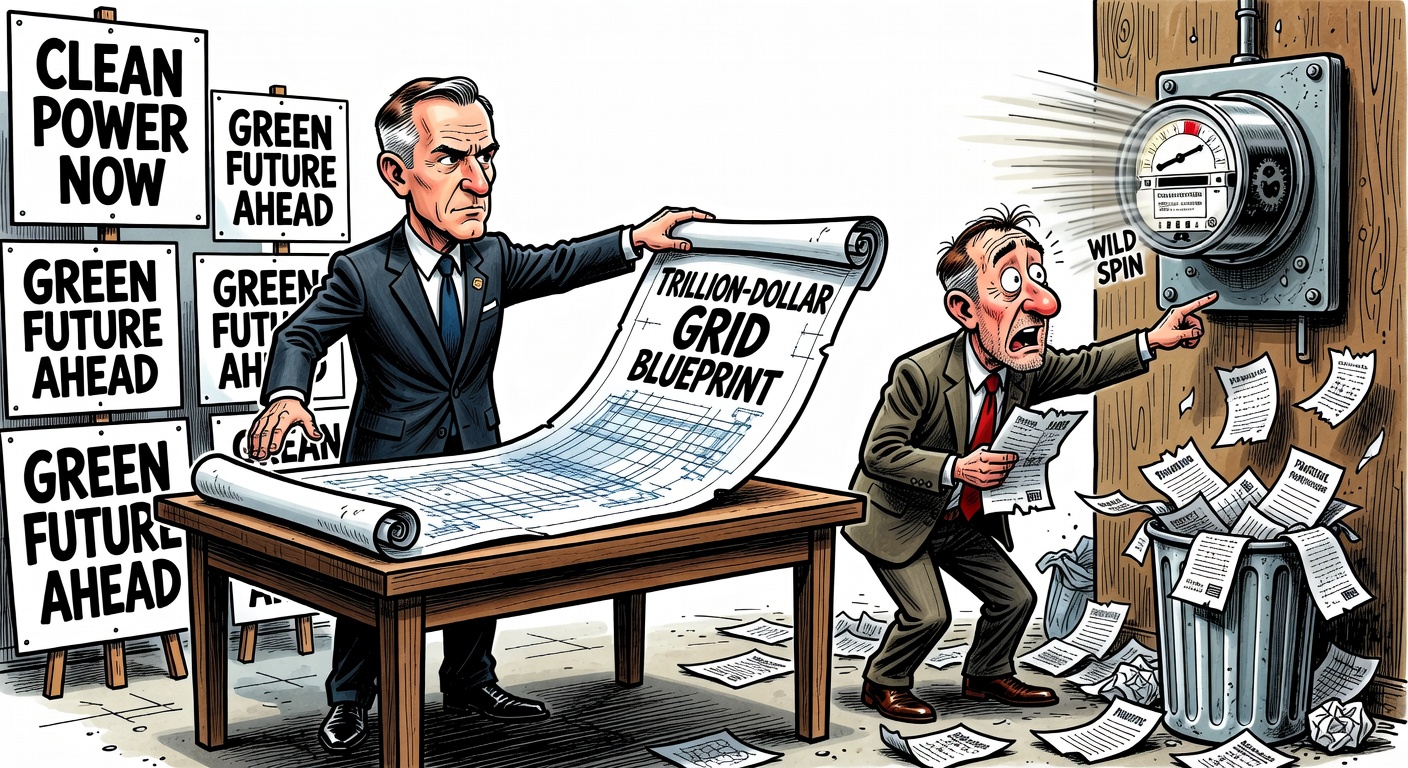
Prime Minister Mark Carney announced a National Electricity Strategy on Thursday, promising to “build at scale and speed” and double Canada’s electricity grid by 2050. The government’s own strategy says electricity demand is expected to double by mid-century and that expanding and modernizing the system is forecast to cost over $1 trillion between now and 2050.
That is not a rounding error. It is a generational spending and ratepayer question. The Liberal pitch is familiar: large national plan, climate language, affordability claims, industrial strategy, Indigenous partnerships, major projects, new consultations and future details. Canadians have heard this style before. The problem is not ambition. The problem is whether the people paying the bill get enforceable receipts before the cheques start moving.
The strategy says Canada will need new generation, more transmission, grid modernization, financing mechanisms, regulatory certainty, labour training and domestic manufacturing capacity. It also acknowledges natural gas will continue to play an important role in reliability and affordability, especially in Western Canada. That admission matters. After years of Liberal rhetoric that treated Canadian oil and gas as a problem to be managed, reality is forcing Ottawa to concede that dependable power cannot be built on slogans.
Carney is selling electrification as the path to affordability and competitiveness. But affordability does not come from press conferences. It comes from project discipline: who pays, who builds, what is permitted, what is delayed, what happens to household bills, and what happens when costs blow past the first estimate.
The conservative accountability test should be simple. First, publish a province-by-province cost table. Second, show how much of the trillion-dollar build will land on federal taxpayers, provincial taxpayers, utilities, private investors and household ratepayers. Third, identify which projects will be fast-tracked and which regulations will be changed. Fourth, publish annual milestones so Canadians can see whether capacity is actually being built or whether Ottawa is merely renaming consultation processes.
This also belongs in the Carney conflict file. A prime minister with deep ties to global finance and green investment should be especially careful when launching trillion-dollar infrastructure strategies that will attract banks, pension funds, asset managers, consultants and politically connected contractors. The government must disclose procurement rules, conflict screens and beneficiary lists before the money flows.
Canada does need reliable, affordable power. Data centres, mining, manufacturing, housing and basic household life all depend on it. But the lesson of the last decade is clear: Liberal mega-promises become expensive fast when accountability arrives late. If Carney wants Canadians to trust a trillion-dollar electricity transformation, he should start with the bill.
Prime Minister of Canada: National Electricity Strategy announcement; Natural Resources Canada: Powering Canada Strong strategy; Associated Press: Canada doubles down on clean energy commitment.