Health Canada Should Publish the Cannabis Licence Criminal-Record Numbers
Legalization was sold as taking cannabis out of criminal hands. If past drug records do not automatically bar federal cannabis licences, Canadians deserve aggregate disclosure on who is being approved.
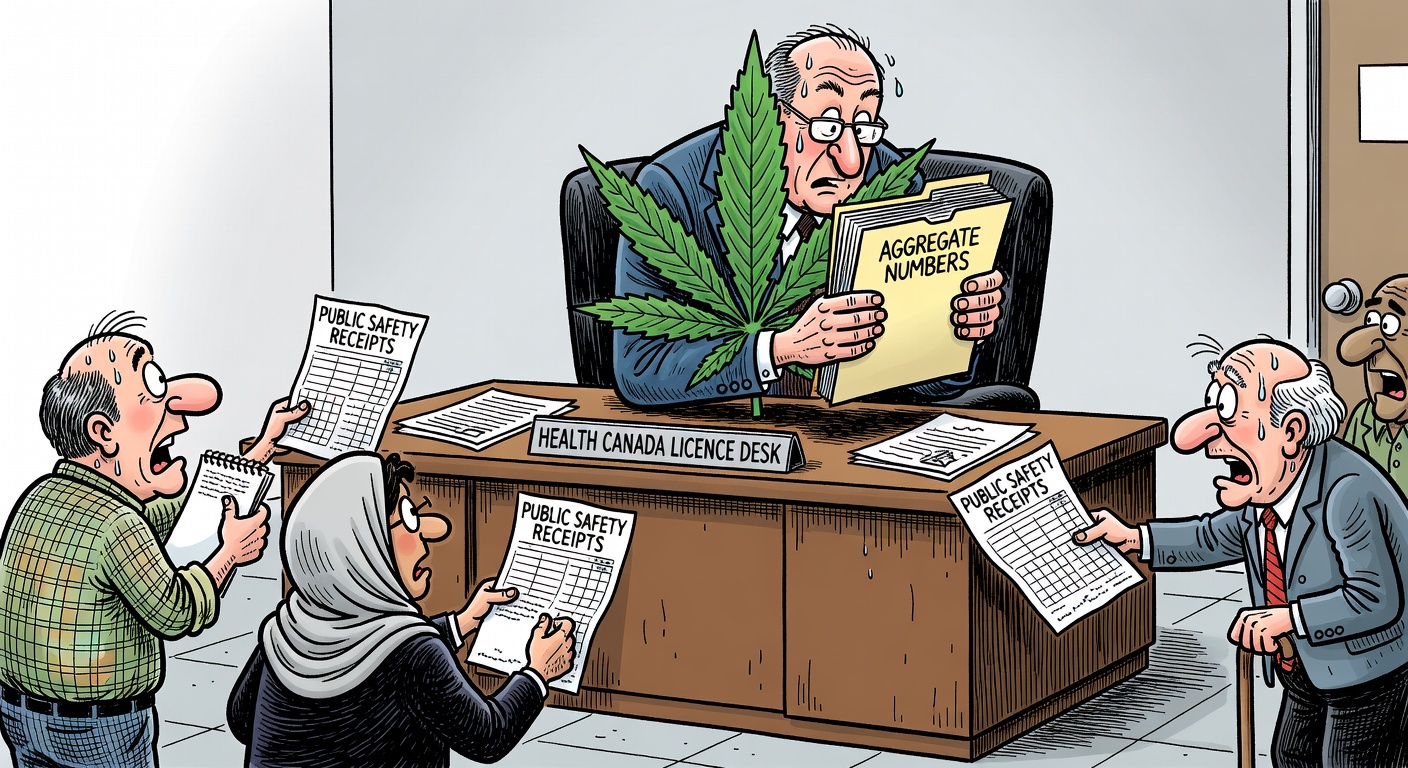
Ottawa’s cannabis bargain was simple: legalize, regulate, and push the illicit market out. That bargain depends on public trust. So when Health Canada confirms that a cannabis-related criminal history “may not prevent” a security clearance, the public deserves more than reassurances. It deserves numbers.
Blacklock’s Reporter reported Wednesday that Canadians with drug convictions are not automatically barred from becoming federally licensed cannabis operators, and that regulators would not say how many licensed growers, processors or retailers have criminal records. That is the accountability problem. The issue is not whether every old possession offence should end a person’s chance to work in the legal economy. The issue is whether Ottawa can ask Canadians to trust the screening system while withholding basic aggregate results.
Health Canada’s own security-clearance guidance says the process assesses whether an applicant could pose an “unacceptable risk” to public health or public safety, including the risk that cannabis could be diverted to an illicit market. It also says the department reviews domestic criminal records, foreign criminal records where applicable, law-enforcement records, intelligence information and financial information.
That sounds serious. But serious systems should be measurable. How many applicants disclosed cannabis or drug-related criminal histories? How many were approved? How many were denied? How many approvals involved non-violent, lower-risk conduct, and how many denials involved organized crime, trafficking, corruption or violence? Those figures can be published without naming private individuals or compromising investigations.
Health Canada is right that fairness matters. A decades-old simple possession case is not the same as a trafficking network. The department’s guidance explicitly says it may grant a clearance to someone who took part in non-violent, lower-risk criminal activity in the past. That may be reasonable. But it is only politically defensible if the public can see that the line is being drawn carefully, consistently and in the public interest.
The Liberal instinct is too often to treat transparency as a nuisance after policy has been announced. Cannabis legalization should have been paired with annual public reporting on security clearances from day one: applications, approvals, refusals, revocations, broad offence categories, and compliance outcomes. Instead, Canadians are asked to accept a black box.
Prime Minister Mark Carney’s government does not need another slogan about trust. It needs an exemption-proof disclosure rule. Publish the aggregate licence-screening data every year. Show how many operators had relevant records. Show how many were refused. Show how diversion risks are monitored after approval.
Legal cannabis can only beat the black market if Canadians believe the legal market is cleaner, safer and honestly regulated. Secrecy does not protect that confidence. Sunlight does.
Blacklock’s Reporter: Drug Conviction’s No Barrier; Health Canada: Security clearance process; Health Canada: Proposed approach to the regulation of cannabis.