The Liberal Interest Bill Is Headed Toward $80.9B — That Is Not “Fiscal Discipline”
The Carney Liberals want Canadians to hear the phrase “Canada Strong.” The fiscal tables tell a colder story: public debt charges are projected to climb to $80.9 billion by 2030-31.
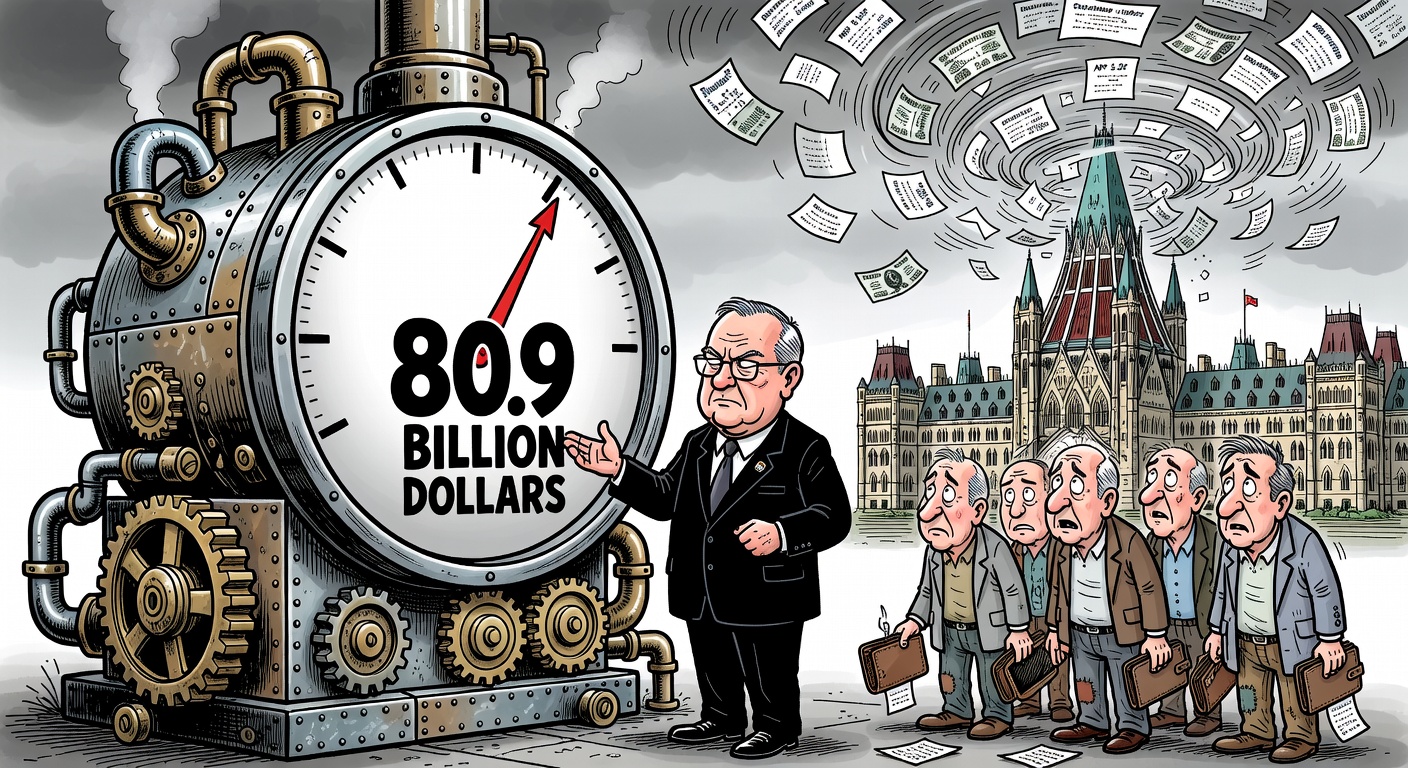
The Carney Liberals want Canadians to hear the phrase “Canada Strong.” The fiscal tables tell a colder story: public debt charges are projected to climb to $80.9 billion by 2030-31.
That number comes from Annex 1 of the government’s own Spring Economic Update. Public debt charges are listed at $53.4 billion for 2024-25, $54.0 billion for 2025-26, $58.7 billion for 2026-27, $65.7 billion for 2027-28, $71.6 billion for 2028-29, $75.7 billion for 2029-30 and $80.9 billion for 2030-31. That is not a Conservative talking point. That is Ottawa’s table.
Every dollar spent on interest is a dollar not spent on tax relief, health transfers, defence readiness, border security, infrastructure maintenance or actual services for Canadians. Interest does not build a bridge. It does not train a doctor. It does not house a young family. It rewards yesterday’s borrowing and sends tomorrow’s taxpayers the invoice.
The government’s defence is predictable. It points to the federal debt-to-GDP ratio and says Canada compares favourably with other G7 countries. But households do not pay bills with ratios. Businesses do not hire workers with ratios. Provinces do not build hospitals with ratios. Cash matters. And Ottawa’s cash interest bill is moving in the wrong direction.
The Spring Economic Update also leans heavily on the language of “capital investment” — the idea that borrowing can be acceptable if it buys long-term assets. That argument deserves scrutiny, not applause. If the spending is genuinely productive, publish the project list, timelines, expected returns and independent audits. If it is ordinary program growth relabelled as investment, Canadians deserve to know that too.
Carney was sold to voters as the adult in the room: the central banker who understood markets, debt and credibility. Then the accountability standard should be higher, not lower. A government led by a former central banker should be able to explain how it will stop debt servicing from crowding out national priorities.
Conservative fiscal accountability starts with a simple rule: do not confuse borrowed money with prosperity. Canada can invest, build and grow without pretending an $80.9 billion interest line is normal. The Liberals should publish a credible path to lower debt charges, cap operating spending, and submit major “investment” claims to transparent performance tests.
Until then, “Canada Strong” is just branding on a credit-card statement.
Government of Canada: Spring Economic Update 2026, Annex 1 — Details of economic and fiscal projections; Government of Canada: Economic and fiscal overview; Government of Canada: Annex 3 — Debt management strategy.