Carney Praises a Free Press — So Release the Press-Blacklist Records
If Ottawa is deciding who counts as an “accredited” reporter behind closed doors, Canadians deserve the records, the criteria, and the names of everyone in the room.
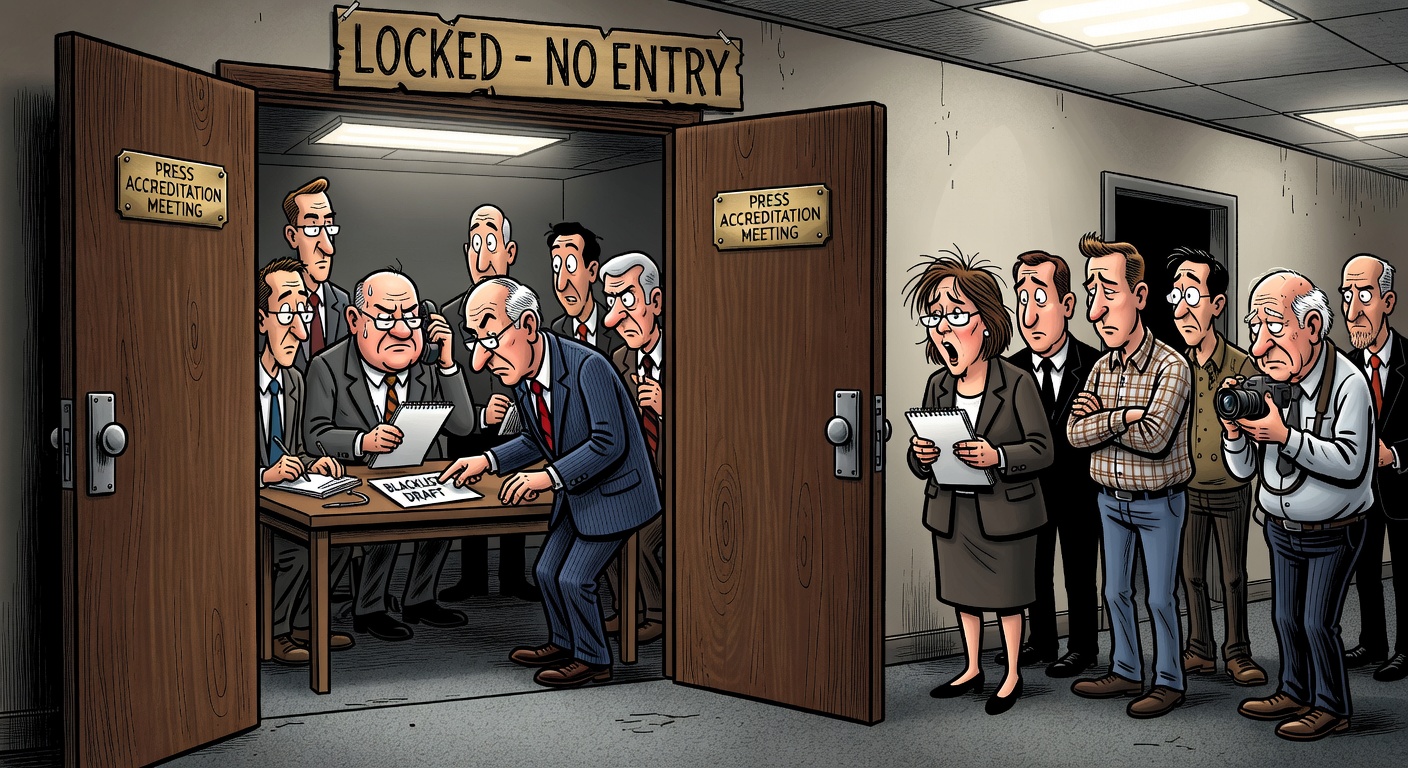
If a government praises press freedom in public while its own central machinery attends private meetings about which reporters get access, that is not a small process story. It is a democratic accountability problem.
Blacklock’s Reporter published an item on May 11 reporting that Access to Information records show staff in Prime Minister Mark Carney’s Privy Council Office attended a closed-door March 10 meeting to discuss which reporters would be blacklisted or “accredited.” Juno News summarized the same report, saying federal bureaucrats met privately over which reporters could be accredited and which could be effectively shut out of federal access.
That word — accredited — can sound harmless. Every event needs logistics. Security rules matter. Parliament Hill cannot be a free-for-all. But accreditation becomes dangerous when the rules are opaque, when officials can pick winners and losers, and when independent or inconvenient media are left wondering whether access depends on viewpoint, compliance, or proximity to the governing class.
The contrast with Carney’s own public language is hard to miss. In his World Press Freedom Day statement, the Prime Minister said that “a strong, independent, and free press” defines and defends Canadian values. Good. Then the government should act like it. A free press is not free only when it is legacy, subsidized, friendly, or institutionally acceptable. It is free when journalists can ask hard questions without worrying that anonymous officials will quietly decide they are not the right kind of press.
Conservative accountability does not require pretending every blogger, activist, or outlet has an automatic right to every secured room. It means the rules must be neutral, written, public, reviewable, and insulated from partisan pressure. If an outlet is denied accreditation for a real security reason, say what rule was triggered. If space is limited, publish the allocation criteria. If a blacklist exists, Canadians deserve to know who created it, who approved it, and how a reporter can appeal.
The Carney government should release the March 10 agenda, attendee list, briefing notes, decision records, draft criteria, and any communications with ministers’ offices or political staff. It should also publish the current federal media-accreditation policy and identify every outlet or reporter denied access under it.
Press freedom is not a slogan for official statements. It is tested when the questions are uncomfortable and the journalists are not on the approved list. If Ottawa has nothing to hide, it can show Canadians the records.
Blacklock’s Reporter: “Secret Meet On Press Blacklist”; Juno News: “Carney staff attended meeting on blacklisting certain media”; Prime Minister of Canada: Statement on World Press Freedom Day.