Bill C-22 Puts Every Canadian's Metadata on the Table
The Liberal government calls Bill C-22 a modern crime-fighting tool. The growing backlash says something else: Ottawa is asking Parliament to normalize lower privacy thresholds, secret technical orders and metadata retention on ordinary Canadians.
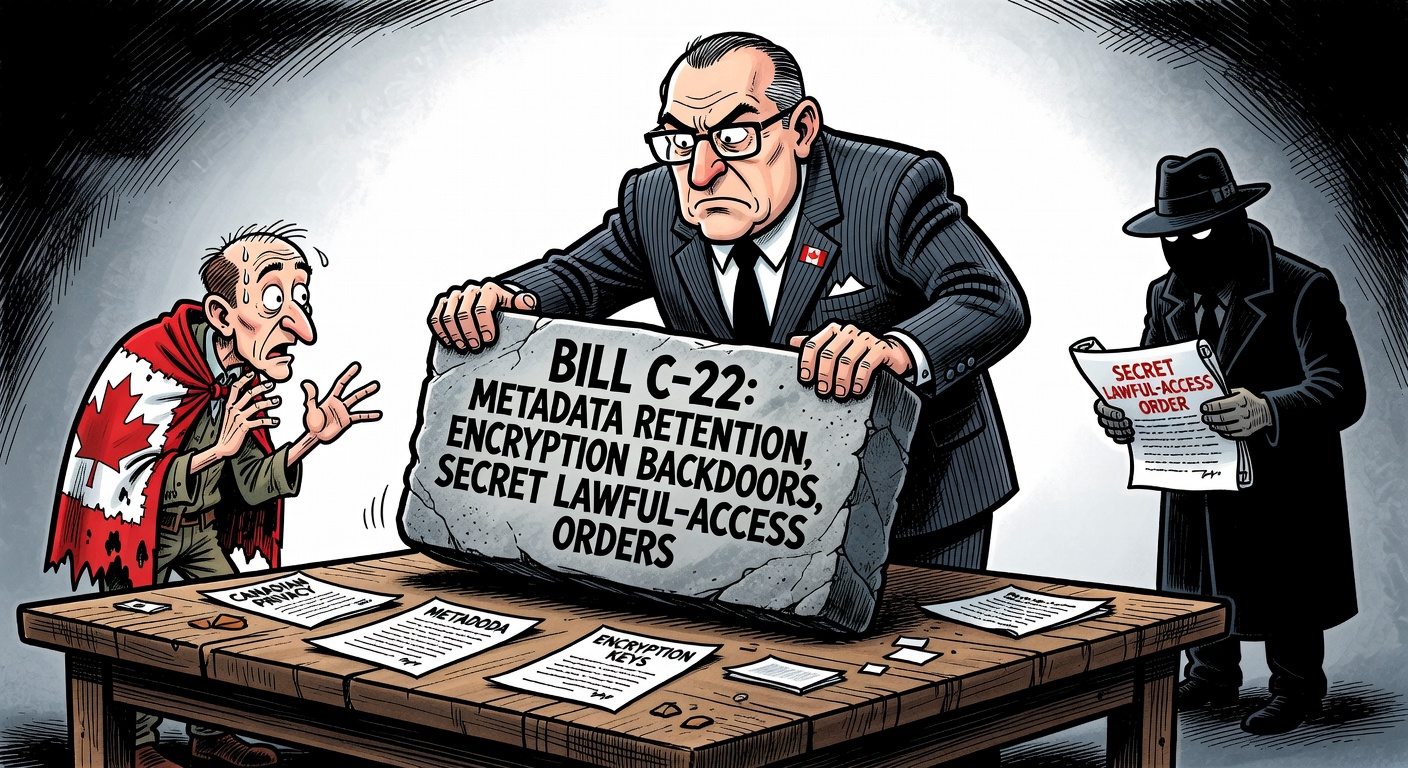
Canadians should not have to choose between public safety and constitutional privacy. Police need lawful tools to investigate serious crime. But those tools must be narrow, transparent and tested against the Charter before they are built into the digital infrastructure every citizen uses.
Bill C-22, formally the Lawful Access Act, 2026, is now at House committee after second reading. Parliament's own LEGISinfo page lists it as a government bill “respecting lawful access,” with committee consideration underway. That means the details matter now, not after the architecture is already in place.
The Canadian Press reports the bill is facing opposition from major digital companies, civil-liberties groups and law professors. One flashpoint is subscriber information. The bill would create a pathway for police to seek identifying data from service providers on “reasonable grounds to suspect,” not the higher “reasonable grounds to believe” standard critics say better reflects Supreme Court privacy rulings around subscriber data.
The second problem is technical capability. The bill would require some electronic service providers to maintain capabilities so police and CSIS can obtain communications and information. CP reports the public safety minister could issue orders to providers and that the bill would prohibit disclosure of an order's existence or contents. Apple and Meta warned that this structure could pressure companies toward weakened encryption or backdoor-like capabilities, even if the government insists that is not its intent.
The third problem is metadata retention. The bill would allow regulations requiring providers to retain metadata for up to one year. Ottawa says this is not message content. But metadata can reveal where a person goes, when they communicate and who they interact with. University of Ottawa law professor Michael Geist told MPs that retained mobile metadata at scale becomes a surveillance map of virtually every Canadian.
That is the conservative accountability point: power created for one purpose rarely stays limited to that purpose. If Liberals want Canadians to trust this bill, they should accept hard guardrails: no encryption weakening, no secret orders without meaningful review, a higher subscriber-data threshold and no bulk metadata retention on people suspected of nothing.
Public safety is real. So is state overreach. A government that cannot draw that line clearly should not be handed the keys to Canadians' digital lives.
Canadian Press via CityNews: Bill to help authorities probe online activities raises widespread privacy fears (May 10, 2026); Parliament of Canada LEGISinfo: Bill C-22, Lawful Access Act, 2026; Michael Geist: SECU testimony on Bill C-22 (May 8, 2026); CCLA civil-society joint letter on Bill C-22 (April 21, 2026).