PBO Main Estimates: Carney’s Spending Still Needs Receipts
The Liberals promised a more transparent fall budget cycle. The watchdog’s first major test says Parliament still has to chase the details.
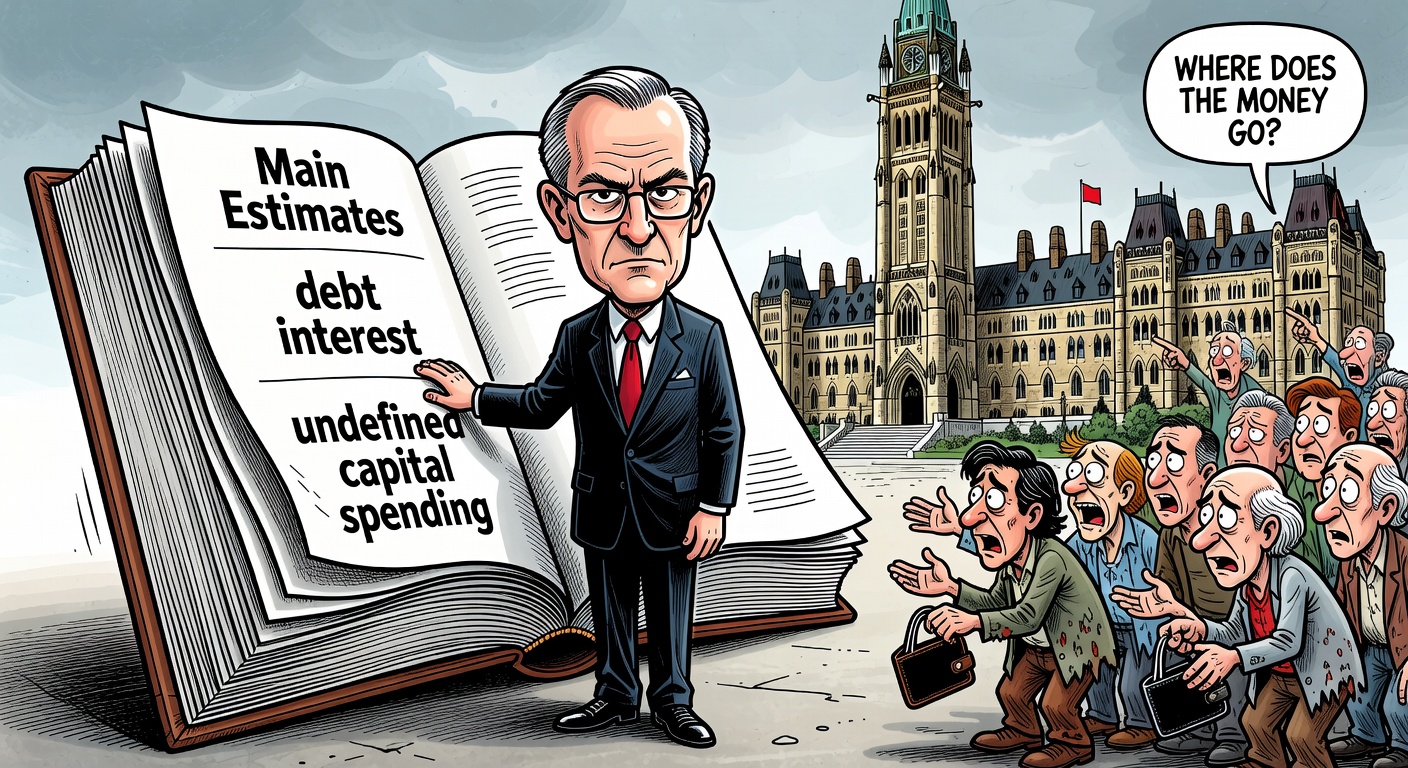
Mark Carney’s Liberals sold their new fall budget cycle as a way to improve transparency and help Parliament oversee public spending. Then the Parliamentary Budget Officer released the 2026-27 Main Estimates report on May 7, and the core accountability problem remained: Canadians are still being asked to trust a spending machine whose details arrive late, incomplete, or wrapped in optimistic labels.
The numbers are not small. The Main Estimates outline $502.8 billion in budgetary spending authorities for 2026-27. Of that, $230.4 billion needs a fresh vote from Parliament, while $272.4 billion flows through statutory authorities already approved in law. Transfers to individuals, provinces and other organizations account for $300.5 billion, or nearly 60 per cent of the total.
The most revealing line is not a new program. It is the bill for old borrowing. Public debt charges in the Main Estimates are $53.7 billion. In a separate Spring Economic Update assessment, the PBO warned debt charges are on a “concerning upward track,” rising from 10.6 per cent to 13.2 per cent of revenues between 2025-26 and 2030-31. On a per-person basis, the PBO projects public debt charges climbing from $1,409 in 2026-27 to $1,901 in 2030-31.
If Carney’s fiscal plan is disciplined, why does the watchdog keep finding missing definitions, missing metrics and rising interest costs?
That is the accountability test. The Liberals say they are cutting program spending through a comprehensive expenditure review. The PBO says these Main Estimates show operating expenditures down 6.3 per cent from 2025-26 estimates to date — but only 5.1 per cent once Canada Post is excluded. It also warns the decrease may not hold if later Supplementary Estimates add funding during the year.
The same pattern appears in the Spring Economic Update notes. The government says it will balance operating spending with revenues by 2028-29, but the PBO says Ottawa has not provided enough precision on what counts as “capital” versus “operating” spending. That matters because Carney’s framework allows borrowing for capital after 2028-29. If the definitions are elastic, so is the promise.
Then there is the Canada Strong Fund: a $25-billion endowment while the same government claims to be finding savings. The PBO’s warning is plain enough: if the fund is created without a fiscal surplus, taxpayers are making a leveraged investment, and Ottawa has not shown whether borrowing costs will be counted when judging returns.
Competent government is not a press conference. It is a ledger Parliament can read. Before Carney asks Canadians to applaud another “nation-building” plan, his government should publish the definitions, the scorecards, the borrowing costs and the delivery metrics. Canadians do not need more slogans. They need receipts.
Sources: Parliamentary Budget Officer: The Government’s Expenditure Plan and the Main Estimates for 2026-27; PBO: Spring Economic Update — Fiscal Anchors and Fiscal Sustainability; PBO: Departmental Spending and New Measures; Canadian Taxpayers Federation summary of PBO debt-interest figures.