Before the World Cup, Ottawa Must Release the Visa-Risk Numbers
Canada is about to host a global mega-event. Parliament is asking whether Ottawa has approved temporary visas despite fraud, criminal-record, inadmissibility or ministerial-override red flags. Canadians deserve answers before fans arrive.
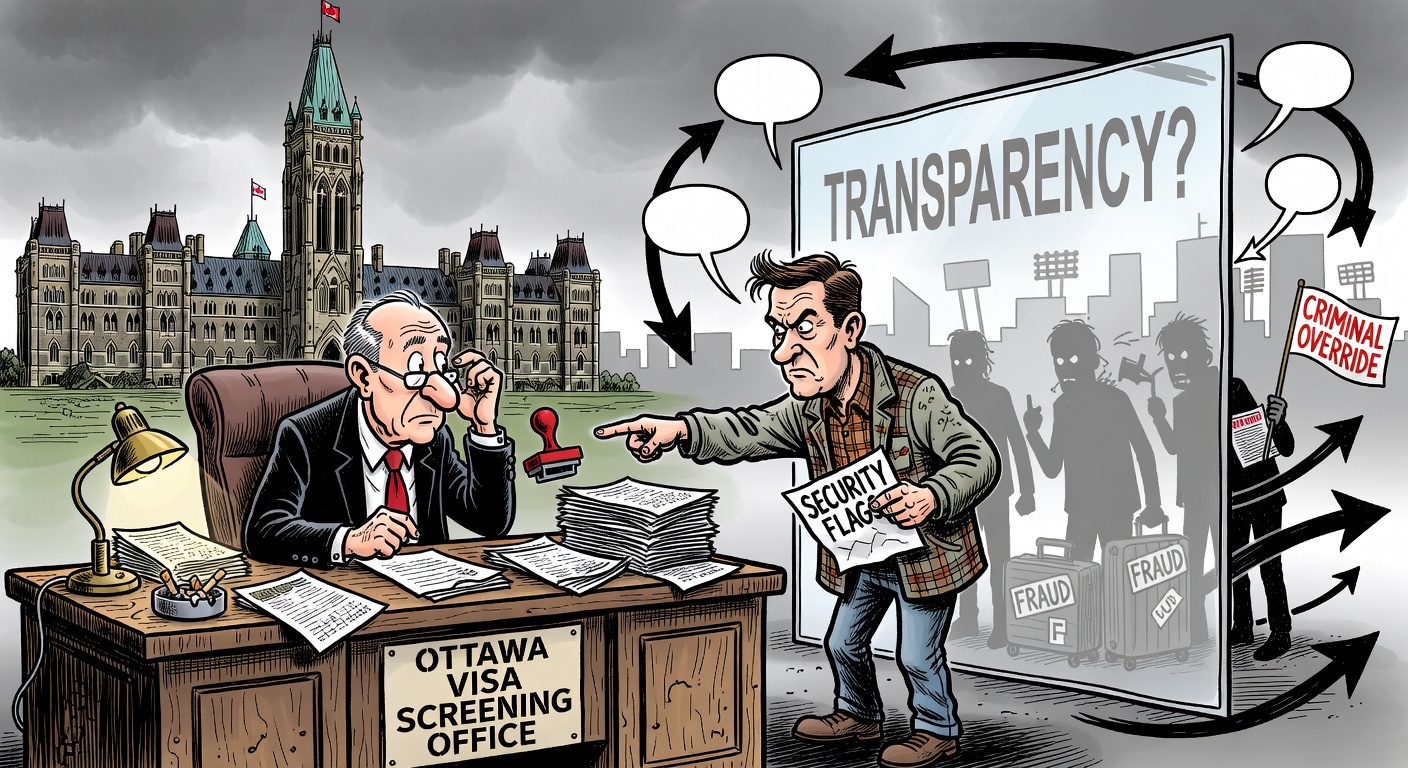
Canada will host 13 FIFA World Cup games in Toronto and Vancouver between June 11 and July 19, 2026. That should be a moment of national pride. It is also a public-safety test. Millions of eyes will be on Canada, and Ottawa’s visa-screening system needs to be strong enough — and transparent enough — to earn public confidence.
That is why Conservative MP Michelle Rempel Garner’s written question Q-1190 matters. Filed on May 1, it asks Immigration, Refugees and Citizenship Canada for World Cup-related data going back to January 1, 2025. The question is not vague partisan theatre. It asks for hard numbers: how many people granted temporary visas were identified by risk assessment units as associated, or potentially associated, with organizations inadmissible to Canada; how many were linked to fraudulent documentation; and how many were identified as having criminal records.
Q-1190 also asks how many foreign workers applied to enter Canada, how many applications were approved or denied, what criteria and supporting documentation were required, how many temporary resident visas were issued by length, and how many denied applications were overruled by the minister and then approved. Finally, it asks how IRCC and the Canada Border Services Agency are preparing for a surge in visa applications and screening demands.
Those are exactly the questions a responsible Parliament should ask before a global event, not after a security failure. The government’s own foreign-affairs briefing material says successful delivery of the 2026 World Cup requires coordination on visas, border management, cybersecurity, anti-crime and corruption issues. If Ottawa knows those areas are central to delivery, Ottawa should be able to explain what it is doing — and whether risky files have already been waved through.
To be clear, the public record does not yet tell Canadians that any specific security-risk applicant was approved. The point is that Parliament is formally asking whether it happened, how often, and under whose authority. That distinction matters. Accountability is not an accusation; it is the discipline of forcing the government to put numbers where the press release is.
The expected response date is June 17, 2026. That is inside the tournament window. That timing is unacceptable if the answers reveal problems that should have been fixed before kickoff. The Carney Liberals should table the data promptly, in full, and in a way Canadians can understand without bureaucratic fog.
Frontline visa officers and border agents can only do their jobs if political leaders back them with clear rules, honest reporting and zero tolerance for ministerial shortcuts. Before Canada welcomes the world, Canadians have a right to know whether the gatekeepers are being empowered — or overridden.