Honda Walks Away from the $15B EV Dream Carney Still Wants to Sell
The Alliston EV plant was supposed to produce up to 240,000 electric vehicles a year by 2028. Now Honda is reportedly pulling out, and Carney’s answer is that the sector faces “challenges.”
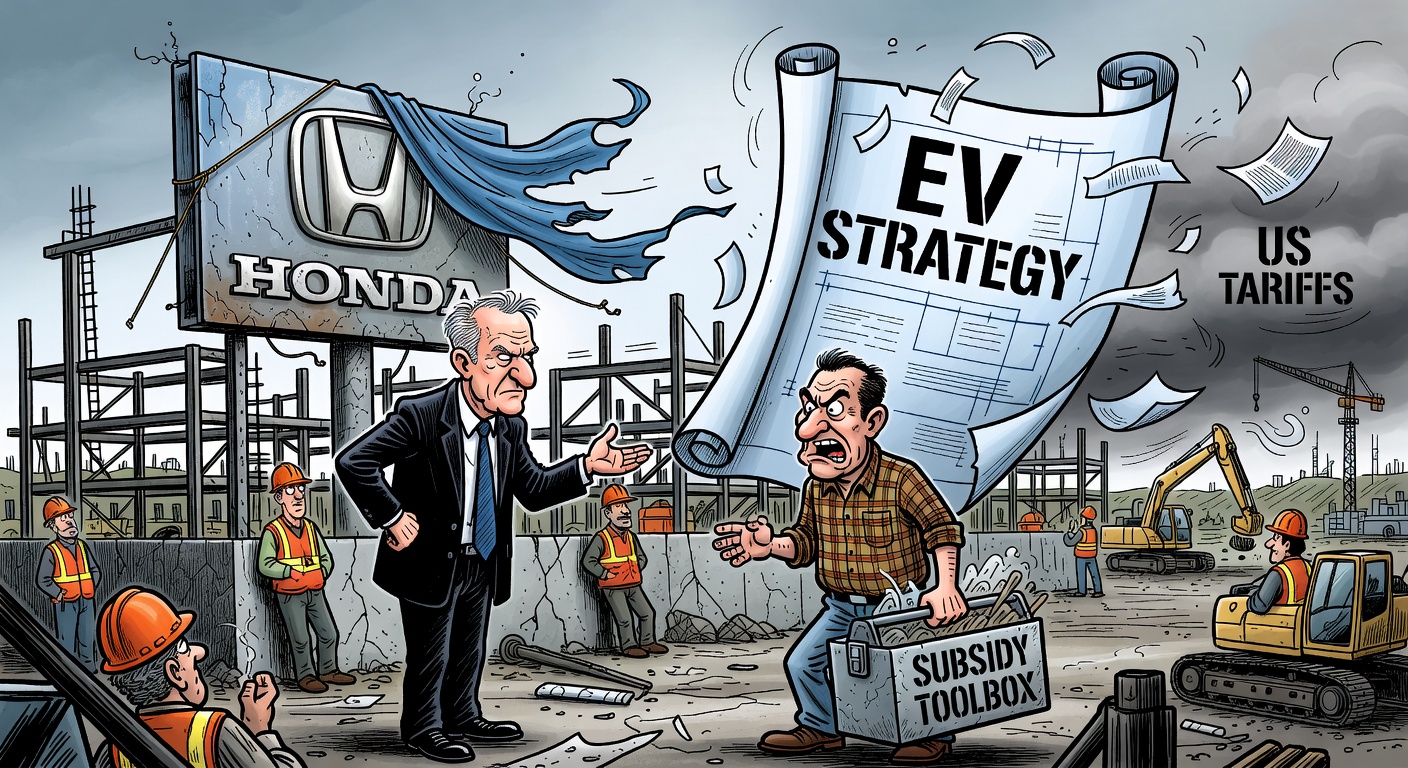
Prime Minister Mark Carney’s industrial sales pitch just collided with market reality. National Post reported Wednesday that Honda is pulling out of a $15-billion electric vehicle plant in Alliston, Ontario, after Nikkei Asia reported the company was changing course because of weaker U.S. EV demand and a pivot toward hybrids.
This was not a minor pilot project. The plant was supposed to be operational in 2028 and capable of producing up to 240,000 EVs annually. It was exactly the kind of project Liberal governments love to announce: big ribbon-cutting numbers, green industrial branding, and promises that Canada can subsidize its way into a new manufacturing future.
Carney’s response before caucus was to acknowledge “challenges” in the auto sector, including U.S. tariffs. That is true as far as it goes. Tariffs matter. CUSMA uncertainty matters. Integrated supply chains matter. But it is also incomplete. Honda’s reported decision was tied not only to trade pressure, but to waning EV demand in the United States and a strategic shift toward hybrids.
That matters because Liberal policy has treated EV adoption as an inevitability. Ottawa built mandates, incentives and industrial strategy around a political timetable, then asked taxpayers and workers to believe the market would obediently follow. When companies change course, Canadians are left asking whether the government was building a durable auto strategy or chasing an ideological headline.
Carney now says Ottawa will keep working with companies, help them “reposition” and support workers. Fine. But workers do not need more slogans. They need a competitive manufacturing environment: affordable power, realistic regulation, tax competitiveness, trade certainty, and technology-neutral policy that lets hybrids, plug-ins, combustion improvements and future fuels compete instead of forcing every answer through one government-approved funnel.
The uncomfortable lesson is obvious. A real auto strategy starts with what customers will buy and what companies can profitably build. A political auto strategy starts with what ministers want to announce. Canada has had too much of the second.
Honda’s reported pullout should be a warning shot. If Ottawa keeps pretending every cancelled or delayed EV plan is just a temporary “challenge,” more workers will be asked to pay for policy fantasies that collapse when the market changes.