Carney Finds Another $270M for Ukraine While Canada Borrows Toward $1.6T Debt
Canada can support allies and still demand receipts. Carney announced another $270 million for Ukraine while Ottawa’s own books show debt and interest costs climbing hard.
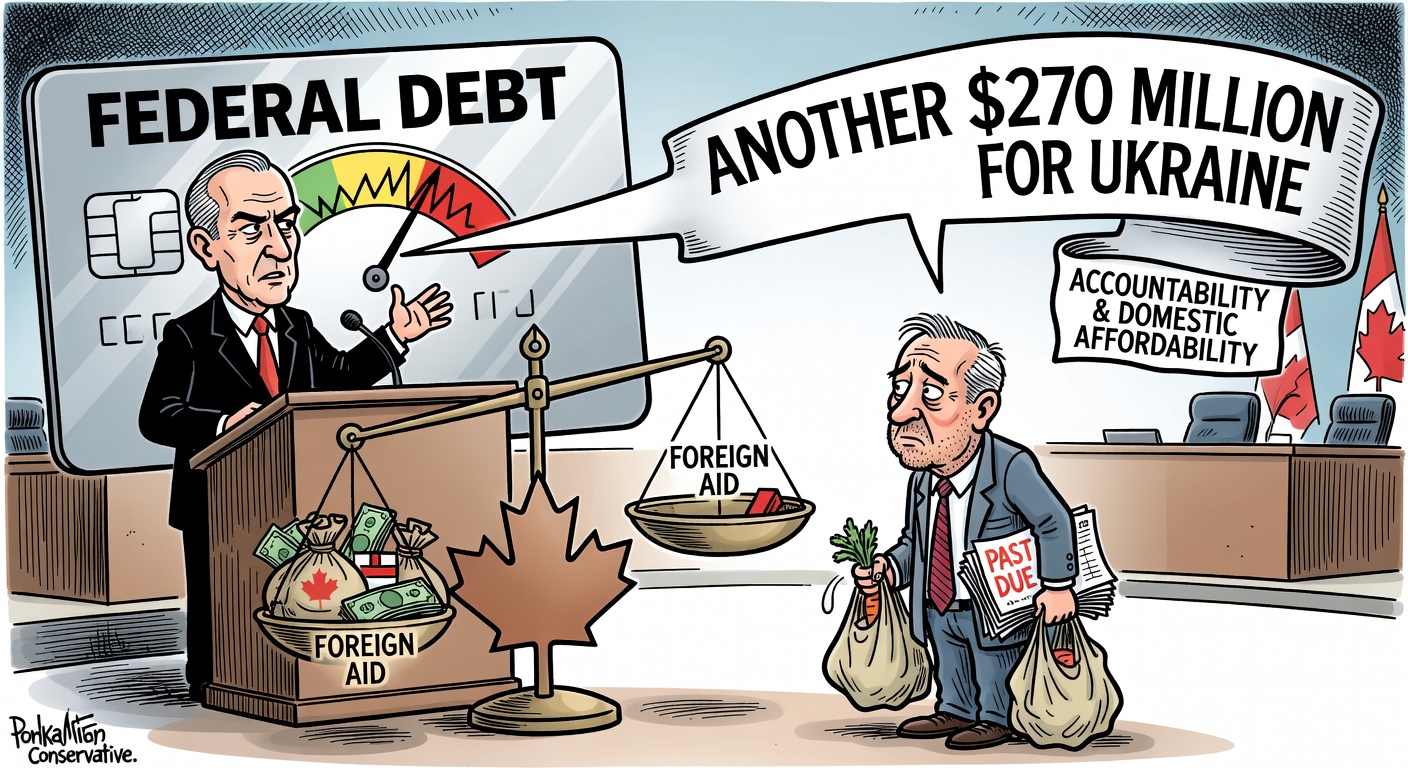
On May 4, Prime Minister Mark Carney announced another approximately $270 million, or US$200 million, for Ukraine through NATO’s Prioritised Ukraine Requirements List. The Prime Minister’s Office says the money is for critical military capabilities and was announced during Carney’s European Political Community summit trip in Yerevan, Armenia.
Canada should stand with allies against aggression. That does not mean the government gets a blank cheque at home. The question for taxpayers is not whether Ukraine matters. It is whether the Carney Liberals are capable of applying the same urgency to Canada’s own affordability, debt, defence procurement, and accountability crises that they apply when announcing new foreign commitments abroad.
The timing matters. Ottawa’s own Spring Economic Update projects federal debt at $1.3339 trillion in 2025-26, rising to $1.6294 trillion by 2030-31. Public debt charges are projected at $54.0 billion this year, then $58.7 billion in 2026-27, eventually reaching $80.9 billion by 2030-31. That is money Canadians pay before a single new program is delivered. It is interest on yesterday’s decisions.
Against that backdrop, every new commitment deserves basic questions: What is the total Canadian exposure? What has already been delivered? What remains undelivered? What audit trail follows the money? What domestic procurement benefits, if any, return to Canadian workers? What programs are being delayed or borrowed against to make room?
The Liberal reflex is to treat those questions as somehow disloyal. They are not. They are the minimum standard for a serious country. A government can support Ukraine and still answer to seniors waiting on benefits systems, young Canadians priced out of housing, families at food banks, and taxpayers watching debt interest swallow more of the budget every year.
Carney’s foreign-policy pitch is that Canada is back on the world stage. Fine. But Canada cannot be strong abroad while hollowing itself out at home. Strength is not measured by summit photos or cheque announcements. It is measured by whether a government can defend national interests, control spending, equip its own forces, protect taxpayers, and tell citizens clearly where their money is going.
There is also a defence question at home. Canadians are repeatedly told the world is more dangerous, yet procurement delays, recruitment shortfalls and capability gaps keep piling up. If Ottawa can move quickly for allied announcements, Canadians are entitled to ask why the same speed does not appear when equipping Canada’s own forces.
Support allies. Demand receipts. That is not isolationism. That is accountability.