Parliament's Ethics Committee Told Carney to Sell His Assets. He Won't.
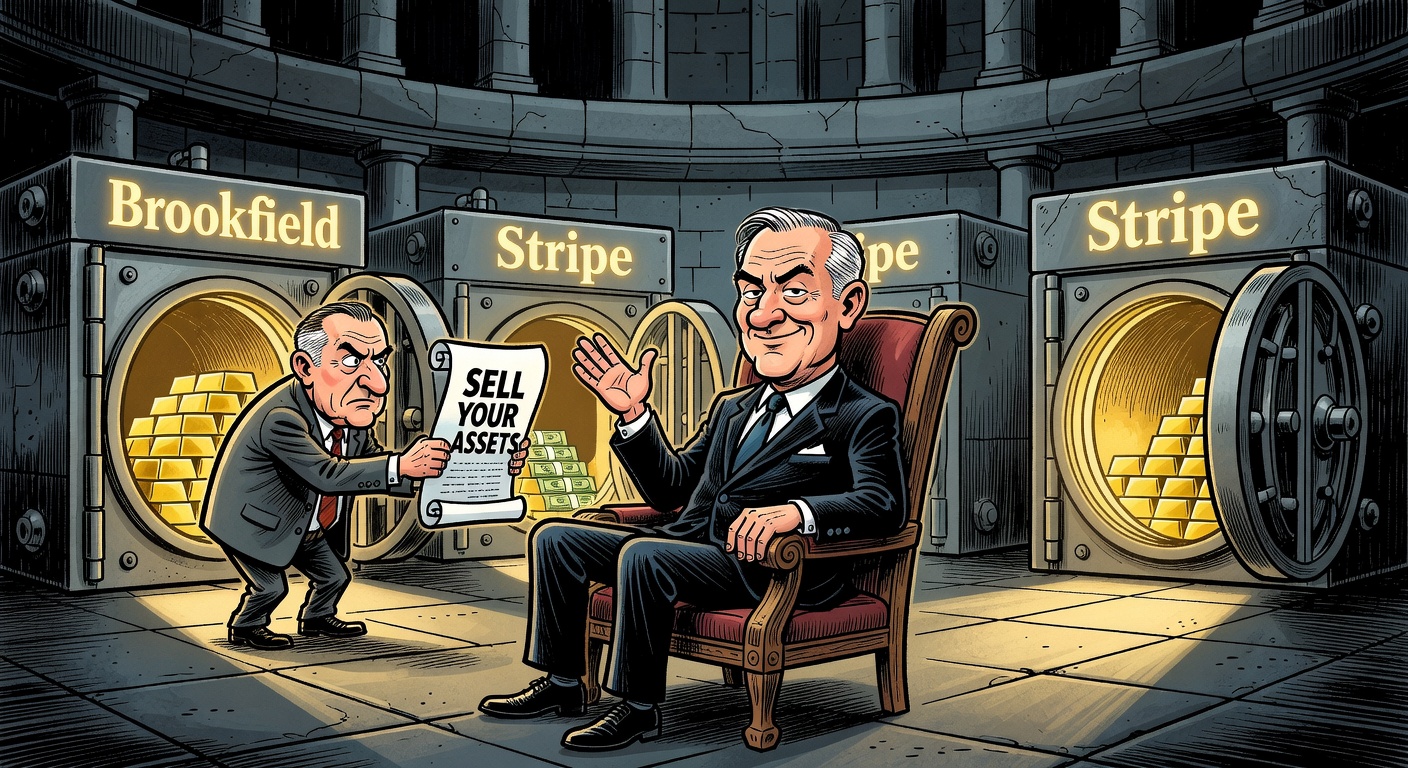
A House of Commons committee spent months studying Canada's Conflict of Interest Act and returned with 20 targeted recommendations — many written specifically to address the Prime Minister's extraordinary web of financial entanglements. The core message: divest, or recuse yourself from almost everything. Mark Carney's response has been silence. Experts say the recommendations will go nowhere. And that tells you everything you need to know about how this government views accountability.
The Report
On April 23, 2026, the House of Commons Standing Committee on Access to Information, Privacy and Ethics released its long-awaited review of the federal Conflict of Interest Act. The report — obtained by the National Post — contains 20 recommendations to tighten ethics rules for public office holders. A striking number of them appear tailor-made for one person: the current Prime Minister.
Conservative MP John Brassard, who chairs the committee, was direct at the news conference announcing the findings: "Individuals with greater decision-making authority should be held and must be held to higher standards."
Those words weren't abstract. They were aimed squarely at a Prime Minister who arrived in office carrying what the National Post described as a "minefield of potential conflicts" — stakes in Brookfield Asset Management, Stripe, and connections to dozens of other corporations that now find themselves subject to federal policy, regulation, and in some cases direct federal investment through the new $25-billion Canada Strong Fund.
The Scale of the Problem
Before entering politics, Mark Carney was Vice Chair of Brookfield Asset Management — one of the world's largest alternative asset managers, with vast holdings in Canadian infrastructure, real estate, and energy. He also sat on the board of Stripe, the fintech payments giant.
When Carney became Prime Minister, he established an "ethics screen" — a mechanism under which he claims to be recused from decisions affecting his former employers. But watchdog group Democracy Watch has documented at least a dozen loopholes in Canada's ethics law that effectively allow Carney to participate in nearly all decisions that affect his investments anyway. The Privy Council Office delayed responding to an access-to-information request about the screen's details by months.
The ethics commissioner's own disclosure listed more than 100 companies covered under Carney's conflict-of-interest screen. That's 100-plus companies where the Prime Minister is supposedly recused from decisions — but where, in practice, federal policy decisions reach everywhere. You cannot run a country and credibly claim to be firewalled from your own investment portfolio.
What the Committee Recommended
The committee's 20 recommendations include strengthening the definition of "conflict of interest," expanding disclosure requirements, closing the loopholes Democracy Watch has been flagging for over a year, and — crucially — recommending that senior officials with significant investment holdings be required to divest, not merely screen.
The recommendation to sell is not unprecedented. Former Finance Minister Bill Morneau faced intense pressure over his conflict-of-interest issues and eventually resigned. Former PM Pierre Trudeau never faced anything close to Carney's level of financial exposure when in office. Carney's situation is, by most accounts, unique in Canadian political history: a sitting Prime Minister with complex, multi-billion-dollar financial entanglements with companies whose fortunes rise and fall on his government's decisions.
"The report contains 20 recommendations to further strengthen the law, many of which are specifically tailored to deal with Mark Carney's minefield of potential conflicts." — National Post, April 23, 2026
Why It Won't Happen
The committee report is just that — a report. It has no binding force. To implement any of the 20 recommendations, the Liberal government would have to pass legislation. That means the Prime Minister would essentially have to vote to impose stricter ethics rules on himself. Experts quoted by the National Post confirmed: this is very unlikely to happen.
Under Canada's Conflict of Interest Act, the ethics commissioner has broad discretion to approve or reject screens and recusals — but the law itself is riddled with the gaps Democracy Watch has catalogued. Without legislative change, Carney can continue operating with his current arrangement indefinitely. And now, with a manufactured parliamentary majority obtained through floor-crossings, there is no opposition mechanism strong enough to compel a vote.
The Liberals spent years demanding accountability from others. When Randy Boissonault was exposed for business conflicts, the House erupted. When former Conservative cabinet ministers faced ethics probes, the Liberals demanded resignations. Now the shoe is on the other foot — and the government's response is to sit on a committee report and run the clock.
The Bigger Picture
Carney entered politics with a carefully cultivated image: the sober technocrat, the man above partisanship, the central banker who would restore credibility to the PMO after the chaos of the Trudeau years. But the closer you look at his actual record on ethics, the more the image cracks.
He appointed a lawyer to advise him on his own conflicts — a self-administered solution. He allowed the Privy Council to delay ATIA disclosures about his ethics screen. He now presides over a $25-billion sovereign wealth fund that will invest in Canadian industrial projects — sectors where Brookfield and its affiliates are active investors. And when Parliament's own ethics committee told him he should sell his assets, the answer was silence.
If Trudeau had arrived in office with 100+ companies in his conflict-of-interest screen, the media would have been relentless. For Carney, it's treated as a complexity to be managed — not a scandal to be answered.
The Bottom Line
Canada has a Prime Minister who oversees policy for an economy his personal investments are embedded in. Parliament's own ethics committee said he should sell. He won't. The committee's recommendations will gather dust, the ethics commissioner's loopholes will remain open, and the $600-million government-subsidized media will move on to the next story.
The only reason this matters is because Canadians are supposed to be able to trust that the person making trillion-dollar decisions isn't doing so with one eye on his portfolio. That trust hasn't been earned — and a committee report that goes nowhere doesn't change that.
National Post, April 23, 2026: "An ethics report just called on Mark Carney to sell his investments. Here's why it likely won't happen"