$536 Billion and Climbing: Carney's Liberals Keep Spending More While Claiming to Spend Less
Canada's spring economic update projected $536.2 billion in program spending — $7.6 billion higher than the fall budget, and a cumulative $25 billion more than forecast over four years. Program spending will reach $575.4 billion by 2029–30. And if history is any guide, even those numbers will be revised upward. The Liberals promised fiscal discipline. They delivered a compounding spending machine that Canada cannot afford.
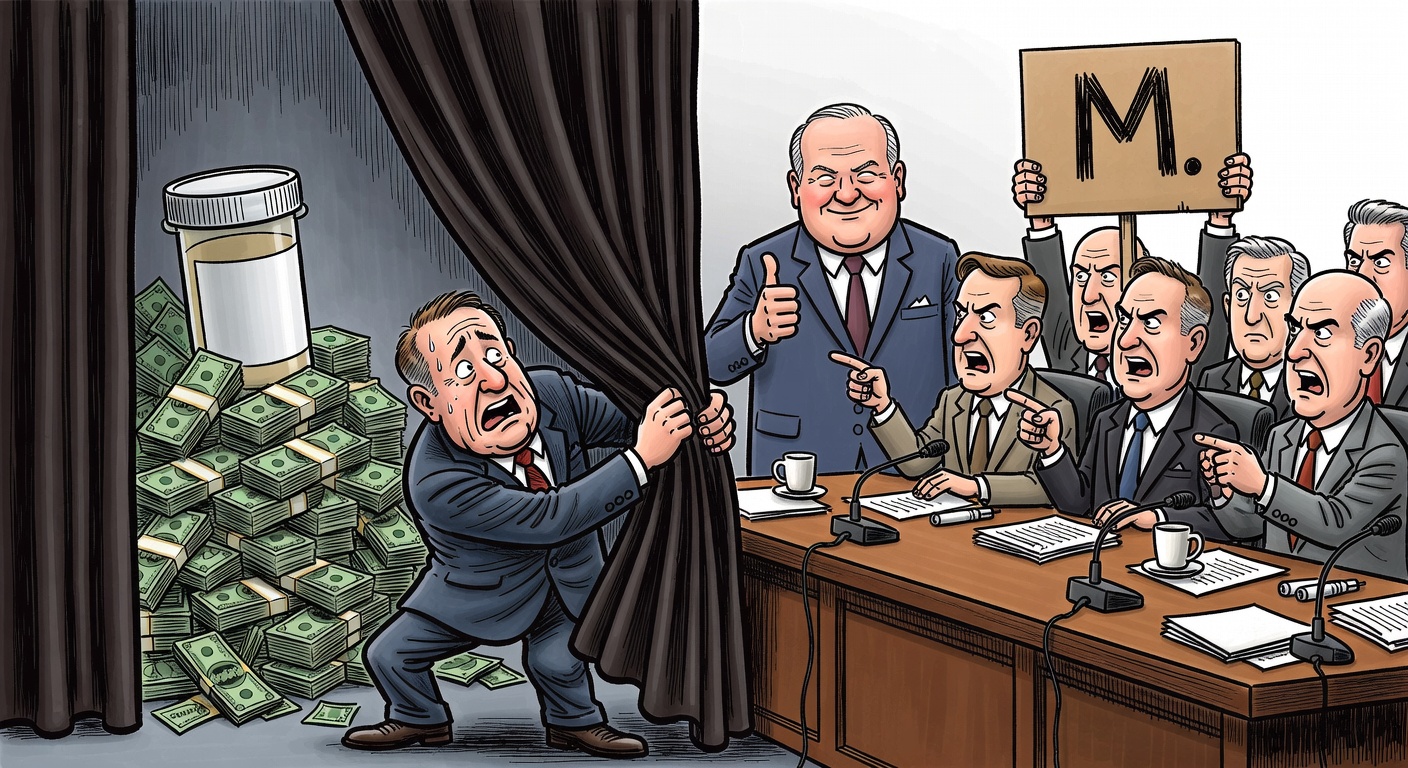
Editorial cartoon — iVoteLiberal.com
The Numbers the Liberals Don't Want You to Focus On
When Carney's government released its spring economic update, the headlines focused on the headline deficit and the Canada Strong Fund. But buried inside the document — which the finance department released in PDF form with minimal fanfare — is a set of figures that should alarm every Canadian taxpayer.
Federal program spending for the current fiscal year is now projected at $536.2 billion. That's $7.6 billion higher than what the same government projected in the fall budget released just months ago. It's not a new priority. It's not an emergency. It's the same government, same programs, same mandate — and somehow spending $7.6 billion more than it said it would.
Look forward, and the picture gets worse. The new spending projections for next year are higher than the fall budget. The year after that: higher. The year after that: higher still. Cumulatively, the Liberals have raised their own program spending forecast by $25 billion over four years versus what they announced in the fall. By 2029–30, program spending is projected to hit $575.4 billion.
As National Post columnist Matthew Lau noted on April 30, 2026: "The Liberals are spending even more of our money than they previously estimated." That sentence sounds mundane. It is not. It describes a structural pattern — a government that systematically underestimates its own spending, then revises upward, every single time.
A Pattern of Upward Revision — Every Time
This is not a one-time overage. Research from the C.D. Howe Institute has documented that the Liberal government under both Trudeau and Carney has consistently revised its spending projections upward with each subsequent fiscal update — sometimes dramatically. The pattern is not accidental. It reflects a government that habitually announces spending numbers it knows will be exceeded, because the political cost of announcing the real number up front would be too high.
Under Trudeau, annual program spending grew from roughly $300 billion to over $490 billion — a 63% increase in a decade. Carney inherited that trajectory and, rather than bending the curve downward, has accelerated it. The spring update's $536.2 billion projection represents a new ceiling — one that will almost certainly become a floor.
The Liberals ran on fiscal responsibility. Carney repeatedly promised "responsible fiscal management." He promised to keep deficits on a declining path. He promised to protect Canada's fiscal anchor — the debt-to-GDP ratio. Yet every fiscal document his government has released has featured higher spending than the last.
Where Is the Money Going?
The spring update does not provide a detailed breakdown of the $7.6 billion in new spending — a notable omission for a document that is supposed to give Parliament and Canadians a clear accounting of how public money is being spent. What the document does show is that the increases are spread across multiple departments, with no single program identified as the primary driver.
This diffuse spending growth — small increases across dozens of programs, aggregating to billions — is precisely the kind of fiscal creep that defies accountability. There is no single scandal to point to, no single contract to cancel. There is simply a government that, in the absence of any external constraint, spends more than it says it will, every year, without exception.
Canada's federal debt now exceeds $1.2 trillion. At current spending trajectories, that number will grow substantially over the next four years. The interest cost alone — servicing the debt already accumulated — is now one of the largest line items in the federal budget, crowding out spending on health care, infrastructure, and the programs Canadians actually use.
The Fiscal Discipline Myth
Carney came to power promising something different from Trudeau. He was the central banker, the serious economist, the man who understood what debt actually means. He spoke the language of fiscal responsibility fluently. He used phrases like "fiscal anchor," "declining debt-to-GDP," and "responsible stewardship of public finances."
The spring economic update is the first real test of whether those phrases meant anything. The answer, on the numbers, is no.
A government serious about fiscal discipline would have come in below its own fall budget projection, or at worst held even. Instead, program spending is $7.6 billion higher than forecast — and set to grow from there. The Liberals keep spending more, while claiming to spend less. The gap between the rhetoric and the reality is not measured in talking points. It is measured in $25 billion over four years.
Carney may have changed the face of the Liberal Party. He has not changed its spending habits. And the bill — all $575 billion of it by 2029–30 — will be paid by Canadian families who were told fiscal discipline was on the way.
It isn't. It never was.
Sources: National Post — Matthew Lau, "Carney accelerates Canada's fiscal collapse" (April 30, 2026); Government of Canada Spring Economic Update 2026 (budget.canada.ca); C.D. Howe Institute fiscal tracking data; CarneyWatch.ca accountability record.