The $206M Wind Loan Private Lenders Wouldn’t Fully Touch Needs Receipts
Clean energy does not cancel due diligence. If taxpayers are carrying risk, Parliament should see the conflict checks, financing terms and public-subsidy math.
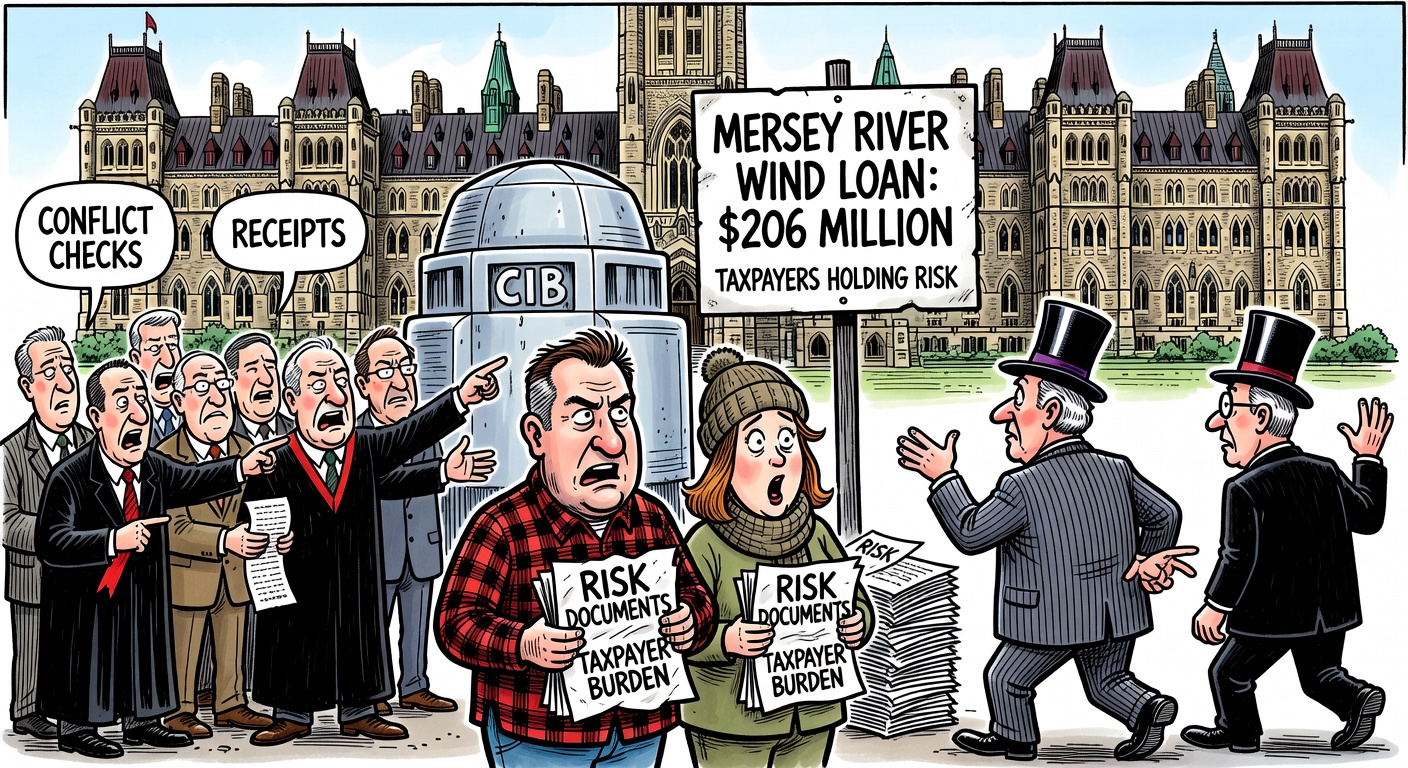
The Canada Infrastructure Bank has put $206 million behind Mersey River Wind, a Nova Scotia project with 33 turbines and a planned 148.5 megawatts of power. On paper, the public-interest case is simple: cleaner electricity, more construction jobs, and enough generation for more than 50,000 homes. That is the sales pitch. The accountability question is who carries the risk, who benefits, and what due diligence taxpayers are allowed to see.
The official announcement says the project is also eligible for a federal clean-technology investment tax credit worth up to 30% of capital costs, potentially up to $122.5 million, plus as much as $25 million from Natural Resources Canada’s Smart Renewables and Electrification Pathways program. That means the CIB loan is not an isolated cheque. It sits inside a larger stack of public support.
That is why House of Commons written question Q-1124 matters. It asks for the communications, due diligence, conflict-of-interest assessments, Politically Exposed Person analyses, risk classifications, loan terms, private-financing assessments, and total public-subsidy calculations behind the $206.4 million loan. In plain English: Parliament is asking whether the basic safeguards were done, what they found, and whether private capital was supplemented or displaced by taxpayer-backed financing.
iPolitics has reported that CIB executives defended the loan after Conservative and Bloc MPs raised questions about alleged Liberal connections around people involved in the project. That does not prove wrongdoing, and critics should not pretend it does. But it does make disclosure more important, not less. When a government bank lends hundreds of millions into a project with political questions attached, “trust us” is not an answer.
The strongest concern is not ideological opposition to wind power. It is the familiar Liberal pattern of announcing a green-industrial win while the public waits for the paperwork. If the project is commercially sound, release the loan rate, repayment schedule, guarantees, security, concessionary elements and risk-sharing provisions. If conflict screening found no issue, release the summary. If private lenders would not provide the required financing on their own because the model carried unusual revenue or customer risk, explain why taxpayers are the right backstop.
A serious government should welcome that test. Clean power projects can be worthwhile. The energy transition will require capital. But public capital is not free money, and climate language cannot become a substitute for procurement discipline.
Before Ottawa celebrates another subsidized ribbon-cutting, it should publish the Mersey River receipts: the conflict checks, the subsidy stack, the private-financing analysis and the full risk case. If taxpayers are being asked to stand behind the deal, taxpayers deserve to see the deal.