The Alto Land-Access Fight Shows Why Farmers Don’t Trust Ottawa’s Mega-Project Machine
A viral TikTok about landowners pushing back against Alto is not just social-media noise. It points to a real policy fight over farmland, property rights, impact studies and Ottawa’s appetite for billion-dollar mega-projects.
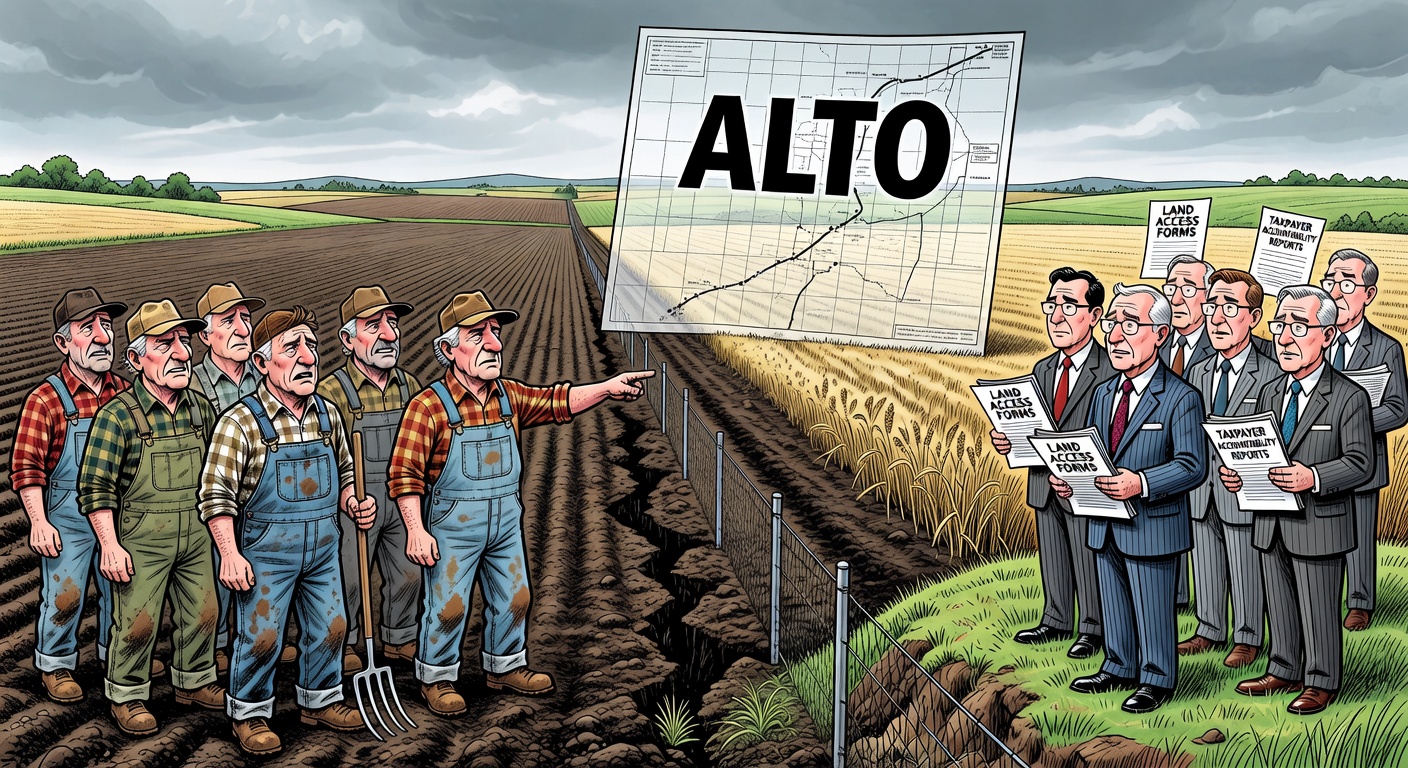
The TikTok came from @unfilteredwithkels and framed the Alto fight as a landowner-resistance issue: refuse voluntary entry, issue no-trespass notices, demand use of existing corridors, document land values, and organize rural opposition. Some of that is advocacy language. But the underlying concern is real.
Alto is the federal Crown corporation advancing Canada’s proposed high-speed rail network between Québec City and Toronto. According to the Ontario Federation of Agriculture, the project is being planned as a roughly 1,000-kilometre electric passenger rail network, with trains planned at 300 to 325 km/h and a preliminary federal cost estimate in the $60 billion to $90 billion range.
That scale matters. This is not a bike lane or a small local rail siding. High-speed rail needs straight, flat, secure corridor space. The OFA notes that secure fencing becomes imperative at high speeds and that safe grade crossings are impractical or impossible. Alto itself acknowledges that major infrastructure requires land decisions and says affected owners deserve fair treatment, clear information, access solutions and compensation that reflects real impacts.
The question is whether rural Ontarians believe Ottawa will actually deliver that standard.
The National Farmers Union – Ontario says the current Alto approach treats prime farmland, farm livelihoods and ecologically sensitive lands as expendable. NFU-O is calling for a pause, proper consultation, clear farmland-preservation rules and a compensation plan if lands are expropriated. It also wants existing transportation, hydro or other lower-impact corridors prioritized before a new corridor through farmland is considered.
The OFA is making a similar point. It says Alto should suspend operations and conduct a rigorous assessment of economic, social and environmental impacts. It wants a formal agricultural advisory council, agricultural impact assessments, protection against landlocking farm parcels, safe farm crossings, preserved drainage, fencing consultation and fair compensation for negative effects on farm production and growth potential.
That is the real accountability story. Ottawa can sell Alto as climate-friendly, nation-building and transformational. But if the route cuts through productive farms, forces families into legal fights over access, leaves rural communities bearing the costs without service, or buries key studies until after political momentum is locked in, then the “green” branding becomes a shield for old-fashioned top-down planning.
The Carney government should not be allowed to hide behind glossy infrastructure language. If Alto is worth $60 billion to $90 billion, it is worth full disclosure before farmers are pressured into land-access arrangements or left guessing whether their fields, drainage, crossings and future investment plans will survive the final alignment.
The minimum standard is clear: publish the business case, route-selection criteria, agricultural impact work, environmental assumptions, access-rights templates, compensation framework, crossing standards, drainage plans and legal-support policy for affected landowners. Fund independent advice for farmers before they sign anything. Put the burden of proof on Alto and Ottawa, not on families trying to protect farms that may have taken generations to build.
Canada may need better rail. But better rail cannot mean worse property rights, weaker consultation, or treating farmland as empty space on a planner’s map.