Canada’s $13M Africa Warehousing Grant Needs More Than a Project-Browser Line
Global Affairs Canada lists a $13 million contribution to the 2X Ignite Africa Warehousing Facility SCSP. The public deserves more than a generic description when taxpayer money moves into cross-border investment structures.
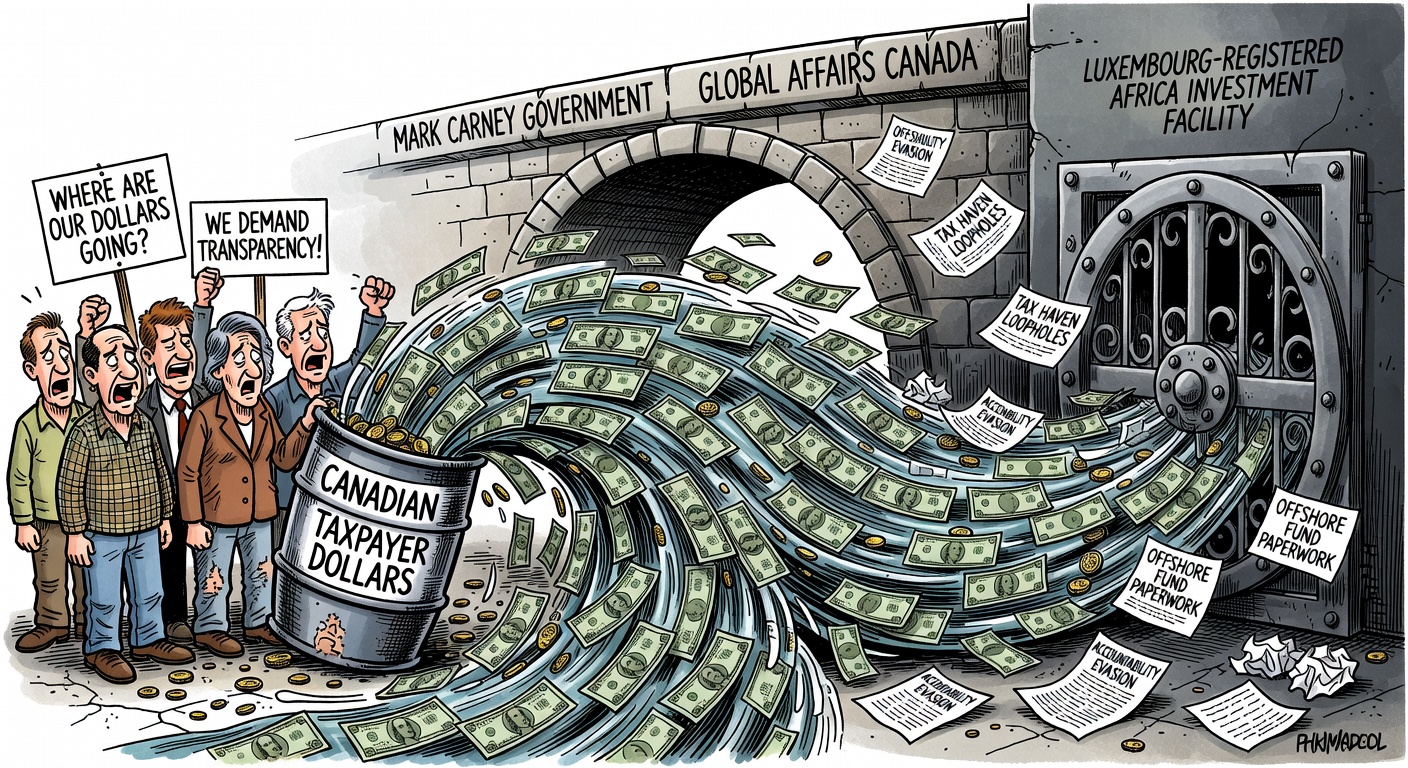
A viral social-media post is circulating about a federal contribution to the 2X Ignite Africa Warehousing Facility. The responsible way to cover it is to separate what is documented from what is speculation.
Here is the documented part: Global Affairs Canada’s own Project Browser lists project number CA-3-P014968001, titled “2X Ignite Africa Warehousing Facility,” with a maximum contribution of $13,000,000. The listed partner is 2X Ignite Africa Warehousing Facility SCSP. The project status is operational, with dates running from March 30, 2026 to March 31, 2033.
The government description says the facility is meant to expand women’s access to capital, support women-led investment funds, finance small and medium-sized enterprises, and provide coaching around impact measurement, gender equality and climate considerations. That may sound worthy on paper. But worthy language does not remove the need for scrutiny.
The accountability problem is simple: Canadians can see the headline amount, but not enough of the decision trail. Who approved the contribution? What due-diligence memo assessed the structure? What are the management fees? What are the conflict checks? What benchmarks determine success? What happens if expected private investment is not “crowded in”? How much of the $13 million reaches actual businesses versus fund-level administration, consultants, legal structuring and impact-reporting machinery?
Those questions are especially fair because this is not a simple local grant to a community organization. It is a multi-year contribution to an investment facility operating across African markets, using financial language such as concessional loans, warehousing SME deals, investment pipelines, impact measurement and fund-management capacity. When Ottawa starts using aid dollars to support investment structures, Parliament should demand investment-grade disclosure.
The Carney government also has a credibility problem here. Mark Carney came to office from the world of global finance, climate finance and institutional investment. His government cannot expect Canadians to accept every “blended finance,” “impact investing,” or “inclusive growth” project on trust. The more sophisticated the structure, the more transparent the paperwork must be.
The right test is not whether helping women entrepreneurs in Africa is good or bad in the abstract. The test is whether Canadian taxpayers can see who receives the money, who manages it, who earns fees, who measures results, and whether the public gets hard outcomes rather than slogans.
Global Affairs should publish the contribution agreement, due-diligence summary, fee structure, governance controls, beneficial ownership information where legally available, risk assessment, annual disbursements and measurable results. If the program is defensible, the documents should strengthen the case. If the documents are thin, that is exactly why Canadians should be asking now.
Foreign aid should not become a quiet pipeline from Canadian taxpayers into opaque global-finance vehicles. If Ottawa wants to spend $13 million this way, it should show the receipts.